
Checklist for Eating Local on Your Next Trip
Eating local while traveling can enrich your experience and make a positive impact. Here’s why it matters and how to do it:
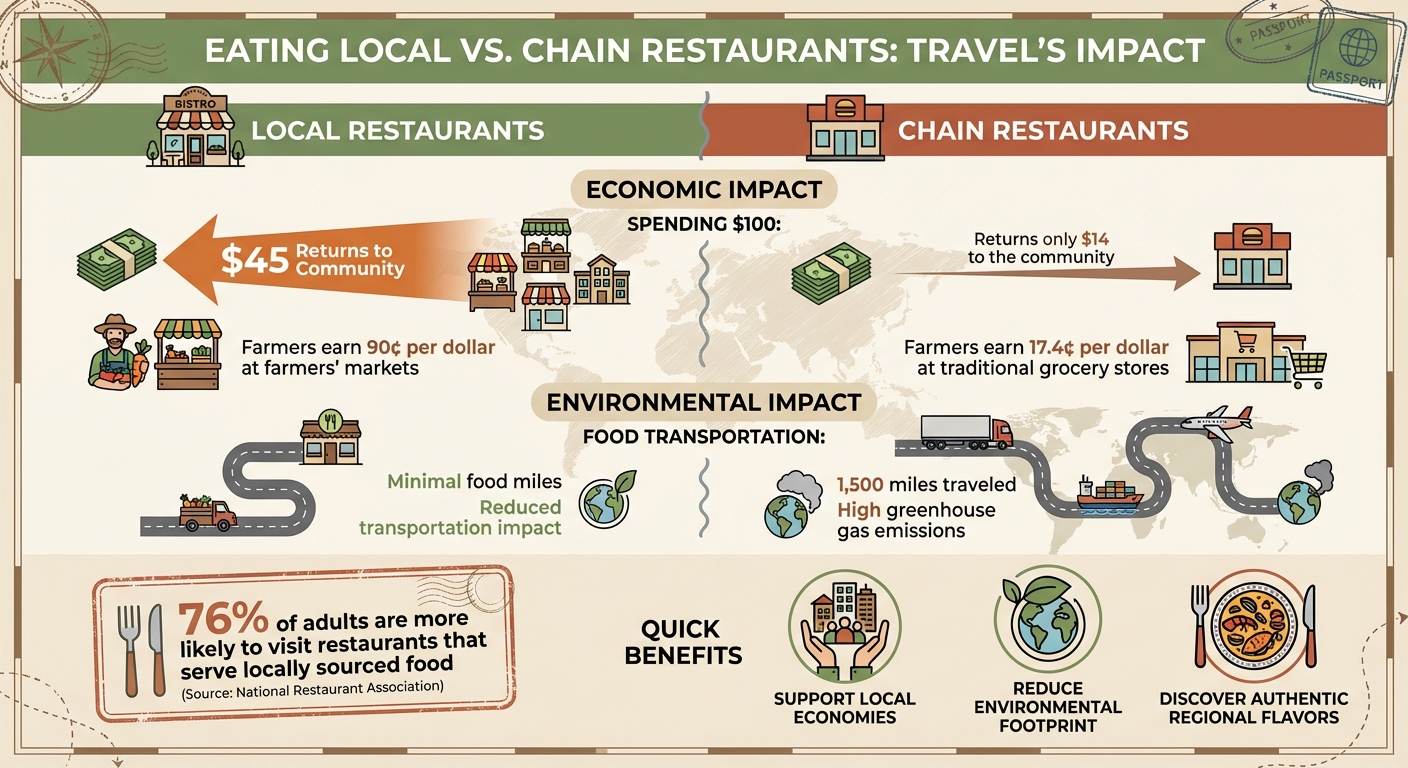
- Support Local Economies: Spending $100 locally returns $45 to the community, compared to $14 at chains.
- Reduce Food Miles: Typical food travels 1,500 miles, adding greenhouse gases. Local options cut transportation impacts.
- Discover Regional Flavors: Seasonal produce and regional dishes offer a true taste of the destination.
Quick Tips:
- Before You Go: Research seasonal foods and local specialties using tools like the Seasonal Food Guide.
- Where to Eat: Visit farmers’ markets, roadside stands, and farm-to-table restaurants. Use platforms like USDA Local Food Portal or LocalHarvest for guidance.
- What to Pack: Bring reusable containers, utensils, and small food prep tools for eco-friendly adventures.
- On the Trip: Cook simple meals with market finds or take a cooking class to learn local recipes.
- Ask Locals: For dining, ask, "Where do you eat?" to find hidden gems beyond tourist spots.
Eating local isn’t just about food – it’s a way to connect with the place you’re visiting while supporting its people and reducing your environmental footprint.
Economic and Environmental Impact of Eating Local While Traveling
Pre-Trip Planning for Eating Local
Research Seasonal Foods and Regional Dishes
Before your trip, take some time to discover what’s in season at your destination. The Seasonal Food Guide is a handy tool that lets you search by zip code or state to find out what fruits, vegetables, nuts, and herbs are at their peak during your visit. With over 170 items tracked across all 50 states, you’ll get a clear picture of what’s fresh and flavorful. Plus, the app works offline, so you won’t have to worry about connectivity issues while traveling.
Dive into the unique flavors of the region by exploring local specialties. Think wild huckleberries in Montana, Native American-grown wild rice in Minnesota, or heirloom tomatoes that thrive in specific areas. Heirloom varieties often pack more flavor and nutrients compared to mass-produced options. For the most accurate local insights, check resources like state agriculture extension offices or departments of agriculture. You can also use tools like A Greener World to locate nearby sources of sustainable beef, eggs, dairy, and baked goods.
Once you’ve gathered this information, it’s time to connect these seasonal and regional treasures with real-world dining options.
Find Farmers’ Markets and Farm-to-Table Restaurants
Farmers’ markets and farm-to-table restaurants are your gateway to authentic local dining. Start with the USDA Local Food Portal, which lists over 13,000 agritourism sites and more than 7,000 farmers’ markets. The portal offers details like operating hours, directions, available products, and even whether the market accepts SNAP benefits. Other platforms like LocalHarvest and the Eat Well Guide are also excellent resources, with the latter featuring over 25,000 curated listings of farms, markets, and restaurants that prioritize local and sustainable ingredients.
Before heading to a market, check their website to learn about their definition of "local" and their stance on pesticide use. Supporting farmers’ markets can make a big difference – farmers typically earn about 90 cents of every dollar spent there, compared to just 17.4 cents at traditional grocery stores. Don’t limit yourself to markets, though. Seek out "Food Hubs" that bring together local products or visit agritourism spots like u-pick farms, pumpkin patches, and corn mazes, all searchable through the USDA directory.
With this information in hand, you can start weaving these food experiences into your travel plans.
Build Your Itinerary Around Food Experiences
When it comes to finding authentic dining spots, Google Maps can be a game-changer. Look for restaurants with strong reviews, especially those written in the local language, as these often point to true local favorites. Smaller venues that focus on just one or two dishes are also worth seeking out – they often reflect a deep mastery of those offerings and a thriving local business model.
Plan your visits to markets and restaurants during peak hours for a lively experience, and consider aligning your trip with seasonal events like wine harvests, truffle seasons, or food festivals. If you’re on a road trip, apps like Roadtrippers (available for $35 per year) can help you map out food stops and craft brewery visits along your route. For a deeper dive into local cuisine, book cooking classes or food tours through platforms like Get Your Guide, Airbnb Experiences, or Cookly. Cookly even offers a 10% discount if you use promotional codes.
When asking for dining recommendations, skip generic questions like "Where should I eat?" Instead, ask locals, "Where would you eat dinner?" This approach often leads to hidden gems and avoids the usual tourist traps.
What to Pack for Local Food Adventures
Reusable and Eco-Friendly Gear
If you’re heading out on a food adventure, packing eco-friendly essentials can elevate your experience while reducing waste. Lightweight stainless steel containers and beeswax or vegan wax wraps are perfect for storing fresh cheese, bread, or produce. Many stainless steel containers are designed to nest, saving valuable space in your bag. Wax wraps, on the other hand, are a reusable and convenient way to cover bowls or wrap food.
Don’t forget reusable produce bags made from cotton mesh or muslin. These are perfect for market visits and help cut down on plastic waste – especially since about 85% of packaging waste ends up in landfills. A portable utensil set with bamboo or stainless steel cutlery and straws (around $13.00) is another must-have, especially for enjoying street food without relying on disposable plastics. For snacks and leftovers, silicone food pouches (priced between $13.00 and $34.00 depending on size) are leak-proof and easy to clean.
Opt for containers that double as storage and serving bowls to save space and add versatility. A small cleaning kit with a wooden dish brush or compostable sponge is also handy for washing your gear on the go.
Once you’ve got your reusable tools packed, consider adding compact food prep tools to make the most of your market finds.
Travel-Friendly Food Preparation Tools
A few compact kitchen tools can make a big difference when turning market treasures into simple meals. The Victorinox Fibrox Pro 8-inch chef’s knife (priced at $29.95) offers excellent quality and control for slicing and dicing. Pair it with a 12-in-1 kitchen multi-tool (ranging from $24.99 to $30.00), which includes a grater, peeler, and zester – perfect for replacing bulkier individual tools. Travel writer Steffani Cameron points out that "90 percent of my lodgings tend to lack [can openers]", so having your own tools can prevent frustration.
Flexible plastic cutting mats are a smart alternative to traditional cutting boards since they pack flat. For seasoning, the GSI Outdoors Spice Missile (around $9.55–$9.95) is waterproof and holds up to six different spices in a single, compact container. With careful packing, a full travel kitchen kit – complete with a chef’s knife – can fit into a single packing cube weighing just 2 pounds and measuring 12″×3″×4″. Cameron also stresses the importance of keeping things lightweight, saying, "when airline check-in weight limits loom monthly, and I haul that bag over cobblestones and curbs, every gram counts".
Snacks and Staples for the Journey
Packing a few lightweight staples can complement fresh, local ingredients beautifully. Nut butter travel packs (priced between $1 and $3 each) are convenient and pair well with local apples or fresh bread from farmers’ markets. Trail mix (around $5–$10 per bag) provides a quick energy boost for busy days. Whole-grain crackers and pretzels are another great option, especially when paired with local cheeses or spreads.
Fresh fruits like apples and baby carrots are perfect for travel since they stay fresh without refrigeration. Single-serve cheese sticks are another smart choice – they can be left unrefrigerated for a day or two, making them ideal for day trips. These snacks ensure you’re ready to enjoy your food adventure without missing a beat.
Finding Local Food Options During Your Trip
Visit Farmers’ Markets and Roadside Stands
Once you’ve arrived at your destination, take the opportunity to bring your pre-trip research to life by exploring local markets and roadside stands. Historic market halls, like the iconic Reading Terminal Market in Philadelphia, often gather a variety of local vendors under one roof, offering everything from fresh produce to regional specialties. While driving through rural areas, keep an eye out for roadside signs pointing to local produce stands – these hidden gems can lead you to some of the freshest finds.
Timing is key when visiting these spots. Showing up around 11:00 AM is a sweet spot; locals often grab fresh lunches around this time, ensuring that the food hasn’t been sitting too long in the "danger zone" between 40°F and 140°F. Travel writer Jodi Ettenberg captures the magic of these experiences perfectly:
"Street food, too, is such an integral part of why I travel, and a wonderful way to soak in the sights and sounds of the places I’m visiting".
When choosing where to buy, look for stalls with long lines, especially those frequented by women and children. This is often a good sign that the food is trusted and well-regarded by locals.
Don’t forget to bring small bills. Many roadside stands operate on a cash-only honor system, where you’re expected to leave payment in a lockbox and make your own change. While some modern stands now accept Venmo, this convenience isn’t guaranteed everywhere yet.
Shop at Small Grocers and Co-Ops
Community-owned grocers and food co-ops are fantastic places to find regional and seasonal products that reflect the local flavor. Resources like LocalHarvest can help you locate co-ops, farms, and buying clubs near your travel destination. For example, the "Grocery Story" directory identifies 357 food co-op locations across North America, making it a valuable tool for travelers. To confirm you’re dealing with a legitimate cooperative, look for websites ending in .coop – a domain exclusively reserved for verified co-ops.
If a storefront isn’t available, consider seeking out buying clubs or bulk drop locations for local goods. Vendors at farmers’ markets can also be a great resource – ask them which small grocers they supply, as these shops often stock regional products. While many co-ops welcome non-members, keep in mind that co-op owners typically enjoy perks like deeper discounts and voting rights.
After stocking up at these local spots, treat yourself to a meal at a restaurant that showcases the area’s freshest ingredients.
Eat at Restaurants with Locally Sourced Menus
Restaurants that prioritize local sourcing make it easier to identify their commitment. A good sign? Specific farm names listed next to menu items, which is a hallmark of authentic farm-to-table dining. Menus that change with the seasons or feature the current harvest are another indication of genuine local sourcing. According to the National Restaurant Association, 76% of adults are more likely to visit a restaurant that serves locally sourced food.
Before heading out, check the restaurant’s website or social media pages for mentions of terms like "locally sourced", "farm-to-table", or "hyperlocal." Look for posts showing visits to local producers, which often highlight their partnerships. Once you’re at the restaurant, don’t hesitate to ask the waitstaff about where the ingredients come from. At true farm-to-table establishments, the staff is usually well-versed in the names and locations of their suppliers.
sbb-itb-289f5f2
How to Use Local Ingredients
Prepare Simple Meals with Market Finds
Cooking with local ingredients doesn’t require a fancy kitchen. Sometimes, all you need is a little creativity and a few fresh finds from the local market. When kitchen space or tools are limited, "snack dinners" can be your go-to. Think local cheese, crackers, deli meats, and fresh produce – simple to assemble but incredibly satisfying. Meals that rely more on assembly than cooking are perfect for these situations.
Start your day with a yogurt and fruit bowl made from seasonal produce, nuts, and seeds. For lunch or dinner, grab some local bread, bagels, or tortillas and layer them with fillings like hummus, smoked salmon, or boiled eggs. As Emily Lush, Founder of Wander-lush, explains:
"If you want to get a feel for what raw ingredients are local, what produce is in season – and what everyday people use for their home cooking – then there’s no better place to start [than the produce market]."
If you’re in a place where water safety is a concern, stick to produce that can be peeled, like bananas, avocados, carrots, papayas, or mangoes. Avoid pre-cut fruits or salads that might have been washed in unsafe water. For peace of mind, remember this advice from Audrey Scott, Co-founder of Uncornered Market:
"Cooked is more reliable than fresh. If you have questions about the hygiene of what and where you’re eating, make sure everything is properly cooked. Fried, boiled, or baked, high temperatures kill germs."
Many supermarkets also offer ready-made options, such as meze dishes, cooked meats, and regional baked goods, giving you a taste of local flavors with minimal effort. Packing a small knife or reusable containers can make preparing these market finds in your hotel or rental even easier.
For a deeper dive into local cuisine, consider taking a cooking class to learn how to transform these ingredients into authentic dishes.
Take Cooking Classes
Cooking classes are a fantastic way to elevate your experience with local ingredients. Many of these classes include guided tours of nearby markets, where you’ll learn to identify native ingredients and how to use them in your cooking. In places like Vietnam and Colombia, workshops often teach specialized techniques, such as crafting pho broth or rolling perfect empanadas. Some platforms, like Cookly, even offer discounts on these classes, making it easier to jump in.
For example, in Lisbon, Portugal, you can join outdoor cooking classes hosted by locals. These sessions not only teach you how to prepare traditional Portuguese dishes but also allow you to enjoy the process in a scenic setting. Beyond the skills you gain, these hands-on experiences give you the confidence to recreate the dishes during your travels or once you’re back home.
Work with What’s in Season
Making the most of local ingredients means adapting to what’s fresh and in season. Before your trip, research the region’s seasonal specialties and traditional dishes. Once you arrive, head to a bustling market early in the day to see what’s available and at its peak. Watch how locals shop, interact, and handle ingredients – you’ll pick up valuable tips just by observing.
If you’re unsure about certain items, tools like Google Translate’s image feature can help you understand labels. Don’t hesitate to ask locals for advice by saying something like, “What’s the best thing to cook right now?” Their recommendations can lead to authentic and delicious discoveries.
If an ingredient you’re used to isn’t available, embrace local substitutes. Bring along a few favorite spices or teas to pair with your market finds. You could even plan your trip around a harvest event, like the annual Caper Festival on Salina in Sicily’s Aeolian Islands, which celebrates a single seasonal ingredient in a big way. These moments offer a unique opportunity to connect with the local culture through its food.
How to Find the Best Local Food in ANY City (Travel Foodie Tips)
Conclusion: Eating Local While Traveling
Choosing to eat local while traveling adds depth to your journey. Opting for farmers’ markets instead of chain supermarkets, family-run restaurants over large franchises, and seasonal, locally sourced ingredients instead of imported goods does more than just satisfy your hunger – it immerses you in the culture, history, and daily life of the destination.
The impact goes far beyond your meal. Spending money on local food supports small farmers, independent businesses, and regional jobs. Plus, it helps cut down on the environmental cost of food transportation. By reducing food miles, you’re lowering fuel use and greenhouse gas emissions – a win for the planet.
As Michael Pollan wisely said: "If it’s local, it’s less [energy]". This idea holds true whether you’re browsing a roadside stand in Vermont or enjoying street food at a bustling market.
Your pre-trip research and thoughtful choices make every meal meaningful. From finding local markets to cooking with fresh, seasonal produce, every step becomes a chance to connect with the place you’re visiting. Food is one of the most direct ways to understand a destination.
On your next trip, start small. Visit a farmers’ market, ask locals where they enjoy eating, or try a dish you’ve never heard of before. These simple actions help preserve culinary traditions, promote sustainable agriculture, and create meaningful connections. Eating local doesn’t just benefit the community or the environment – it transforms your travels into a richer, more memorable experience.
FAQs
How can I find authentic local food while traveling?
To find those truly local dining experiences, start with a bit of research before you travel. Check out food blogs, local dining guides, or social media pages where residents share their go-to spots. Another smart move? Book a food tour early in your trip. Local guides often know the best family-run cafés, bustling street food stalls, and vibrant markets that tourists might miss.
Once you’ve arrived, don’t hesitate to ask locals for their favorite eateries. Whether it’s the barista at your morning coffee stop, a shop owner, or the hotel staff, they’re likely to point you toward authentic spots. Farmers’ markets and street food stalls are also excellent choices – they’re affordable, brimming with fresh, seasonal flavors, and give you a real taste of the area.
For extra help, apps like Google Maps or Yelp can be handy, but try to focus on places with reviews from locals rather than ones packed with tourists. By taking these steps, you’ll not only savor the real flavors of your destination but also support small, local businesses along the way.
Why should I eat local food when traveling?
Eating locally sourced and seasonal food while traveling comes with plenty of perks. For starters, it’s usually easier on your wallet. Local markets, street food stalls, and small neighborhood cafés often charge much less than the touristy restaurants, making it a budget-friendly option. Plus, it’s a greener choice. Since local food doesn’t travel far, it cuts down on transportation emissions, and it’s often grown with fewer synthetic chemicals – good news for both your health and the environment.
On top of that, opting for local dishes helps support small businesses and keeps regional food traditions alive. It’s also an incredible way to dive into the local culture. Every dish tells a story – whether it’s about the area’s climate, seasonal harvests, or culinary heritage. A simple meal at a farmer’s market or a cozy family-run spot can become more than just food; it’s a chance to experience the heart of a community while contributing to sustainable tourism.
What should I pack to enjoy local food sustainably while traveling?
Packing a few eco-conscious essentials can elevate your local food adventures while keeping things kind to the planet. By cutting down on waste and steering clear of single-use plastics, you’ll leave a positive mark on both the environment and the communities you visit.
Here’s what to pack: a reusable water bottle or insulated flask to stay hydrated, reusable produce bags for market finds, and a lightweight set of bamboo or stainless-steel utensils – think fork, spoon, and even chopsticks. A collapsible silicone travel mug is a lifesaver for drinks on the go, and reusable snack bags or small containers are great for leftovers or packed meals. A washable cloth napkin comes in handy for quick cleanups, and a reusable shopping tote is perfect for larger purchases. If you’re eyeing perishable goodies, a portable insulated lunch bag will keep them fresh.
These simple, lightweight additions to your bag make it easier to savor fresh, seasonal foods while treading lightly on the planet.