Research: Impact of Campfire Alternatives
Campfires are nostalgic, but they come with serious downsides. They release pollutants, risk wildfires, and damage ecosystems. Alternatives like propane fire pits, solar lights, and efficient stoves offer safer, cleaner options for outdoor enthusiasts. Here’s what you need to know:
- Wood Fires: Inefficient, emit high CO₂ and PM2.5, harm soil, and increase wildfire risks.
- Alternatives: Propane stoves and fire pans reduce emissions, protect soil, and are safer during burn bans.
- Key Stats: Burning wood emits 1.5 lbs of CO₂ per pound, while propane stoves emit far less and leave no ash or embers.
Switching to modern options ensures safer, eco-conscious camping while preserving outdoor spaces. Dive into the full breakdown below.
Campfire Alternatives
How Traditional Campfires Harm the Environment
Traditional wood campfires may evoke fond memories, but their environmental impact extends far beyond the campsite, leaving a trail of ecological damage.
Air Pollution and Carbon Emissions
Burning wood in open fires is highly inefficient, producing about 1.5 pounds of CO₂ per pound of wood burned – a staggering six times more emissions than what occurs during natural decomposition. Providence Amaechi, Lead Content Writer at EnvironmentGo, explains:
burning wood releases more carbon dioxide than burning petrol or oil for the same quantity of heat or energy.
Wood smoke isn’t just about CO₂. It carries a harmful mix of pollutants, including carbon monoxide, volatile organic compounds (VOCs), and fine particulate matter like black carbon. Black carbon, in particular, poses a unique threat. According to the U.S. Environmental Protection Agency:
black carbon, the light absorbing component of particulate matter, can darken light surfaces in snow covered areas and lead to increased heating of the Earth’s surface.
The health risks are equally alarming. In parts of the western United States, wildfire smoke accounts for as much as 50% of PM2.5 exposure, a type of fine particulate matter that can deeply affect respiratory health. Low-burning or smoldering fires are especially harmful, as they release higher concentrations of carbon monoxide, hydrocarbons, and particulate matter due to incomplete combustion.
While the air quality impact is severe, the damage doesn’t stop there. Traditional campfires also harm the soil and disrupt vegetation cycles.
Soil and Vegetation Damage
Campfires interfere with the natural processes that sustain healthy ecosystems. When wood is burned instead of left to decompose, it interrupts the nutrient cycling that enriches the soil. Decomposing wood plays a key role in returning essential nutrients to the earth, but burning it robs the soil of this benefit.
Additionally, gathering wood for campfires contributes to biodiversity loss. Rotting wood serves as a habitat for countless organisms, and removing it disrupts these ecosystems, sometimes even leading to localized deforestation. Burning wood also releases carbon immediately, bypassing the slower, natural process of carbon sequestration that occurs during decomposition. This rapid release of carbon can strain the long-term health of ecosystems.
These combined effects highlight the urgent need for alternatives that protect air quality, soil health, and natural ecosystems. By rethinking traditional campfires, we can enjoy the outdoors without leaving lasting harm behind.
Studies on Campfire Alternatives
Researchers have been exploring ways to reduce the environmental impact of outdoor fires. These efforts focus on alternatives that address the soil and ecological damage caused by traditional campfires. Recommendations from organizations like the Leave No Trace Center for Outdoor Ethics and Scouting America are grounded in scientific studies on recreation ecology and the interaction between humans and natural resources.
Fire Pans and Mound Fires
Field studies highlight fire pans and mound fires as effective solutions. Both methods create a protective barrier between the fire and the ground, reducing the risk of soil damage caused by intense heat from traditional fire rings.
According to research from the Leave No Trace Center and Scouting America, an insulation layer of mineral soil, sand, or gravel – 3 to 6 inches thick – provides effective ground protection. As noted by the Leave No Trace Center:
"The thickness of the mound is critical to insulate the ground below from the heat of the fire." – Leave No Trace Center for Outdoor Ethics
Fire pans, on the other hand, offer a portable option. When elevated on rocks or lined with mineral soil, they help reduce heat transfer through the metal base. To contain coals and ash effectively, fire pans should have sides at least 3 inches high. These methods significantly reduce ground damage compared to traditional fire rings, which often concentrate heat and sterilize the soil. New materials are also being developed to improve fire resistance and minimize environmental impact.
Bio-Based Fire-Resistant Materials
In addition to structural alternatives, bio-based materials are showing potential in reducing the environmental and health risks of campfires. One promising material is chitosan, a biopolymer derived from seafood shells. A 2023 study published in Scientific Reports explored how chitosan can be processed into nitrogen-doped carbon structures using a "salt templating" technique. By treating chitosan with sodium chloride and zinc chloride at approximately 262°F, researchers created carbon materials with a surface area of 1,217 m²/g and a nitrogen content of 8.5% by weight.
While this research is currently focused on laboratory applications rather than direct use in camping, it represents a step toward more environmentally friendly fire safety products. These advancements could eventually lead to the development of sustainable camping gear in the future.
sbb-itb-289f5f2
Traditional Campfires vs. Alternatives
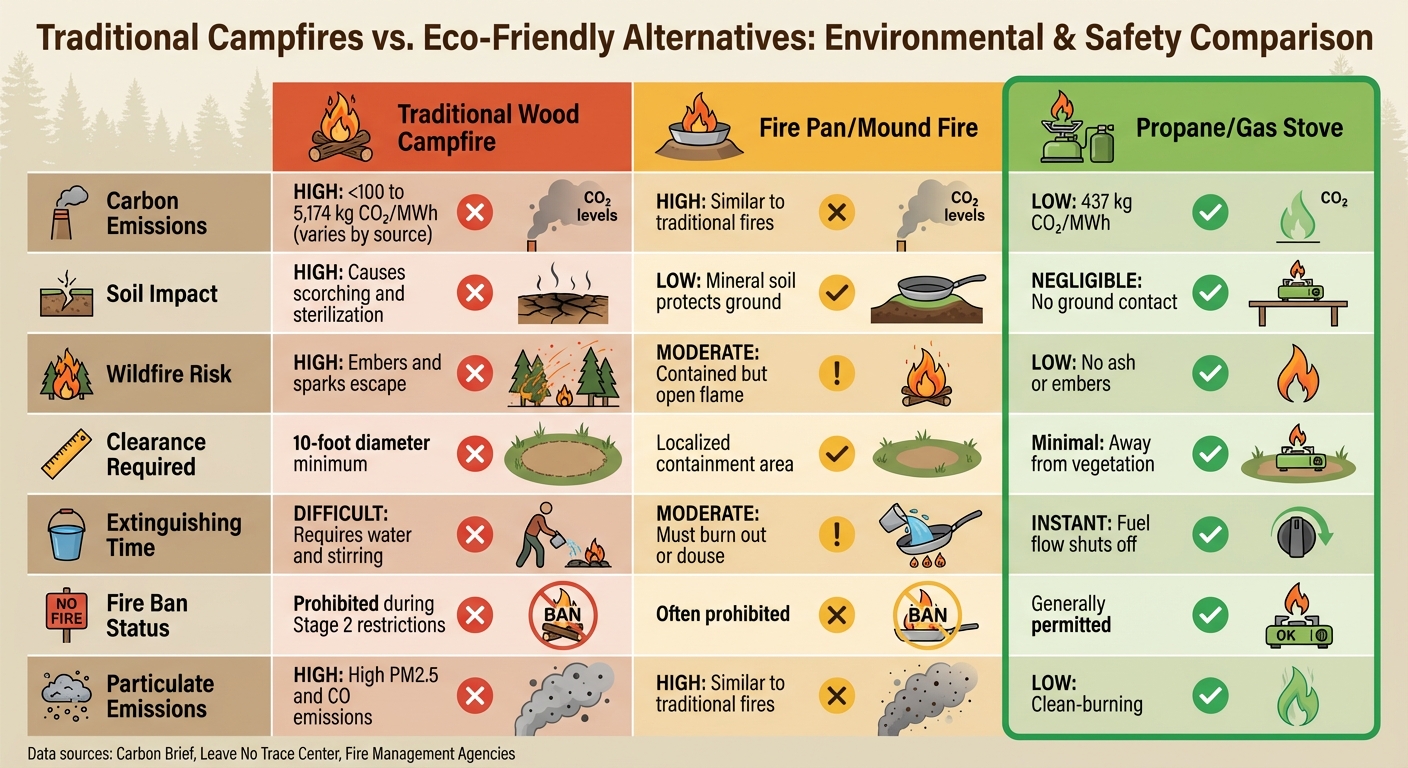
Traditional Campfires vs Eco-Friendly Alternatives: Environmental Impact Comparison
This section takes a closer look at how traditional campfires stack up against alternative methods, focusing on their environmental impact and safety considerations. Campfire emissions largely depend on the type of fuel used and how it’s processed, making wood-burning far from a truly carbon-neutral activity. While trees do absorb CO₂ as they grow, the actual emissions from burning wood include the energy costs of transportation, processing, and drying.
The type of wood used plays a major role in determining emissions. For instance, burning wood residues produces less than 100 kg CO₂/MWh, making it significantly cleaner than coal. On the other hand, wood sourced from harvested trees can release up to 5,174 kg CO₂/MWh. As Simon Evans from Carbon Brief explains:
In the cold northern forests of Canada it is usually lower carbon to leave coarse forest residue or trees killed by beetles to rot, because this happens slowly.
These differences in emissions also influence the safety of each method. Traditional campfires require a cleared 10-foot diameter area, pose a wildfire risk due to escaping embers, and are often banned during Stage 2 fire restrictions. In contrast, gas or propane stoves offer a safer alternative, with no embers or ash to worry about.
Interagency Fire Management Officer Jeff Bortner emphasizes the importance of fire safety:
We have already seen wildfires start throughout western Washington and these types of conditions are highly conducive to wildfires starting on the peninsula. By following these restrictions everyone can help reduce the risk of unintentional wildfires.
Comparison Table: Environmental and Safety Metrics
Here’s a breakdown of key environmental and safety factors for traditional campfires, fire pan/mound fires, and propane or gas stoves:
| Factor | Traditional Wood Campfire | Fire Pan/Mound Fire | Propane/Gas Stove |
|---|---|---|---|
| Carbon Emissions | <100 to 5,174 kg CO₂/MWh (varies by source) | Similar to traditional fires | 437 kg CO₂/MWh |
| Soil Impact | High; causes scorching and sterilization | Low; mineral soil protects ground | Negligible; no ground contact |
| Wildfire Risk | High; embers and sparks escape | Moderate; contained but open flame | Low; no ash or embers |
| Clearance Required | 10-foot diameter minimum | Localized containment area | Minimal; away from vegetation |
| Extinguishing Time | Difficult; requires water and stirring | Moderate; must burn out or douse | Instant; fuel flow shuts off |
| Fire Ban Status | Prohibited during Stage 2 restrictions | Often prohibited | Generally permitted |
| Particulate Emissions | High PM2.5 and CO emissions | High; similar to traditional fires | Low; clean-burning |
This comparison highlights the environmental and safety trade-offs between traditional and alternative fire methods, helping campers make informed choices that minimize risks and environmental harm.
Propane and Natural Gas: Low-Impact Options
Propane and natural gas provide cleaner-burning alternatives to traditional campfires, significantly cutting down on emissions. Unlike wood fires, which release heavy smoke and particulate matter, these fuels produce far fewer pollutants. This makes them a practical choice in areas where air quality concerns or wildfire risks restrict the use of open flames. Their lower environmental impact makes them appealing to campers who prioritize sustainable practices.
Propane, in particular, stands out for its energy efficiency and portability. With an impressive 2,516 BTUs per cubic foot – more than double the 1,030 BTUs of natural gas – propane allows campers to carry less fuel while still enjoying sufficient heat output. Chris Kauffman of Kauffman Gas highlights propane’s environmental benefits:
Propane doesn’t act as a GHG and is listed as a clean energy source under the 1990 Clean Air Act. When released into the air, it oxidizes quickly in sunlight or is removed via precipitation – causing no atmospheric harm.
Safety is another key advantage of propane. In the event of a leak, propane immediately vaporizes, preventing contamination of soil and water in sensitive areas. According to the Propane Education & Research Council, propane generates about 94% less carbon dioxide compared to diesel-powered alternatives. While natural gas emits slightly less CO2 during combustion, its main component, methane, has a much stronger greenhouse effect and higher emissions during extraction and distribution.
Propane’s tank-based storage also makes it a convenient option for remote locations, eliminating the need for pipelines. With over 84% of wildfires in the western United States caused by human activity, burn bans have become increasingly common. However, portable propane stoves and fire pits are typically allowed during these restrictions because they produce no embers or ash. This lets campers enjoy warmth and cooking without adding to wildfire risks, aligning with responsible outdoor practices.
Conclusion
Research highlights that campfire alternatives significantly reduce safety and environmental risks compared to traditional wood fires. Traditional campfires can damage soil, harm vegetation, and disrupt natural nutrient cycles. They also contribute to air pollution and broader ecological harm.
Switching to alternatives addresses these issues effectively. As Scouting America explains:
Stoves have become essential equipment for minimum-impact camping. They are fast, flexible, efficient, reliable, and clean burning, and they eliminate the need for firewood.
These alternatives, such as propane fire pits and portable stoves, perform well in nearly any weather and leave no lasting impact on the environment. They offer consistent heat and ambiance without the dangers associated with wood fires and remain an excellent option during burn bans.
FAQs
What are the environmental advantages of using propane stoves instead of traditional campfires?
Using propane stoves comes with clear benefits for both the environment and your outdoor experience. Propane burns as a clean and efficient fuel, releasing significantly less carbon dioxide (CO₂) and harmful smoke compared to traditional wood-burning campfires. This means fewer greenhouse gas emissions and less air pollution, making it a smarter choice for nature lovers.
Another advantage? Propane stoves eliminate the need to gather firewood. This helps protect forests and minimizes the ecological footprint of your camping trips. Opting for a propane stove allows you to enjoy the outdoors while being kinder to the planet.
How do fire pans and mound fires help protect the environment while camping?
Fire pans and mound fires offer eco-friendly alternatives to traditional campfires, helping preserve the soil and surrounding environment. A fire pan is essentially a portable metal tray that elevates the fire off the ground, preventing heat from harming the soil. To enhance protection, it’s usually lined with a few inches of sand, gravel, or mineral soil, which acts as an insulating layer. Similarly, a mound fire is built on a compacted base of sand or mineral soil, about 4–6 inches thick. This layer spreads out the heat, safeguarding the ground from being scorched or damaged.
These techniques also eliminate the need to clear vegetation or create permanent fire rings. By using small sticks and keeping fires contained, campers can help maintain the soil’s nutrients, protect wildlife habitats, and reduce erosion. Both fire pans and mound fires are reusable, easy to transport, and often meet campsite regulations across the U.S., making them a smart choice for those who care about preserving nature. You can enjoy a cozy fire while ensuring the land stays just as pristine as you found it!
Can I use propane or natural gas stoves during a burn ban?
Yes, you can use propane or natural gas stoves during a burn ban, but there are specific rules to follow. The stove must be a portable gas stove with an approved safety certification (like CSA or ULC) and must have a shut-off valve for added safety. It’s also crucial to adhere to local regulations, including keeping the stove at the required distance from combustible materials. In some cases, you may need to obtain a permit.
Make sure to review the most up-to-date rules in your area to stay compliant with fire restrictions and prioritize safety at all times.