Solar-Powered Gadgets For Emergency Kits
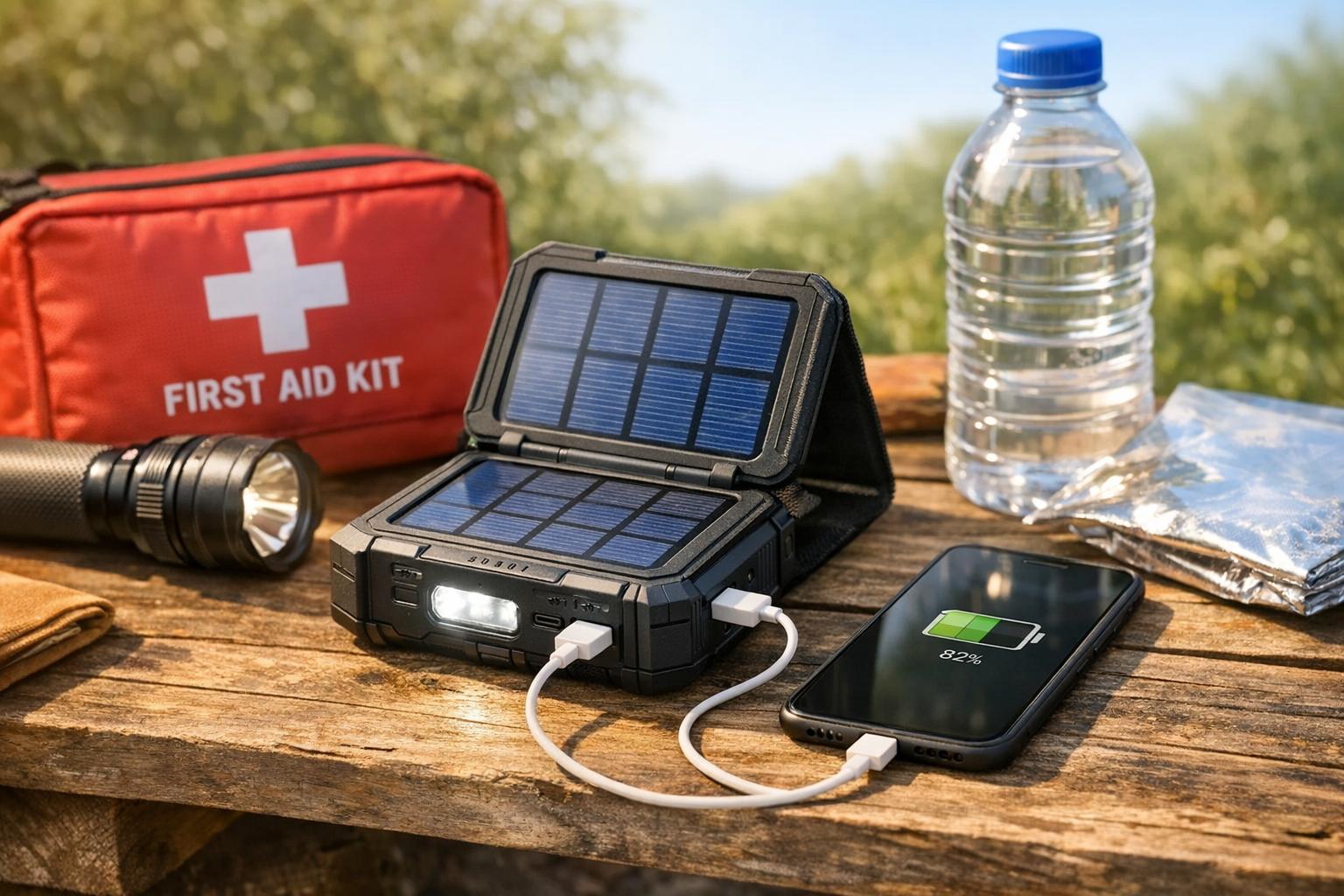
Solar-powered gadgets are game-changers for emergency preparedness. These devices provide reliable power when traditional sources fail, using sunlight to keep your essential tools running. Whether you’re facing a power outage or venturing into the wilderness, solar-powered gear ensures you stay connected, informed, and safe.
Key Takeaways:
- Power Independence: No need for disposable batteries or fuel. Solar gadgets offer clean, renewable energy.
- Portability: Lightweight and compact designs make them easy to carry in emergency kits.
- Durability: Many models are waterproof and rugged, built to withstand tough conditions.
- Versatility: Useful for charging phones, powering lights, or tuning into emergency broadcasts.
Popular Picks:
- Jackery SolarSaga 200W Panel: High-efficiency, foldable solar panel for larger energy needs.
- Kaito KA500 Voyager Radio: Multi-power weather radio with phone charging.
- XREXS Solar Car Flashlight: A flashlight with emergency tools like a seatbelt cutter and glass breaker.
- MPOWERD Luci Lantern: Collapsible solar lantern with phone charging capability.
Solar-powered devices are practical, eco-friendly, and essential for staying prepared. Equip yourself with the right gear, test it regularly, and store it in an accessible spot to ensure you’re ready for any situation.
Why Solar-Powered Gadgets Work Well for Emergency Kits
Renewable Energy Without the Need for Batteries or Fuel
Solar-powered gadgets harness the sun’s energy, offering a limitless power source without relying on stockpiled batteries or fuel. This not only eliminates the hassle of replacing or refueling but also cuts down on the chemical waste that comes from discarded batteries. Unlike gas-powered generators, which emit harmful fumes and require outdoor use, solar devices operate cleanly and safely with zero emissions.
Today’s solar panels offer impressive efficiency, ranging from 10%–20%, with premium models reaching up to 24.3%. Paired with LiFePO4 batteries capable of up to 6,500 charge cycles, these devices are built to last and deliver consistent energy when you need it most.
Lightweight and Easy to Pack
Solar gadgets shine when it comes to portability. Many fold down to compact sizes – some as small as a wallet – or collapse to about an inch thick, making them perfect for slipping into backpacks or emergency kits. For instance, a lightweight 14W solar charger can weigh just 12.8 ounces, and collapsible lanterns like the MPowerd Luci are designed to pack flat for easy storage. Some models even feature built-in loops or carabiners, letting you attach them to your pack while hiking.
On top of their portability, many solar-powered gadgets are built tough. With IP67 ratings, they’re dustproof and waterproof, ready to handle rain and rugged conditions. This combination of durability and convenience makes them a must-have for both everyday carry and emergency preparedness.
Reliable Power When the Grid Fails
Solar devices become lifesavers during power outages or in remote areas. In disasters like Hurricane Maria and the Nepal earthquake, solar generators provided essential power when fuel and traditional energy sources were unavailable. Their ability to function independently of fuel stations or the grid makes them an essential part of eco-friendly emergency kits.
"Access to a renewable source of energy is the main benefit of solar generators in an emergency. Solar generators can run as long as there are solar panels to charge them – no refueling required." – DJI
Another benefit is their simplicity. Unlike traditional generators with numerous moving parts, solar devices have fewer mechanical components, reducing the risk of breakdowns and cutting down on maintenance. While a full charge typically requires 6–12 hours of sunlight, modern models can achieve a full AC charge in less than 2 hours, ensuring you’re ready for anything.
7 Amazing Outdoor Solar-Powered Gadgets & Gear on Amazon
Best Solar-Powered Gadgets for Your Emergency Kit
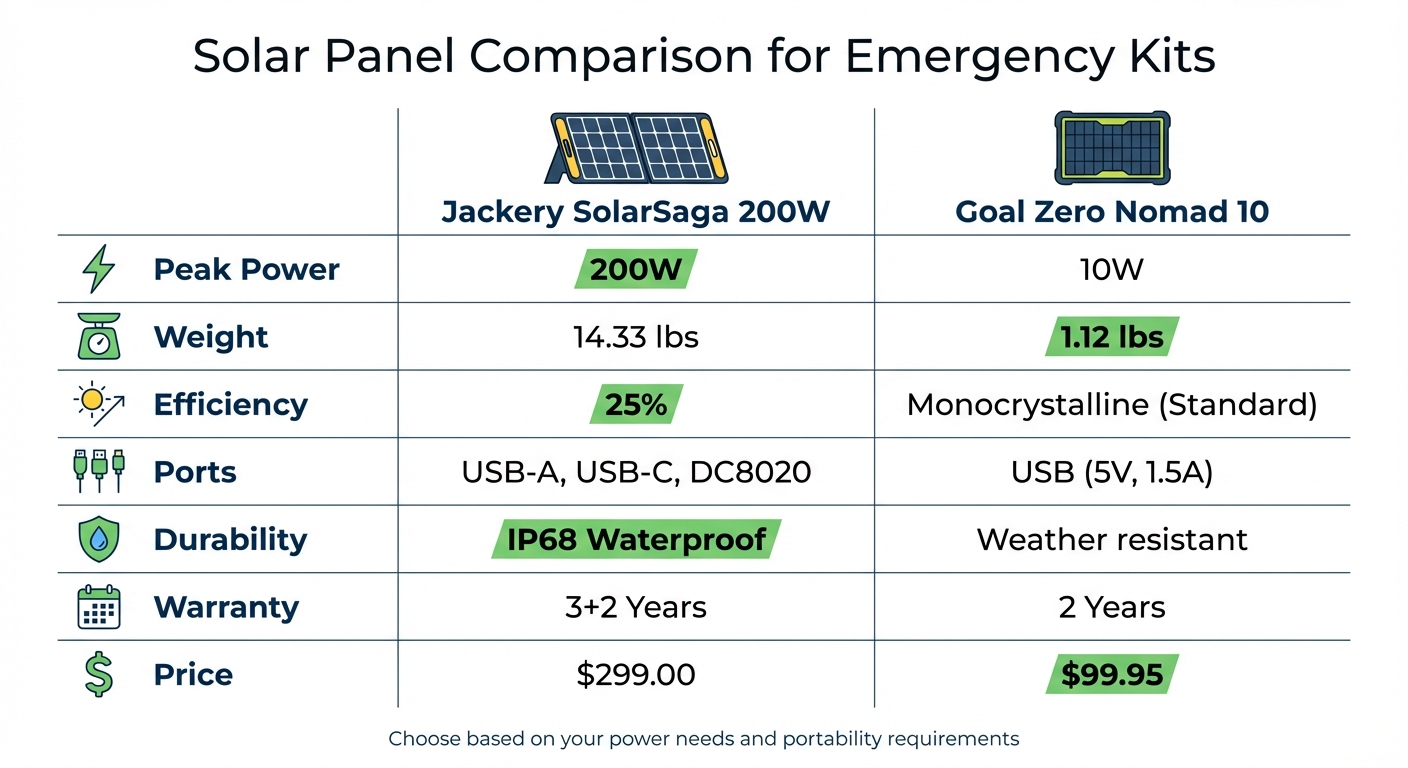
Solar Panel Comparison: Jackery SolarSaga 200W vs Goal Zero Nomad 10
Here’s a rundown of some highly-rated solar-powered gadgets that combine renewable energy with portability and durability – perfect for your emergency kit.
Jackery SolarSaga 200W Solar Panel
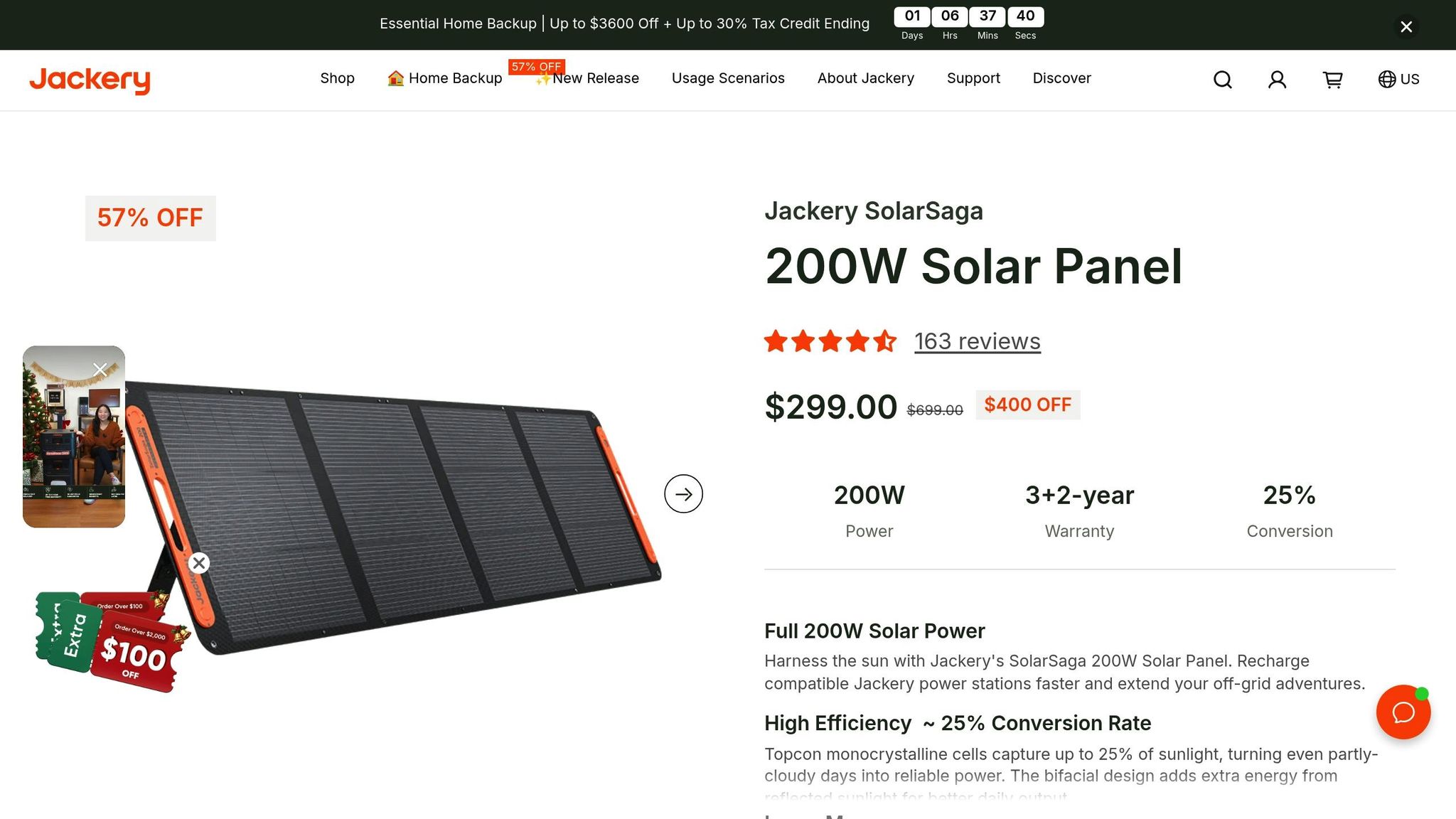
The Jackery SolarSaga 200W is a powerhouse for emergency energy needs. With monocrystalline cells boasting 25% efficiency, it generates 800–1,000Wh on sunny days, making it capable of running a 12V camping fridge when paired with a compatible power station. Despite its impressive output, it’s designed for portability, weighing just 14.33 lbs and folding neatly for transport. Plus, its IP68 waterproof rating ensures it’s dustproof and can handle full water immersion.
The panel includes USB-A, USB-C, and DC8020 ports, allowing you to charge multiple devices at once. Currently available for $299.00 (down from $699.00), it has received a 4.73/5 rating from 163 users who value its ability to charge power stations even in less-than-ideal sunlight. The addition of bifacial technology, which captures light on both sides of the panel, further enhances its efficiency.
| Feature | Jackery SolarSaga 200W | Goal Zero Nomad 10 |
|---|---|---|
| Peak Power | 200W | 10W |
| Weight | 14.33 lbs | 1.12 lbs |
| Efficiency | 25% | Monocrystalline (Standard) |
| Ports | USB-A, USB-C, DC8020 | USB (5V, 1.5A) |
| Durability | IP68 Waterproof | Weather resistant |
| Warranty | 3+2 Years | 2 Years |
| Price | $299.00 | $99.95 |
Now, let’s talk about staying connected during emergencies.
Kaito KA500 Voyager Solar Radio
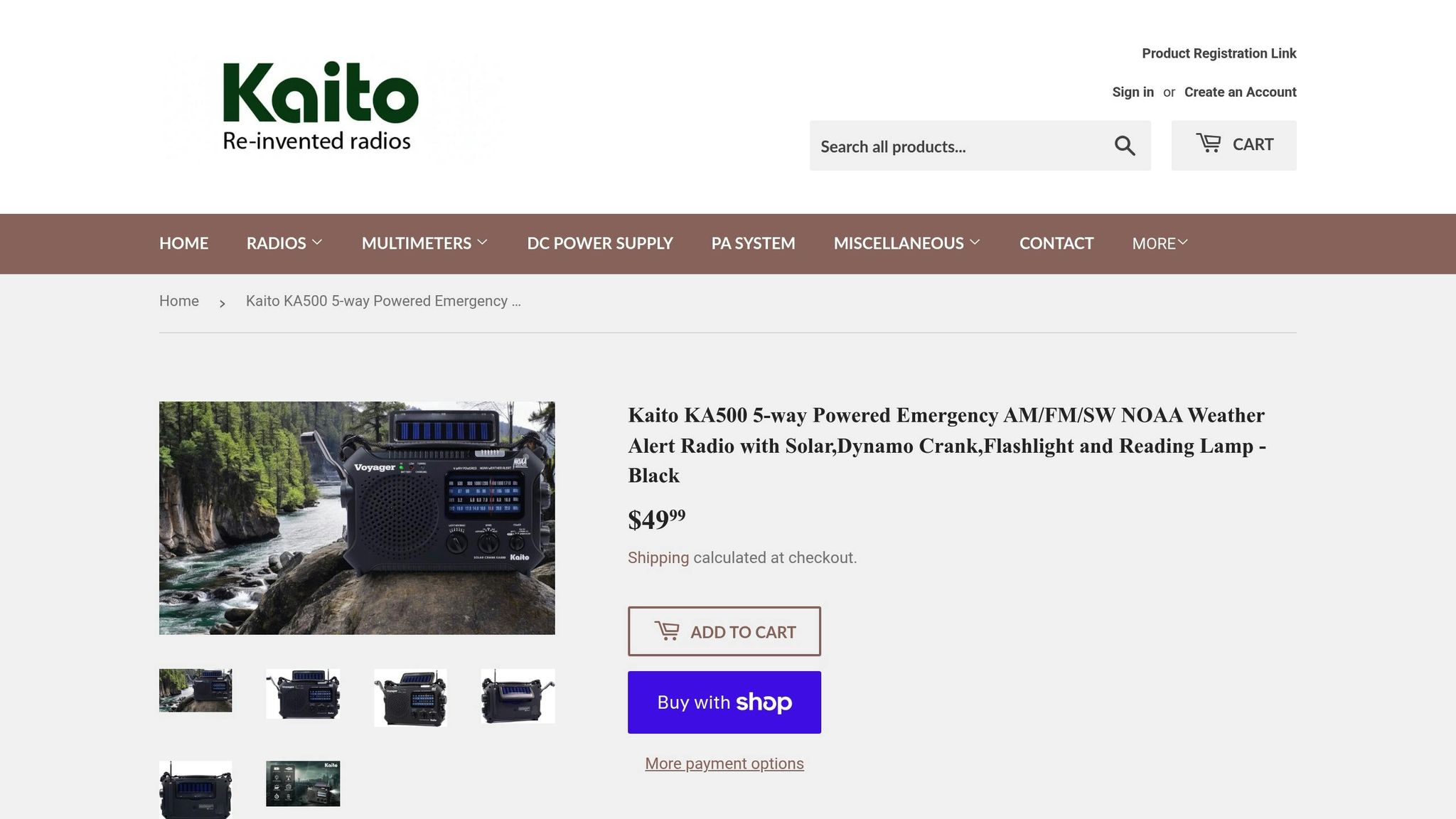
The Kaito KA500 Voyager ensures you stay informed when traditional communication channels fail. This emergency radio offers five power options: solar, hand crank, AA batteries, AC adapter, and USB. With these, you’ll always have access to NOAA weather alerts and AM/FM radio. A single minute of cranking provides 10 minutes of light, making it a reliable tool for outages.
This radio also features a built-in flashlight and a USB port for phone charging, ensuring you can stay connected and informed during emergencies.
For vehicle-specific emergencies, the next gadget is a must-have.
XREXS Solar Powered Car Flashlight
The XREXS Solar Powered Car Flashlight is a multi-functional tool designed for vehicle emergencies. It combines a solar-rechargeable flashlight with a seatbelt cutter and a glass breaker – essential for handling critical situations on the road. It also doubles as a power bank, allowing you to charge your phone with stored solar energy. Compact and practical, it’s a device you’ll want within arm’s reach in your car.
Collapsible Solar Lantern (MPOWERD Luci)
The MPOWERD Luci Charge 360 is a compact lighting solution that’s perfect for tight spaces in emergency kits. Providing 360 lumens of brightness, it collapses to just 1.5 inches thick for easy storage. Its inflatable and collapsible design, paired with an IP67 waterproof rating and a 4,000mAh battery, ensures reliable lighting and phone charging capabilities.
With a price range of $50.00 to $70.00, the Luci offers up to 24 hours of light on its lowest setting and can even function as an emergency beacon . It’s rated 4.6/5 by users who love its brightness and portability. Fully solar-charged, it’s a versatile addition to any emergency setup.
"Modern solar technology has achieved efficiency levels that make renewable camping power practical – today’s panels and batteries actually deliver usable energy."
– JC Courtland, Outdoor Gear Expert
sbb-itb-289f5f2
How to Build and Care for Your Solar-Powered Emergency Kit
Choosing the Right Gear for Your Needs
To assemble a reliable solar-powered emergency kit, you’ll need to pair a solar panel with a power bank or station, along with the gadgets you plan to power. For simple tasks like charging a phone or running small lights, a 10W–20W solar panel combined with a portable power bank will do the trick. For more demanding needs, such as powering laptops or small appliances, you’ll want a 40W–100W+ panel and a higher-capacity power station.
Your choice of gear should match your lifestyle. Backpackers will benefit from lightweight panels weighing just 7–13 ounces, while home or car kits can include larger panels ranging from 28W to 100W+. If you live in an area with unpredictable weather or limited sunlight, opt for a solar charger rated slightly above your power requirements. This ensures you’ll have enough energy, even on cloudy days when efficiency drops.
Testing Your Equipment Before It’s Needed
Regular testing is critical to ensure your kit works when you need it most. Keep your battery packs fully charged using a wall outlet before any severe weather hits – solar charging should serve as a backup. Make it a habit to check battery levels every six months. A USB multimeter can help you measure voltage and current under direct sunlight. For the best results, position your solar panel perpendicular to the sun and adjust the angle throughout the day.
Keep in mind that real-world performance often falls short of the manufacturer’s claims. You can generally expect a 25% to 50% drop from the advertised wattage.
"Since batteries can lose some power naturally when not in use, we recommend checking batteries every 6 months to make sure that they are full." – Voltaic Systems
By testing your equipment regularly, you’ll ensure it’s ready for action when emergencies arise.
Storing Your Kit for Easy Access
Proper storage is just as important as selecting the right gear. Keep your kit in a central, easily accessible location, and aim to keep its weight between 10 and 20 pounds for portability. Store it in a cool, dry place to maintain its performance. When using your kit, avoid placing solar panels on hot surfaces and ensure there’s adequate airflow to maximize efficiency. Compact, collapsible items – like the MPOWERD Luci lantern – are great for saving space.
With the right storage and care, your solar-powered emergency kit will be ready to provide renewable energy whenever you need it.
Conclusion
Solar-powered gadgets are a smart addition to any emergency kit, offering energy independence and portability. By tapping into renewable energy, these devices ensure crucial tools like GPS units, phones, and emergency radios stay operational when it matters most.
Thanks to advancements in solar technology, today’s panels deliver reliable performance, making them a practical choice for emergency power. They cut out the need for traditional grids or disposable batteries, providing steady energy during outdoor adventures or unexpected power outages.
Building a solar-powered emergency kit doesn’t have to break the bank. Whether you’re starting with a few basics or creating a more extensive backup system, this approach not only boosts your preparedness but also aligns with eco-conscious living.
The most important step is to act now. Gather the right combination of solar panels, power banks, and devices tailored to your needs. Test your equipment in advance, and check battery levels every six months to ensure everything is ready to go when you need it. With regular maintenance and proper storage – covered in earlier sections – you’ll have a dependable, grid-free power solution to keep you connected and safe in any situation.
FAQs
Do solar-powered gadgets work on cloudy days?
Yes, solar-powered gadgets can still function on cloudy days, though their performance takes a noticeable hit. Solar panels use photovoltaic cells to convert both direct and indirect sunlight into electricity. This means they can still generate power under overcast skies, but the output typically drops to around 5–10% of their normal capacity. The reason? Clouds scatter and absorb a significant portion of the sunlight.
To stay prepared during cloudy weather, it’s a good idea to fully charge a solar power bank or battery pack on sunny days. This way, you have stored energy ready to go when sunlight is scarce. For emergency kits, consider pairing a small solar panel (around 5–10 watts) with a 10,000 mAh power bank. This combination can keep essential devices like smartphones or LED lanterns running for several days, even when the weather doesn’t cooperate.
How do I maintain a solar-powered emergency kit?
Maintaining your solar-powered emergency kit is straightforward and ensures it’s always ready when you need it. Start by giving your solar panels a good cleaning at least twice a year to clear off dust, pollen, or debris that can interfere with their performance. If you spend a lot of time camping or hiking in dusty areas, you might want to clean them every three months. While cleaning, take a moment to inspect the panels for cracks, loose parts, or any signs of corrosion. And don’t forget – make sure they’re completely dry before putting them back in place.
When it comes to the solar generator or power station, a quick wipe with a soft, slightly damp cloth will help prevent dust buildup and keep it from overheating. Keep the vents free from obstructions to allow proper airflow, and store the unit in a dry, temperature-controlled spot – ideally between 50°F and 80°F. For the battery, it’s a good idea to fully charge it and then let it discharge to about 20% every few months. Before using it, check the terminals for any signs of corrosion.
To stay organized, consider keeping a small log where you can jot down cleaning dates, battery cycles, and inspection notes. This way, you’ll never miss a step, and your kit will always be ready for your next outdoor trip or emergency.
Can solar-powered gadgets replace traditional emergency power sources?
Solar-powered gadgets can be incredibly useful during emergencies, offering essential lighting and the ability to charge small devices – as long as sunlight is available. Their effectiveness, however, depends on clear skies, and their limited energy storage means they’re not ideal for running larger appliances or meeting long-term energy demands.
That said, these devices are a smart addition to any emergency kit. To cover all your bases, it’s best to combine them with other power sources, like generators or backup batteries, for a more reliable and versatile setup.