Ultimate Guide To Responsible Wildlife Tourism
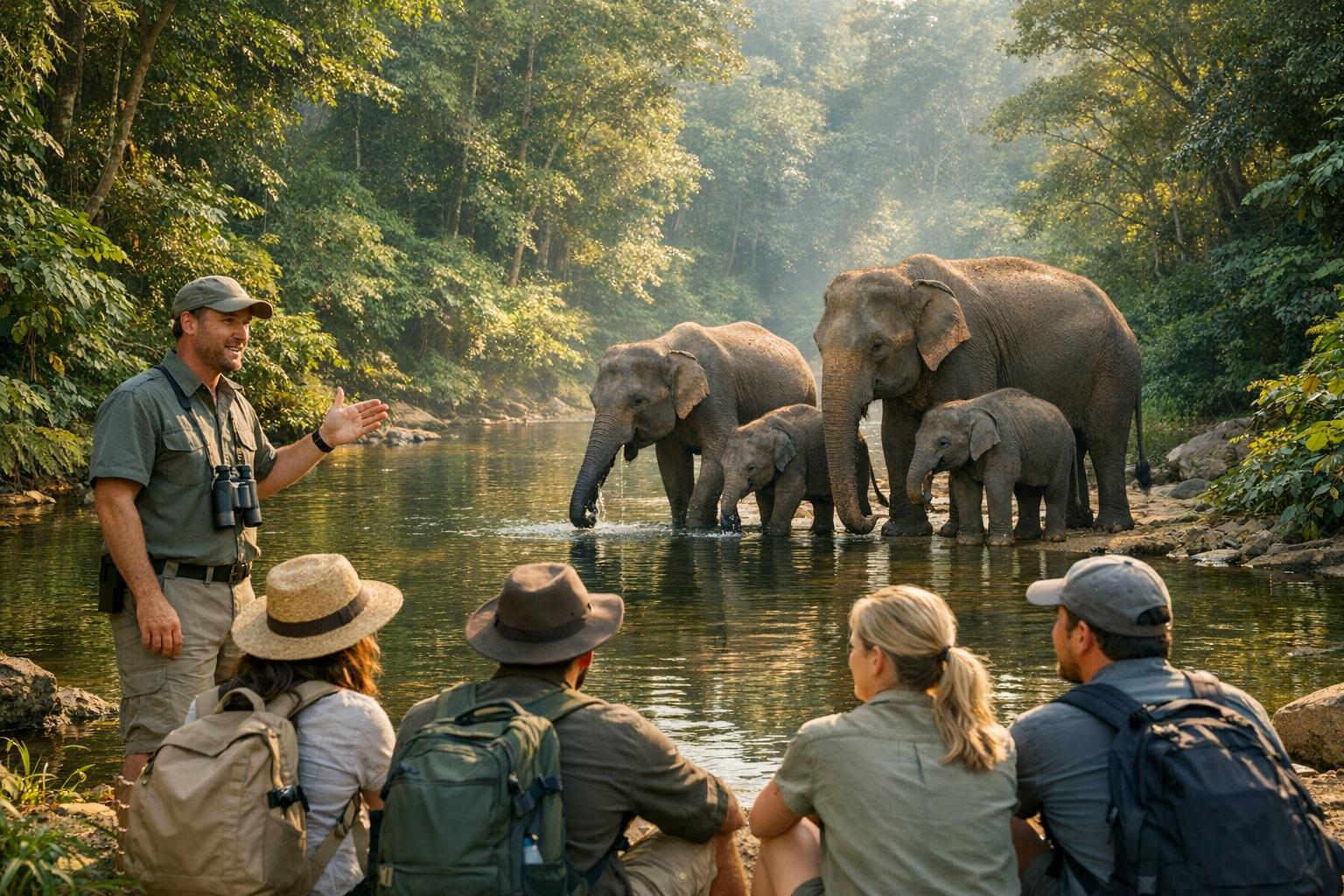
Wildlife tourism can be ethical, but only if done right. Here’s how you can enjoy observing animals while protecting their welfare and habitats:
- Respect animals: Avoid touching, feeding, or taking selfies with wildlife. Always maintain a safe distance (e.g., at least 65 feet for most species).
- Choose ethical operators: Look for certifications (GFAS, AZA, GSTC), clear conservation policies, and no guarantees of animal sightings. Avoid tours that allow direct interaction or animal performances.
- Support conservation: Donate to organizations like WWF, volunteer for ethical programs, or visit national parks to directly fund protection efforts.
- Minimize your impact: Use reef-safe sunscreen, avoid single-use plastics, and stay on marked trails to protect ecosystems.
- Advocate for change: Report unethical practices, avoid harmful social media trends, and share your ethical travel experiences to inspire others.
Making informed choices ensures wildlife remains wild and communities benefit from tourism. Let’s dive deeper into how you can travel responsibly and make a difference.
Ethical Guidelines for Wildlife Tourism
Prioritizing Animal Welfare
When it comes to wildlife tourism, animal welfare should always take precedence. The "five freedoms" serve as a global benchmark for ethical animal treatment, emphasizing freedom from hunger, discomfort, pain, fear, and restricted natural behaviors. Practically, this means avoiding direct interaction with animals and maintaining a safe distance – at least 65 feet – to allow them to act naturally. Daniel Turner from Born Free highlights this approach:
"If you’re looking at it from the animal’s perspective, it’s better to see them in the wild to see them expressing and behaving naturally".
Feeding wildlife is especially damaging, as it can lead to dependency and disrupt vital behaviors like migration and breeding. In extreme cases, animals that rely too heavily on human-provided food or become aggressive may face euthanasia by authorities. Even marine wildlife isn’t exempt from harm. Jack Fishman of PADI Aware Foundation explains:
"Our touch can be destructive to marine species, from introducing bacteria to destroying protective layers of skin. And our touch can be extremely stressful".
These principles of prioritizing animals’ well-being naturally align with efforts to support local communities and reduce environmental harm.
Respecting Local Communities
Ethical wildlife tourism also means respecting and uplifting local communities. Tourism is a key source of income for protected areas worldwide. By choosing tour operators that employ local residents, you contribute to creating financial incentives for communities to conserve wildlife rather than resort to poaching or other harmful practices.
You can further support local economies by purchasing sustainable, locally made goods instead of items crafted from animal parts, such as ivory, coral, shells, or products like "snake wine". Additionally, respecting local customs is vital. Research traditions before your trip and always ask for permission before taking photos of local people.
Reducing Human Impact
Minimizing your environmental footprint is another key aspect of ethical wildlife tourism. Following "Leave No Trace" principles – like staying on designated trails and roads – helps protect delicate ecosystems. Even small actions, such as stepping on coral reefs, can cause lasting damage, as coral grows only a few centimeters each year.
Practical ways to reduce your impact include using reef-safe sunscreen, cutting down on single-use plastics, and disposing of waste responsibly. Avoid taking natural items like shells or rocks, as even small disruptions can upset ecosystems and harm wildlife. By reducing your footprint, you help ensure the health of ecosystems that both animals and local communities rely on.
Ethical Wildlife Tourism With Kristen Diederich
How to Interact Responsibly with Wildlife
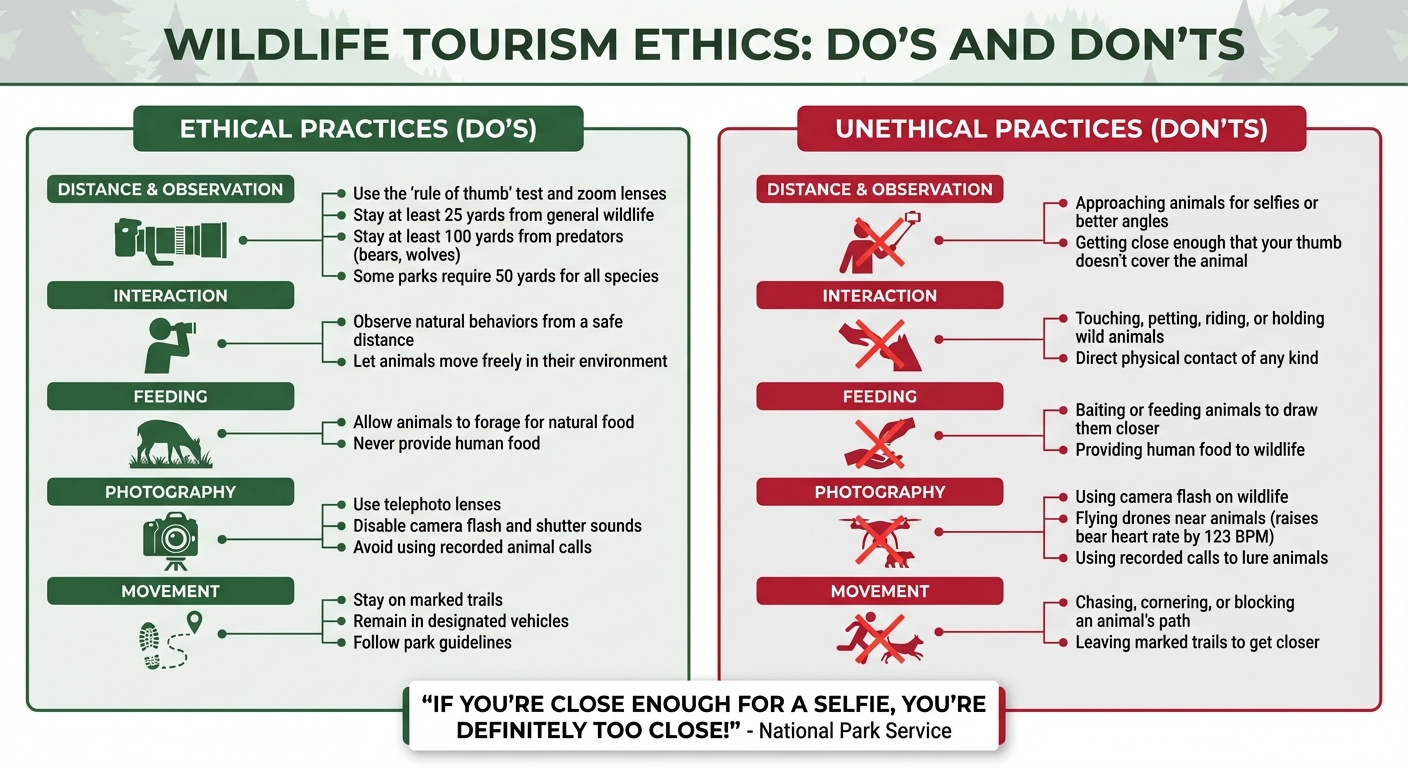
Wildlife Tourism Ethics: Do’s and Don’ts for Responsible Animal Encounters
Respecting wildlife requires more than admiration – it involves thoughtful actions that ensure both your safety and the well-being of the animals. These practical tips can help you engage with wildlife responsibly.
Keeping a Safe Distance
Always maintain a safe distance from animals to avoid causing stress or harm. If you notice an animal retreating, pausing its activity, or appearing alert, it’s a clear sign to back away immediately. Most parks have specific guidelines: stay at least 25 yards from general wildlife and 100 yards from predators like bears and wolves. Some places, like Olympic National Park, require a 50-yard distance for all species.
An easy way to check your distance is the "thumb test." Extend your arm and give a thumbs-up. If your thumb doesn’t completely cover the animal, you’re too close and need to step back. The National Park Service sums it up perfectly:
"If you’re close enough for a selfie, you’re definitely too close!"
Never Feed or Touch Animals
Feeding or touching wildlife might seem harmless, but it can disrupt their natural behaviors and lead to serious consequences. When animals associate humans with food, they lose their natural foraging instincts and can become aggressive. Sadly, this often results in relocation or euthanasia by wildlife managers. Additionally, human food is not suitable for animals and can spread diseases between humans and wildlife.
Touching animals is equally harmful. For example, marine species can lose protective skin layers or contract bacterial infections from human contact. Animals used in tourism, like sloths, often suffer immensely; many die within six months due to stress and poor conditions. If you’re looking for hands-on interaction, consider volunteering at a local animal shelter instead. This way, you can make a positive impact without harming wildlife.
Ethical Photography Practices
Capturing stunning wildlife photos doesn’t require disturbing animals. Use a telephoto lens, turn off your flash and shutter sounds, and avoid using recorded calls to lure animals. These calls can stress wildlife and disrupt their natural behaviors.
Beverly Joubert, a National Geographic photographer, highlights the importance of respect:
"The ethics of photography are the same as the ethics of life, and all revolve around respect".
Leave the environment as you found it – don’t alter it for a better shot. Even seemingly harmless tools like drones can cause significant stress. Research has shown that drones can raise a black bear’s heart rate by 123 beats per minute, even if the bear appears calm outwardly. Ethical photography ensures both the safety of wildlife and the integrity of their environment.
Do’s and Don’ts for Wildlife Encounters
Here’s a quick reference table to guide your interactions with wildlife:
| Practice | Ethical (Do) | Unethical (Don’t) |
|---|---|---|
| Distance | Use the "rule of thumb" and zoom lenses | Approach for selfies or better angles |
| Interaction | Observe natural behaviors from afar | Touch, pet, ride, or hold wild animals |
| Feeding | Let animals forage for natural food | Bait or feed animals to draw them closer |
| Photography | Use telephoto lenses and disable flash | Use flash or drones that disturb wildlife |
| Movement | Stay on marked trails and in vehicles | Chase, corner, or block an animal’s path |
sbb-itb-289f5f2
How to Choose Ethical Wildlife Tour Operators
Selecting the right wildlife tour operator is essential to ensuring both the welfare of animals and the well-being of local communities. Here’s how to make informed choices that align with ethical travel practices.
How to Research Tour Operators
Start by checking the operator’s website for a section dedicated to sustainability. Ethical operators will clearly outline their policies and practices regarding animal welfare. Look for third-party certifications, such as GFAS, AZA, or GSTC, which validate their commitment to ethical standards.
Dive into online reviews, especially on platforms like TripAdvisor. Pay close attention to one- and two-star reviews, as these often highlight concerns about animal welfare. Also, observe how the operator responds to criticism. A thoughtful and constructive reply often signals a genuine effort to improve. This research helps you identify businesses that prioritize conservation and responsible practices.
Before booking, ask direct questions like:
- Where do the animals come from?
- What percentage of profits supports conservation efforts?
- Is there a rehabilitation and release program?
Jim Sano, Vice President of Travel, Tourism, and Conservation at the World Wildlife Fund, emphasizes the importance of such inquiries:
"If you see those things [sustainability behaviors], it’s a good indication they made a commitment and more likely than not follow the rules of the protected area".
Additionally, ethical operators often engage local communities by providing jobs and alternative income sources. This not only supports the community but also reduces incentives for poaching or habitat destruction.
Red Flags to Avoid
Certain practices are immediate red flags when evaluating tour operators. For instance, guarantees of animal sightings are problematic. Such promises often mean animals are baited, fed, or confined for the sake of tourist satisfaction. Ethical operators respect the autonomy of wildlife and avoid such guarantees.
Hands-on interactions, such as petting, riding, or bathing animals, are another major warning sign. Audrey Mealia, Global Head of Wildlife at World Animal Protection, explains:
"Any elephant that you can get close enough to touch is an elephant that’s been subjected to horrific abuse for this use".
Be wary of misleading terms like "sanctuary" or "rescue." Some facilities use these labels while continuing exploitative practices, such as allowing close interactions or animal performances. Similarly, if animals are made to perform tricks, participate in staged shows, or serve as photo props, it’s a clear indication of unethical treatment. With over 350 "eco-travel" labels in circulation, it’s important to scrutinize claims carefully.
| Red Flags (Avoid) | Green Flags (Support) |
|---|---|
| Guaranteed animal sightings | "No guarantees" policy that respects animal autonomy |
| Hands-on contact (petting, riding, bathing) | Observation from a safe distance |
| Animals performing unnatural behaviors/shows | Naturalistic enclosures that mimic wild habitats |
| Animals used as photo props | Accreditation by GFAS, AZA, or GSTC |
Supporting Conservation-Focused Operators
Avoiding unethical practices is just one part of responsible wildlife tourism. Choosing operators with strong conservation ties takes your impact a step further. Those who partner with conservation organizations and reinvest profits into local projects demonstrate a genuine commitment to protecting wildlife and supporting communities.
Ethical wildlife tours often come with a higher price tag, as they limit guest numbers to minimize environmental impact. These operators also channel proceeds into vital areas like conservation efforts, veterinary care, and community development. While it might cost more, this reflects the true expense of responsible tourism – and it’s a worthwhile investment in the future of our planet.
How to Support Wildlife Conservation
Supporting wildlife conservation is something you can do all year, not just when traveling. Donations, volunteering, and advocacy play a big role in protecting endangered species and preserving their habitats. These efforts go hand in hand with ethical travel, ensuring your impact lasts long after your trip ends. A great starting point? Contribute financially to trusted conservation projects.
Donating to Conservation Projects
Donations are the lifeblood of conservation work worldwide. Organizations like the World Wildlife Fund (WWF) and the International Fund for Animal Welfare (IFAW) rely on these funds for their initiatives, with 83% of WWF donations directly supporting conservation and animal rescue efforts.
Some groups offer symbolic animal adoptions to help specific species, such as elephants or tigers. These programs often include updates about the animals and details on how your donation is making a difference. As the WWF emphasizes:
"Every dollar you give makes a difference for nature".
Another way to contribute is by paying entrance fees to national parks and wildlife reserves. These fees directly fund the upkeep of protected areas and the species that live there. With 8 billion visits to protected areas annually generating up to $600 billion in tourism spending, this funding stream is vital. Before booking a safari or tour, ask the operator how much of your fee supports local conservation or community projects.
You can also back investigative journalism projects like National Geographic’s "Wildlife Watch," which exposes unethical wildlife practices and drives policy changes. Supporting such initiatives helps hold exploitative actors accountable while raising awareness about critical issues.
Volunteering for Wildlife Programs
Volunteering offers a hands-on way to support conservation efforts. Whether you’re tracking wildlife in the field or helping rehabilitate injured animals, your time can make a real difference. Opportunities range from field research in national parks to working at wildlife sanctuaries. Volunteers often assist with data collection, monitor endangered species, and help local communities develop sustainable alternatives to poaching.
Before signing up, ensure the program follows ethical guidelines. Legitimate programs won’t allow activities like posing for photos, washing, or riding animals, and they avoid breeding captive animals. Make sure the organization is a legally registered non-profit or social enterprise with transparent financial practices.
Be wary of "pay to play" facilities that accept volunteers without proper screening. As wildlife rehabilitator Karen Trendler points out:
"Your time is a donation, and if volunteers are not paying, the facility has a greater ability to move them out if they’re not suitable for a care team or the animals".
Reputable programs typically require an application process and some form of training. Ask questions about the animals’ origins and their future – whether they’ll be released into the wild or remain in permanent care. Look for accreditation from recognized organizations like EAZA, AZA, WAZA, or Blue Flag for marine activities. Programs that employ local residents also create economic incentives for communities to protect wildlife instead of turning to poaching.
Advocating for Ethical Practices
Your voice can influence the wildlife tourism industry. If you see animals being mistreated, speak up and address the issue with the operator. Report any abuse or irresponsible behavior to local authorities or conservation organizations.
Social media is another powerful tool. Share your ethical travel experiences and call out content that promotes animal cruelty. Ben Pearson, Senior Campaign Manager at World Animal Protection, advises:
"Raising awareness of poor animal treatment is one of the best things people can do to stop it".
Avoid engaging with content that features animal cruelty, such as wildlife selfies or animals performing tricks. Instead, report such posts to the platform. Instagram, for instance, has flagged hashtags like #slowlorisselfie and #slothselfie to warn users about the harm these trends cause by fueling poaching.
Travel review platforms like TripAdvisor are also effective. Use them to highlight animal welfare concerns or commend operators who prioritize ethical practices. These reviews can influence other travelers and push the industry toward better standards. As Natasha Daly from National Geographic explains:
"When travelers decide they want humane treatment of animals, the wildlife tourism market will change for the better".
Spread the word about genuine sanctuaries and conservation-focused tourism within your circle to help raise their profile. Opt for tours that employ local residents, creating financial incentives for communities to protect wildlife. Sara Campanales, a biologist with Impactful Travel, sums it up well:
"The greatest way to show your love for animals is by observing them wild and free, and supporting their conservation through locally-led responsible tourism".
Conclusion
Main Points to Remember
Ethical wildlife observation starts with respecting the animals’ space and prioritizing observation over interaction. Wild animals aren’t here for our entertainment, so the best way to appreciate them is in their natural habitats or at reputable sanctuaries that focus solely on observation. Avoid activities like touching, riding, or taking selfies with wild animals. The same principle applies to feeding wildlife – it disrupts natural behaviors, fosters dependency on humans, and can lead to aggression or changes in breeding and migration patterns. When evaluating tour operators, dig deeper than flashy marketing. Check reviews, especially lower-rated ones on platforms like TripAdvisor, to uncover potential animal welfare concerns.
Every decision you make as a traveler carries weight. Opting for locally owned accommodations and guides ensures that tourism dollars benefit the community directly. This not only helps protect wildlife but also reduces the economic drivers of poaching. These small but meaningful actions lay the groundwork for ethical travel.
Making a Positive Impact
By following these principles throughout your travels, you actively contribute to ethical wildlife tourism and conservation efforts. Be deliberate in your choices. Select operators with strict "no guarantee" sighting policies and reputable accreditations such as WAZA, AZA, or EAZA. When photographing wildlife, keep it ethical – capture animals in their natural environments, from a safe distance, and without disrupting their freedom to move.
Your influence doesn’t end when your trip does. Share your ethical travel experiences on social media and report any signs of animal mistreatment through trusted channels. Natasha Daly from National Geographic emphasizes this point:
"When travelers decide they want humane treatment of animals, the wildlife tourism market will change for the better".
Every thoughtful choice you make helps raise industry standards and safeguards wildlife for future generations.
FAQs
How can I choose a responsible wildlife tour operator?
When selecting a wildlife tour operator, it’s essential to focus on those that prioritize both animal welfare and conservation. Ethical operators avoid activities that harm animals, such as rides, physical contact, or photo sessions with wildlife – practices often rooted in cruelty or exploitation. Instead, they should have clear policies on animal care, ensuring that animals are well-fed, have clean water, and live in spaces that allow them to move and behave naturally. Look for certifications from organizations like the Global Sustainable Tourism Council (GSTC) or partnerships with conservation groups, as these can signal a commitment to ethical practices.
Before booking, take time to read recent guest reviews and don’t hesitate to ask the operator direct questions. For example, you might ask, “Where do the animals come from?”, “How does my fee contribute to conservation?”, or “What kind of training do your guides receive?” Responsible operators will be open about their practices and show how their tours positively impact local communities and the environment. Whenever possible, choose experiences that let you observe animals in their natural habitats – like safaris, whale-watching trips, or snorkeling adventures – rather than visiting attractions with captive animals.
What are the warning signs of unethical wildlife tourism?
Unethical wildlife tourism often takes advantage of animals for human enjoyment, ignoring their natural behaviors and well-being. Activities like riding elephants, petting tiger cubs, or swimming with dolphins might seem appealing, but they often come at a high cost to the animals. Many of these experiences involve harsh training practices or force animals to live in unnatural and harmful conditions.
When visiting wildlife attractions, take note of the animals’ living conditions and behavior. Warning signs include animals that appear malnourished, exhibit stress behaviors like pacing or constant vocalizing, or are confined to small, dirty spaces. Also, steer clear of tours that encourage disruptive actions, such as approaching animals too closely, making loud noises, or chasing them.
Transparency is another critical factor. Ethical operators will openly share how their activities support conservation efforts and provide clear information about the origins of their animals. If this information is vague or unavailable, it’s a good idea to search for a more responsible alternative. Choosing wisely helps protect wildlife and ensures tourism doesn’t contribute to their suffering.
What are the best ways to reduce my environmental impact when observing wildlife?
Reducing your impact on the planet while enjoying wildlife starts with making thoughtful choices. Look for tours and activities that respect animal welfare and allow wildlife to stay in their natural habitats. Experiences like safaris, whale-watching, or snorkeling are great options. Steer clear of attractions involving captive animals or those that encourage direct interactions. When you’re there, keep a safe distance from animals, resist the urge to feed or touch them, and always stick to marked trails to avoid disturbing their environment.
Pack smart to cut down on waste. Bring reusable essentials like a stainless-steel water bottle, cloth bags, and a refillable travel mug. For protecting ecosystems, opt for biodegradable sunscreen and insect repellent. When it comes to transportation, choose public transit, carpooling, or fuel-efficient vehicles whenever possible. If flying is unavoidable, consider offsetting your carbon emissions through a trustworthy program. Lastly, give back to the community and conservation efforts by donating, buying locally made products, or volunteering your time. These small steps can leave a lasting, positive impact.