
Ultimate Guide to Sustainable Camping Gear
Camping gear has come a long way in reducing its impact on nature. With more people camping every year, the need for eco-friendly options has grown. Today, you can find gear made from recycled materials, free of harmful chemicals like PFAS, and designed to last longer. From tents crafted with recycled water bottles to solar-powered lights, the choices are smarter and kinder to the planet.
Key Takeaways:
- Materials Matter: Look for recycled polyester, bio-based Dyneema, and organic cotton. Avoid virgin plastics and PVC.
- Certifications Count: Bluesign®, Fair Trade Certified™, and RDS labels verify eco-conscious production.
- Durability Saves: Long-lasting gear reduces waste. Brands like Nemo and Patagonia offer repair programs.
- Top Products: Nemo Dagger OSMO tents, REI Co-op Magma sleeping bags, and LifeStraw water filters are standout options.
Switching to responsible camping gear helps preserve the outdoors and reduces your footprint. Whether you’re new to camping or a seasoned adventurer, choosing gear thoughtfully ensures nature remains pristine for years to come.
Is Your Gear REALLY Sustainable? The Hidden Truth
What Makes Camping Gear Eco-Friendly
Not all camping gear labeled as eco-friendly truly meets sustainability standards. Genuinely sustainable gear stands out in three main ways: the materials it’s made from, the manufacturing process, and its durability. Let’s take a closer look at what sets this gear apart.
Recycled and Bio-Based Materials
Recycled polyester, often sourced from plastic bottles, finds its way into everything from sleeping bag shells to fleece jackets and backpacks. By repurposing waste, it reduces landfill contributions and requires less energy compared to producing new polyester from petroleum. Similarly, recycled nylon is made from factory scraps, discarded fishing nets, and old fabrics, transforming waste into durable, high-performance gear.
In addition to recycled synthetics, brands are exploring bio-based materials. These include options like bio-based Dyneema and cellulosic fibers such as lyocell, which deliver excellent performance without depending on petroleum. For natural fibers, consider organic cotton (grown without synthetic pesticides), Responsible Down Standard (RDS) down, and Responsible Wool Standard (RWS) wool, all of which emphasize animal welfare and soil health.
Another innovation is solution dyeing, a process where pigments are added directly to yarn. This method significantly reduces water and energy use compared to traditional batch dyeing. Over 80% of backpacking tents reviewed in 2025 now feature PFAS-free DWR (durable water repellent) coatings, which avoid the use of "forever chemicals" linked to health risks.
In 2025, Nemo Equipment made a notable shift by transitioning its entire backpacking tent line to OSMO fabric. This proprietary material, made from 100% recycled yarns, is completely PFAS-free. Not only does it resist water four times longer, but it also stretches three times less when wet compared to conventional fabrics. That same year, the Nemo Dagger Osmo became the first backpacking tent certified as a "bluesign® Product", signifying that it contains at least 90% bluesign®-approved materials and 30% approved accessories.
Certifications and Ethical Production
Third-party certifications are key to verifying a product’s sustainability claims. Bluesign®, for instance, audits the entire textile supply chain to eliminate harmful substances and ensure high standards for environmental, chemical, and worker safety. To earn the "bluesign® Product" label, a product must include at least 90% bluesign®-approved fabrics and 30% approved accessories.
Fair Trade Certified™ products are another example. These come from factories that ensure fair wages, safe working conditions, and community development funds known as Fair Trade Premiums. In 2024 alone, REI Co-op contributed $718,000 in Fair Trade Premiums, which workers used to fund community projects. Other important certifications include the Global Recycled Standard (GRS), which verifies recycled content, and the Forest Stewardship Council™ (FSC), which ensures wood-based materials come from responsibly managed forests.
When shopping, focus on items with "post-consumer" recycled content, as this supports recycling efforts directly tied to consumer waste. Avoid vague claims like "eco-friendly" unless they’re backed by specific certifications.
Built to Last and Repair
Sustainability goes hand in hand with durability. Gear designed to last reduces waste and minimizes the need for new resources. For example, high-denier fabrics (75D to 150D+) and sturdy aluminum poles offer greater longevity compared to thinner fabrics and fiberglass poles, which are more prone to breaking.
Repairability is another crucial factor. Many backpacking tent manufacturers – around 80% – now provide repair services, such as patching tears, replacing pole segments, restringing shock cords, and fixing zippers. Brands like Nemo and Patagonia are well-known for their repair programs. Some companies are even adopting circular economy initiatives. Nemo’s "Endless Promise" products, for example, are fully recyclable through their take-back programs.
Since 2020, Nemo has reduced its greenhouse gas emissions by 36% by focusing on sustainable materials and improving supply chains. Simple care tips, like using a tent footprint to shield against ground moisture or cleaning gear after every trip, can also extend a product’s lifespan and prevent wear and tear.
"The longer your gear lasts, the longer you can put off replacing it." – REI
Best Eco-Friendly Camping Gear
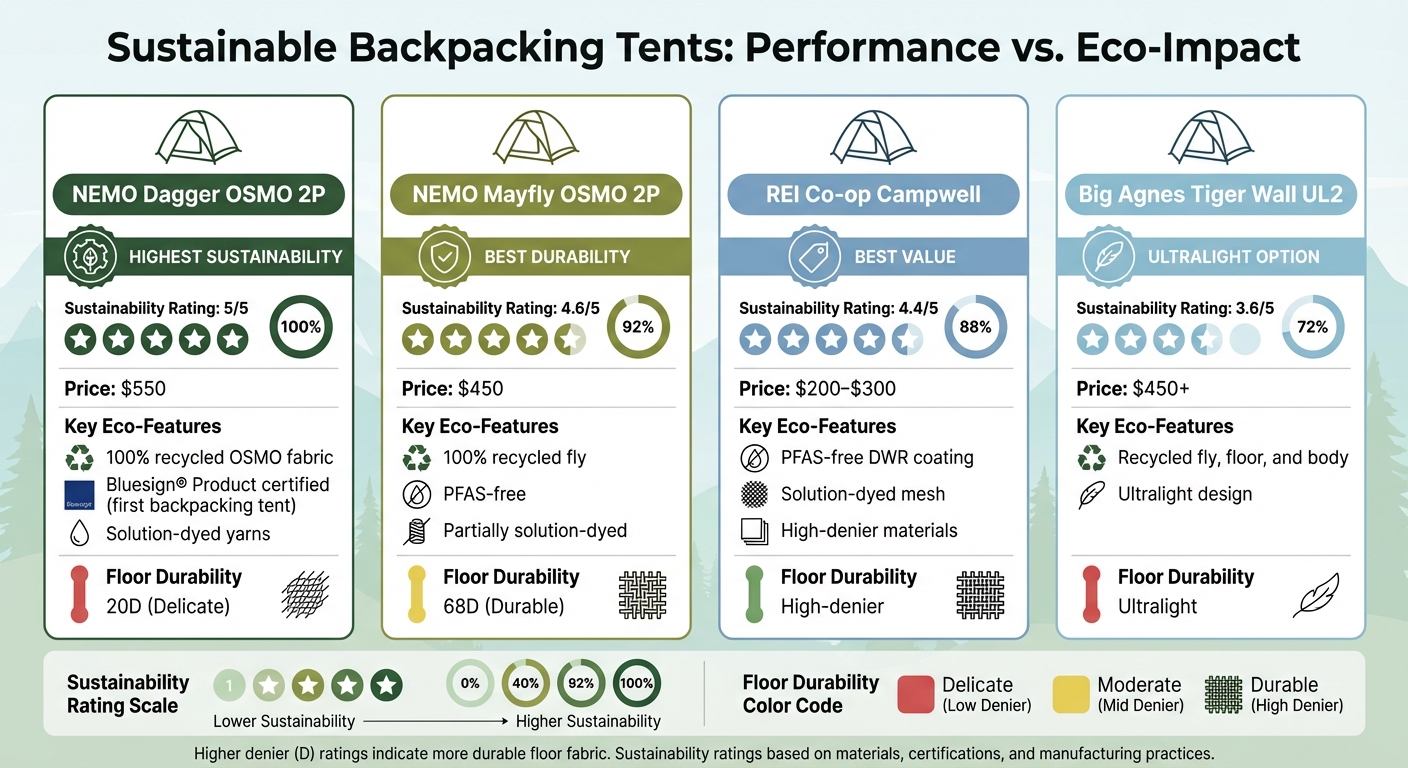
Eco-Friendly Camping Tents Comparison: Sustainability Ratings and Features
When heading out into the great outdoors, choosing gear that aligns with sustainable practices can make a big difference. Let’s take a look at some top-rated eco-friendly camping products that balance performance with environmental awareness.
Tents and Shelters
For eco-conscious adventurers, the NEMO Dagger OSMO 2P stands out as the first Bluesign® Product certified backpacking tent. Made with 100% recycled OSMO fabric and solution-dyed yarns, it’s priced at $550 and boasts a 5/5 sustainability rating.
The NEMO Mayfly OSMO 2P offers similar eco-friendly features for $450, including a durable 68D polyester floor, and holds a 4.6/5 sustainability rating. Meanwhile, the REI Co-op Campwell series delivers an affordable option, priced between $200–$300, with a 4.4/5 sustainability score and PFAS-free materials.
| Tent Model | Sustainability Rating | Key Eco-Features | Floor Durability | Price |
|---|---|---|---|---|
| NEMO Dagger OSMO 2P | 5/5 | 100% recycled, Bluesign Product, solution-dyed | 20D (Delicate) | $550 |
| NEMO Mayfly OSMO 2P | 4.6/5 | 100% recycled fly, PFAS-free, partially dyed | 68D (Durable) | $450 |
| REI Co-op Campwell | 4.4/5 | PFAS-free DWR, solution-dyed mesh | High-denier | $200–$300 |
| Big Agnes Tiger Wall UL2 | 3.6/5 | Recycled fly, floor, and body | Ultralight | $450+ |
For families, the NEMO Aurora Highrise 6 offers a spacious and durable option, priced between $399.95 and $499.95. It’s flame-retardant-free and features an impressively tough 150D+ floor.
Sleeping Pads and Sleeping Bags
Eco-friendly sleeping gear can enhance your camping experience while minimizing impact. The NEMO Quasar 3D Insulated Pad ($199.95) earns a 5/5 sustainability rating for its use of post-consumer recycled ripstop polyester and recycled PrimaLoft insulation. On the budget side, the Big Agnes TwisterCane BioFoam Pad ($69.95) incorporates sugarcane-based EVA foam, offering an affordable and sustainable option.
For sleeping bags, the NEMO Disco Endless Promise Down Bag ($269.95–$359.95) is fully recyclable through NEMO’s take-back program and uses 100% recycled fabrics with RDS-certified down. Another standout is the REI Co-op Magma 30, which holds a 4.9/5 sustainability rating and is made with Bluesign-approved materials.
"A sleeping bag that lasts 10 seasons often beats a ‘green’ but flimsy option that needs replacing after two, because longevity spreads the environmental footprint across many trips." – Diego Martins
| Product | Category | Sustainability Score | Key Eco-Features | Price |
|---|---|---|---|---|
| NEMO Quasar 3D Insulated Pad | Sleeping Pad | 5/5 | 100% recycled fabric & insulation, Bluesign approved | ~$199.95 |
| Big Agnes TwisterCane | Sleeping Pad | N/A | Bio-based EVA foam from sugarcane | $69.95 |
| REI Co-op Magma 30 | Sleeping Bag | 4.9/5 | Bluesign materials, RDS-certified down, PFAS-free | – |
| NEMO Disco Endless Promise | Sleeping Bag | 4.5/5 | 100% recycled fabrics, fully recyclable | $269.95–$359.95 |
For three-season camping, look for sleeping pads with an R-value between 2.5 and 4, while winter camping demands an R-value of 5 or higher. When choosing sleeping bags, opt for recycled synthetic fills in wet climates and RDS-certified down for dry, colder conditions.
Cookware and Water Filtration
Switching to reusable water filtration systems is a simple way to reduce reliance on single-use plastics. The LifeStraw Peak Series Collapsible Squeeze (650 ml) costs $44.95 and removes 99.999999% of bacteria, 99.999% of parasites, and filters out PFAS and microplastics. For a more durable option, the LifeStraw Sip Stainless Steel Filter Straw ($39.95) offers a long-lasting alternative to plastic versions. For group trips, the LifeStraw Family Filter ($82.00) is perfect for serving multiple campers.
LifeStraw’s commitment to sustainability is evident through its B Corp and Climate Neutral certifications. Since 2014, their Give Back program has provided safe drinking water to over 6 million children in western Kenya, supported by a team of 40 local staff members.
For cookware, titanium options like the TOAKS Titanium Pot are a smart choice. They’re lightweight, incredibly durable, and can last indefinitely with proper care. Look for multifunctional cookware to reduce the need for extra gear.
sbb-itb-289f5f2
Backpacks and Camping Accessories
Backpacks
When picking a backpack with sustainability in mind, it’s about more than just recycled materials. Take the NEMO Persist 45L as an example. Crafted from 100% recycled polyester CERO fabric and featuring recyclable cushioning, it scores an impressive 4.7 out of 5 for sustainability. Weighing in at 3 lb 11 oz and offering 44 liters of space, it strikes a good balance between weight and durability. Plus, as part of the "Endless Promise" line, it’s fully recyclable at the end of its life.
For those seeking Bluesign-certified products, the Osprey Rook/Renn series is a solid choice. These packs are made with at least 90% Bluesign-approved fabrics and 20% approved accessories, ensuring safer chemical use and better worker protections during production. The Osprey Exos/Eja series takes it even further, using 100% recycled fabrics. If you’re on a budget, the REI Co-op Trailmade 60 is worth considering. With a 4.8/5 sustainability rating, it incorporates recycled materials and a PFAS-free DWR treatment.
When evaluating backpacks, pay attention to denier ratings in high-wear areas. Fabrics with higher denier numbers (300D to 900D) are more resistant to abrasion and tearing. Solution-dyed fabrics, like those used in the NEMO Persist, require significantly less water during production and provide superior UV resistance compared to traditional dyeing methods. For ultralight options, bio-based Dyneema is a standout material, offering exceptional strength while reducing the carbon footprint by 90% compared to standard alternatives. These advancements reflect the outdoor industry’s ongoing push for eco-friendly innovation.
| Pack Model | Volume | Weight | Key Eco-Feature | Sustainability Rating |
|---|---|---|---|---|
| NEMO Persist 45L | 44L | 3 lb 11 oz | 100% Recycled & Recyclable | 4.7/5 |
| Osprey Rook 65 | 65L | – | Bluesign Product Certified | 4.4/5 |
| REI Co-op Trailmade 60 | 60L | – | Recycled Materials, PFAS-Free | 4.8/5 |
| Gossamer Gear Mariposa 60 | 60L | – | Recycled Robic Nylon | N/A |
Many brands, including Osprey, Gregory, and Deuter, offer lifetime repair services, which can significantly extend the life of your backpack. Before opting for a replacement, check if the manufacturer provides affordable repairs for issues like broken zippers, damaged buckles, or torn panels. These repair options can save money and reduce waste. Beyond backpacks, eco-friendly accessories can further lighten your environmental footprint.
Other Gear and Accessories
To cut down on waste and extend the life of your gear, consider well-designed accessories that complement your backpack. For instance, the NEMO Chipper Reclaimed Foam Seat ($24.95) turns leftover foam from sleeping pad production into a lightweight, portable camping seat, keeping materials out of landfills. Similarly, the Big Agnes TwisterCane BioFoam Hiking Seat ($24.95) repurposes scrap foam to create an ultra-light seating option.
When it comes to trekking poles and rain gear, prioritize items built for durability and repairability rather than disposable alternatives. In 2024, REI contributed $718,000 in Fair Trade Premiums to support worker-led community projects, demonstrating a commitment to ethical manufacturing.
For accessories, look for PFAS-free finishes and certifications like Fair Trade USA, Fair Wear Foundation, or WRAP to ensure ethical production practices. Undyed fabrics are another eco-conscious choice, as they use 55% less water during manufacturing. Small decisions like these can make a big difference in reducing your overall environmental impact.
How to Make Your Gear Last Longer
Taking care of your outdoor gear can help it perform better and last longer. Regular cleaning is key because dirt can wear down fibers and damage waterproof coatings. Sweat and body oils can also clog technical fabrics and lead to mold. For example, technical shells should be washed after every 5 to 20 days of heavy use to maintain their breathability and water-repellent properties. These high-performance waterproof membranes, which have 9 billion pores per square inch, need to stay free of dirt and soap residue to work properly. Using the right washing techniques is essential to keep your gear in top shape.
For tents, hand washing is best. Use cool or warm water and a technical soap like Nikwax Solar Wash (about $28.00 for a 500ml bottle). Let the tent air dry completely before storing it to avoid hydrolysis, a chemical reaction that can break down waterproof coatings.
"No tent-care rule is more important [than making sure it is 100% dry before storing]" – REI
Sleeping bags also benefit from preventative care. Using a liner can reduce how often you need to wash them. When washing is unavoidable, choose a gentle cycle in a front-loading machine or hand wash instead of using a top-loading machine with an agitator.
Proper storage is just as important as cleaning. Keep gear in breathable cotton or mesh bags in a cool, dry, and dark place. Avoid compression sacks for long-term storage of sleeping bags and tents, as they can damage insulation loft and seam tape. Self-inflating pads should be stored flat with their valves open to preserve foam integrity and release any trapped moisture. For electronics, always remove batteries before storing to prevent corrosion.
Small repairs can also make a big difference. Clean zipper teeth with a toothbrush and apply a wax-based lubricant – steer clear of WD-40, as it can damage technical fabrics. For minor tears in tents or rainflies, adhesive repair tape like Tenacious Tape works well. Cut patches into circles or ovals to prevent corners from peeling.
"You can save hundreds of dollars by repairing your gear instead of buying new. Most gear is sturdy enough to withstand repeated repairs" – Corey Buhay
Conclusion
When it comes to outdoor adventures, making thoughtful choices about your gear can elevate your experience while helping to protect the environment. Sustainable camping gear plays a key role in preserving natural landscapes by cutting down on harmful chemicals and waste. Opting for items made from recycled materials, steering clear of PFAS and PVC, and prioritizing durability means you’re not just investing in quality equipment but also safeguarding ecosystems and wildlife habitats. These decisions have a ripple effect, influencing industry practices in a positive way.
"By choosing eco-friendly gear, respecting designated areas, and playing a part in conservation efforts, campers play an important role in creating lasting relationships between humanity and the great outdoors for generations to come." – Lauren, Author at Beyond the Tent
Beyond the environmental benefits, eco-friendly gear can save you money in the long run. Think about solar chargers that eliminate the need for fuel, reusable cookware that reduces single-use waste, and durable equipment that stands the test of time. For example, using water bottles made from 90% recycled stainless steel can slash greenhouse gas emissions by 50%. These small, intentional choices can lead to meaningful change.
So, how can you put these ideas into action? Start by renting gear when you’re just getting started, look for Bluesign-certified and Fair Trade Certified products, and take care of your equipment to extend its life. Whether you’re among the 7.4 million first-time campers from 2022 or a seasoned adventurer, these steps ensure that trails, campsites, and natural wonders stay pristine and awe-inspiring for future generations.
Eco-camping is about committing to durability, repairs, and responsible gear use. Every time you repair instead of replacing, pack reusable items, or stick to marked trails, you’re contributing to a healthier planet and ensuring that the great outdoors remains just as wild and beautiful as it was meant to be.
FAQs
What eco-friendly certifications should I look for when choosing camping gear?
When you’re picking camping gear with sustainability in mind, certifications can be a great way to ensure you’re making responsible choices. Look for labels like B-Corp, Fair Trade Certified, Responsible Down Standard (RDS), Bluesign, and OEKO-Tex Standard 100. These certifications indicate that the products adhere to strict standards for social responsibility, use safe materials, and aim to minimize environmental harm.
You might also come across certifications such as the Global Recycled Standard (GRS), Regenerative Organic Certification, and the Aluminum Stewardship Initiative (ASI). These focus on areas like recycled materials, regenerative farming, and sustainable aluminum sourcing. Opting for gear with these certifications not only supports ethical production but also helps lower your impact on the planet.
Why are recycled materials important for eco-friendly camping gear?
Recycled materials in camping gear are making a real difference in protecting the planet. By transforming waste like plastic bottles into fabrics or insulation, manufacturers cut down on the need for new raw materials. This not only conserves natural resources but also reduces the environmental impact caused by extracting those resources. Plus, creating products from recycled materials takes less energy and water than starting from scratch, which helps shrink the carbon footprint of every item.
On top of that, using recycled content helps divert waste from landfills and keeps harmful microplastics out of ecosystems. It aligns with the idea of a circular economy, where gear is designed to be repaired, reused, and eventually recycled. This reduces waste and promotes a more sustainable way of living. When you choose camping gear made from recycled materials, you’re not just preparing for your next adventure – you’re also playing a part in preserving the natural world for generations to come.
How can I maintain and extend the life of my camping gear?
Proper care is the secret to keeping your camping gear in top shape and ready for future adventures. After each trip, take the time to clean your equipment. Use lukewarm water to rinse off dirt from tents, sleeping bags, and cookware, and make sure everything is completely dry before putting it away. Storing wet gear is a big no-no – it can lead to mildew and ruin waterproof coatings.
When it comes to storage, choose a cool, dry spot away from direct sunlight. For sleeping bags, skip the tight stuff sack and go for a breathable cotton or mesh bag to help maintain their loft. To extend the life of your tent, always use a groundsheet to prevent punctures, and handle zippers and poles carefully to avoid unnecessary wear or damage. If you notice small tears or seam issues, tackle them right away with a repair kit to prevent further problems.
Routine maintenance, like reapplying waterproof treatments as needed and cleaning your gear regularly, can make a huge difference. Not only will this help your gear last for years, but it’s also a smart way to save money and cut down on waste while enjoying the outdoors.