Adventure Tourism: Social Impact on Local Communities
Adventure tourism is booming, growing 10–12% annually, and transforming remote areas into tourist hotspots. While it creates jobs and boosts local economies, it also brings challenges like rising living costs, cultural commercialization, and strain on public services. Communities often see only a small share of tourism revenue, with much of the money benefiting outside investors. However, solutions like community-owned tourism, visitor education, and better regulations can ensure locals benefit while preserving their way of life.
Key Points:
- Economic Impact: Tourism creates jobs and infrastructure, but locals often earn low wages, and housing costs rise.
- Cultural Changes: Traditions risk being turned into performances for tourists, eroding their true meaning.
- Strain on Services: Overloaded infrastructure and public systems struggle to keep up with tourist demand.
- Solutions: Community-based tourism, educating visitors, and reinvesting revenue in local needs can reduce harm.
Adventure tourism has great potential, but ensuring it benefits local people requires careful planning and collaboration.
Adventure Tourism Economic Impact and Community Revenue Distribution
Community tourism: A force for good | G Adventures | Travel Redefined
Problems Adventure Tourism Creates for Local Communities
Adventure tourism may bring financial opportunities, but it also introduces serious challenges that can disrupt the very communities it relies on. Rapid growth in this sector often outpaces a community’s ability to adjust, leaving locals grappling with rising costs, overburdened services, and cultural upheaval. These issues highlight the need for thoughtful solutions to protect community well-being.
Loss of Culture and Commercialization of Traditions
Adventure tourism often transforms local traditions into commodities tailored for global audiences. This process, sometimes called "serial reproduction", leads communities to mimic successful cultural models from elsewhere, resulting in cookie-cutter experiences that erase what made each destination special in the first place. Indigenous groups, in particular, may feel pressured to change traditional practices like hunting or gathering to align with both conservation goals and tourist expectations.
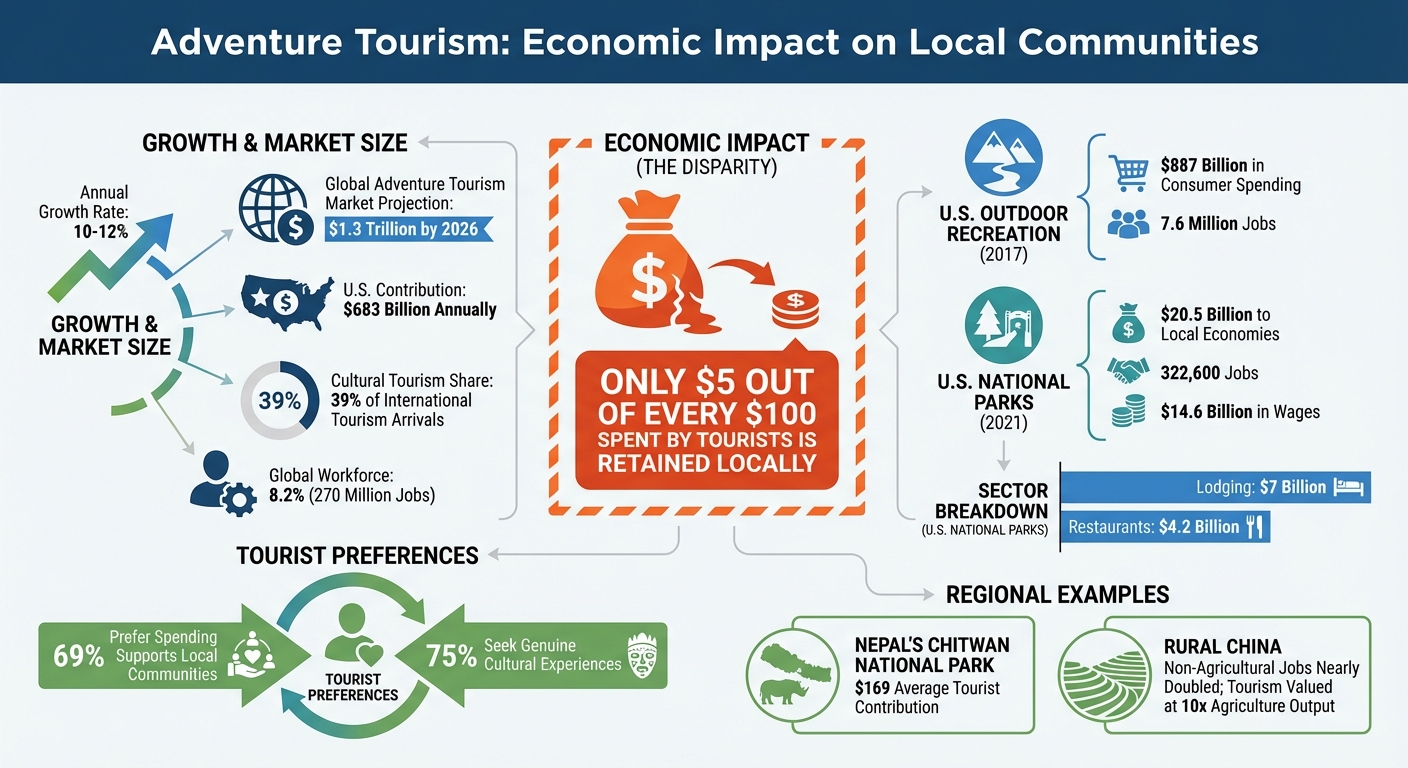
This phenomenon, known as the "showplace" effect, can reduce communities to little more than tourist attractions, overshadowing their authentic, everyday lives. Tourism often imposes an idealized or outdated image of indigenous or local populations, forcing residents to conform to stereotypes that may not reflect their current realities. With cultural tourism now making up more than 39% of all international tourism arrivals, the pressure to package and perform traditions for visitors is only growing. On top of that, the demands of peak tourist seasons leave residents with less time to socialize or nurture traditional relationships, weakening the social bonds that are central to cultural identity.
"Don’t just talk to elected officials. People in the community have ideas and deserve to be heard as well, especially when we’re talking about equity." – Stacy Thomas, Rural Practitioner
These cultural pressures often go hand in hand with economic inequalities that further destabilize local communities.
Unequal Distribution of Tourism Money
A large portion of tourism revenue often ends up in the hands of outside investors or international companies, with local residents receiving only a small share. Even within communities, the financial benefits are unevenly distributed, leaving many residents struggling to keep up with rising costs. Tourism frequently drives up the price of housing, land, and basic goods, making life increasingly unaffordable for long-time residents.
The jobs created by the tourism industry are typically low-paying, seasonal roles that offer little job security or long-term benefits, making it hard for families to achieve financial stability.
"The tourism sector has a history of inequitable outcomes, including generating wealth primarily for outside investors, providing mostly low-wage and seasonal employment for local people, and putting unsustainable pressure on local systems and resources." – Aspen Institute Community Strategies Group
These economic challenges are compounded by the strain on local infrastructure and public services.
Overloaded Public Services and Infrastructure
The influx of tourists often overwhelms infrastructure that was never designed to handle such high demand. Short-term rentals and second homes drive up housing prices, displacing workers and residents on fixed incomes. This issue, sometimes referred to as the "amenity trap", is a major problem in places like Aspen, Colorado. Traffic congestion on rural roads makes it harder for locals to access essential services, revealing the hidden costs of a $374.3 billion outdoor recreation economy.
"When I hear ‘outdoor recreation economy,’ I immediately think of the people who support those economies, and it’s often seasonal workers. And when I think of seasonal workers, housing is what always pops up." – Kate Yeater, Idaho State Parks
New public facilities are often built with tourists in mind, leaving them either too expensive or inaccessible for locals. Childcare services, stretched thin by the demands of service-sector jobs, create additional challenges for working families. In Mediterranean destinations, residents report feeling overworked and less satisfied with their quality of life during peak tourist seasons due to increased workloads and reduced leisure time. Natural resources like rivers and trails also suffer from overuse, requiring costly maintenance and stricter management to preserve them.
Benefits Adventure Tourism Brings to Communities
Adventure tourism, when thoughtfully managed, offers communities more than just a temporary boost in visitor numbers. It can create lasting economic opportunities, help preserve traditions, and improve infrastructure that benefits locals long after tourists have departed.
Jobs and Economic Growth
Adventure tourism generates employment across various sectors, creating ripple effects that extend beyond the direct tourist interactions. For example, in 2021, visitors to U.S. national parks contributed $20.5 billion to local economies. This supported 322,600 jobs and $14.6 billion in wages, with lodging and restaurants leading the way, generating $7 billion and $4.2 billion, respectively.
Even in regions where tourism spending per visitor is modest, the impact can be substantial. A study in Nepal’s Chitwan National Park found that while the average tourist contributed $169, the economic benefits extended widely, boosting local demand for goods and services. Similarly, in rural China, tourism has significantly diversified economies. Non-agricultural jobs nearly doubled, and tourism emerged as the dominant industry, valued at ten times the output of agriculture. This shift helps communities reduce their reliance on industries tied to natural resource extraction, offering more stability.
These economic gains not only improve livelihoods but also foster stronger cultural connections and community resilience.
Cultural Exchange and Protection of Traditions
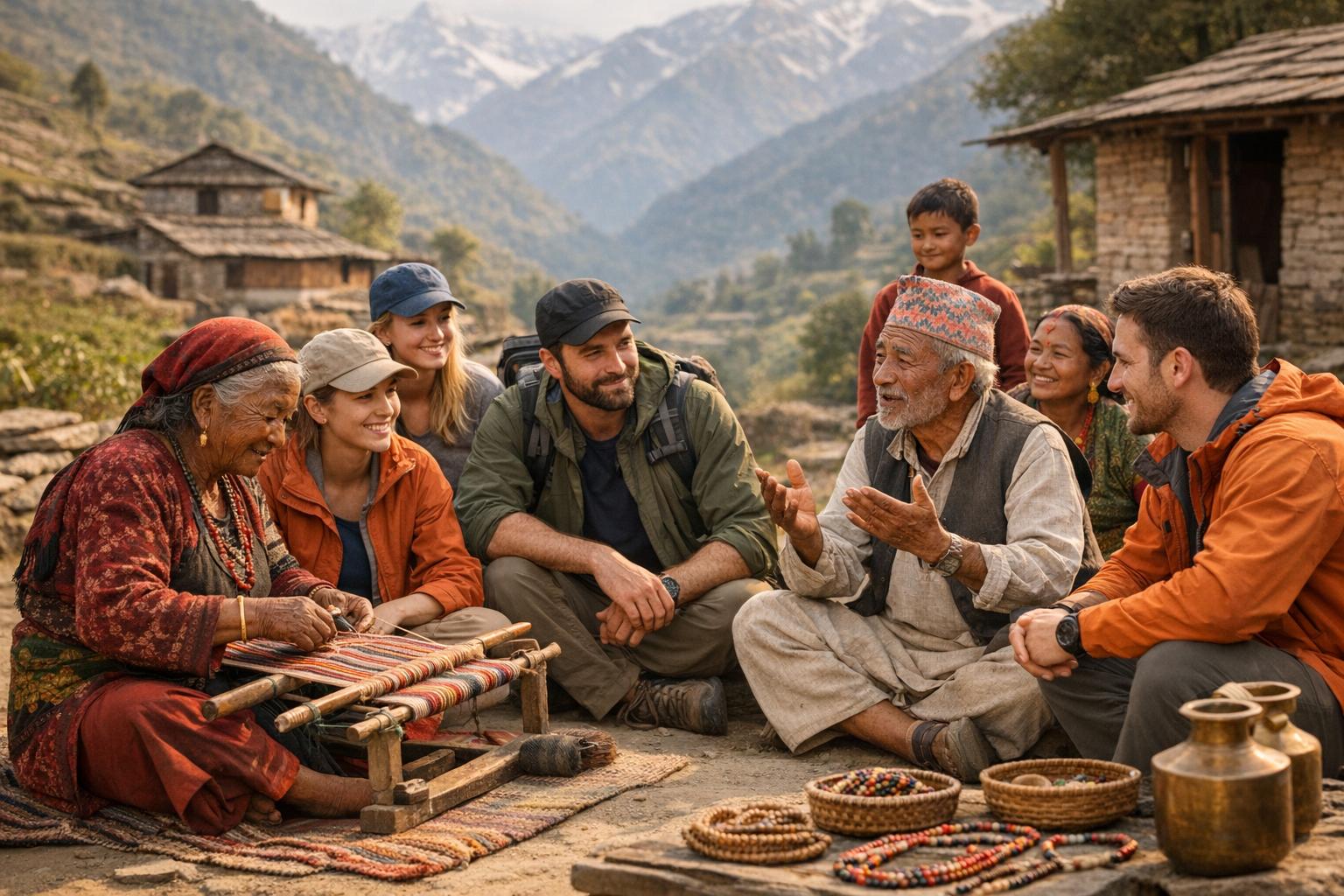
Tourism often sparks renewed interest in preserving local traditions. When visitors show genuine curiosity about cultural practices, it can encourage communities to keep these traditions alive. For instance, Ecuador’s Agua Blanca community combined eco-tourism with practices like herbal medicine preparation and pottery. The income generated supported cultural pride and environmental conservation.
Adventure tourism programs that incorporate local knowledge – such as storytelling, traditional navigation, or indigenous skills – help create meaningful interactions between travelers and residents. In South Korea, the TourDure initiative trained women to run tourism-related businesses, like homestays, which not only boosted financial independence but also strengthened community bonds.
The global adventure tourism market is expected to reach $1.3 trillion by 2026, with the U.S. contributing roughly $683 billion annually. As Derrick Crandall, President of the American Recreation Coalition, put it:
"Adventure tourism is changing the way that many American communities are viewed and their economies are developed, marketed, and sustained."
Cultural preservation is just one piece of the puzzle – tourism also brings tangible improvements to public infrastructure.
Better Roads, Healthcare, and Public Services
Tourism revenue often funds infrastructure projects that benefit both visitors and the local population. In Nepal’s Annapurna Conservation Area, for example, income from tourism has been reinvested into community projects, including schools and healthcare facilities. Similarly, in Kenya’s Maasai Mara region, revenue from wildlife tourism supports infrastructure and conservation efforts, creating sustainable opportunities for the Maasai people.
These investments close critical gaps in public services. Improved roads make it easier for locals to access markets and essential services, while upgraded healthcare facilities benefit families year-round. Clean water initiatives and renewable energy projects funded by tourism revenue also serve entire communities. Leonard A. Jackson, a professor at Kennesaw State University, highlighted this impact:
"Reinvesting tourism revenue into local infrastructure projects, such as roads, schools, and clean water initiatives, fosters long-term economic development."
When communities are directly involved in planning, tourism can enhance local services without straining existing systems, ensuring sustainable growth.
sbb-itb-289f5f2
Solutions to Reduce the Negative Effects of Adventure Tourism
Adventure tourism can bring challenges to local communities, but there are ways to address these issues while protecting local interests. By empowering communities, educating visitors, and implementing thoughtful policies, it’s possible to mitigate cultural erosion, revenue disparities, and infrastructure pressures.
Community-Owned Tourism Operations
Encouraging local ownership of tourism businesses ensures that more of the profits stay within the community. Shockingly, in some developing countries, only $5 out of every $100 spent by tourists remains in the local economy. Community-based tourism (CBT) changes this dynamic by giving residents direct control over how destinations are managed. This approach also aligns with what travelers want – 69% of tourists prefer their spending to support local communities, and 75% seek genuine cultural experiences.
"By putting communities at the center of tourism development, resident sentiment improves with more local people and ecosystems benefiting." – Whitney Smith, travel writer
Localizing supply chains and offering financial literacy training can make a big difference in ensuring that tourism revenues directly benefit residents. At the same time, guiding visitors to support these efforts is equally important.
Teaching Tourists How to Travel Responsibly
Educating tourists can reshape how they interact with local communities and environments. The concept of impact tourism shifts the focus from impulsive charity to organized, meaningful support for local projects.
"Impact tourism is not about impulse giving or collecting loose change for charities without further touch-points. Rather, it is about generating, in an organized and strategic manner, tourism company and visitor support for local community projects through true partnerships." – Samantha Bray, Managing Director of the Center for Responsible Travel (CREST)
Programs like "Pack for a Purpose" encourage travelers to contribute to local projects in impactful ways. Digital tools such as "Meaningful Travel Maps" help tourists identify businesses that prioritize community well-being. Additionally, training local guides to act as ambassadors for their region’s traditions and environmental stewardship helps visitors develop a deeper respect for the local culture.
"Sustainable tourism doesn’t stop at protecting the environment – it also means transforming tourism’s impact on the people and cultures we visit." – Sustainable Travel International
Government Regulations and Conservation Partnerships
Strong government policies are essential to support local initiatives and tie these efforts together. Collaboration between local authorities and community leaders is necessary to address issues like power imbalances and land-use disputes. Inclusive planning processes that prioritize the voices of residents ensure that tourism development aligns with local needs. Reinvesting tourism revenue into essential services like healthcare, education, and infrastructure can also drive long-term benefits for communities.
Tourism employs 8.2% of the global workforce – over 270 million jobs worldwide. By forming conservation partnerships and empowering local ownership, this economic force can be redirected to benefit communities.
"While community engagement holds promise for sustainable tourism development, challenges such as power imbalances, limited access to resources, and conflicts over land use must be addressed to ensure meaningful participation." – Fanice Nyamboke, researcher
Effective frameworks should also focus on evaluating supply chains, supporting women and rural entrepreneurs, and preserving cultural heritage in its authentic form, rather than altering traditions to meet tourist expectations.
Conclusion: Finding the Right Balance in Adventure Tourism
Adventure tourism has the potential to uplift local economies while safeguarding the unique cultures and landscapes that make these destinations special. However, the real challenge lies in ensuring that tourism growth doesn’t come at the expense of local communities. A striking statistic highlights this issue: only $5 out of every $100 spent by tourists typically stays within the local economy. To address this, approaches like community ownership, visitor education, and strong governance provide a clear path forward.
The rise of Community-Based Tourism (CBT) emphasizes the importance of giving residents control over how their home is shared with the world. Examples such as Nepal’s Annapurna Conservation Area and South Korea’s TourDure initiative demonstrate how community-led tourism can create lasting, positive impacts.
"Community-based tourism (CBT) is an innovative and participatory approach that places local communities at the center of tourism development." – Leonard A. Jackson, Michael A. Leven School of Management, Entrepreneurship and Hospitality
For these solutions to truly succeed, collaboration among stakeholders is essential. Transparent revenue-sharing models and visitor education can transform passive tourist spending into meaningful support for local communities. When tourism revenue is reinvested into infrastructure that prioritizes residents, the benefits ripple outward.
The economic impact of outdoor recreation is immense. In the U.S. alone, it generated $887 billion in consumer spending and supported 7.6 million jobs in 2017. By channeling this economic power through inclusive planning and local ownership, tourism can serve as a tool to combat poverty while protecting the natural and cultural treasures that draw travelers in the first place. The key challenge remains ensuring that tourism revenue directly benefits the people who call these destinations home.
FAQs
How can local communities benefit more from adventure tourism?
Local communities have a real opportunity to thrive in the adventure tourism space by taking control of tourism-related activities. Through community-based tourism (CBT) initiatives, locals can manage key aspects like tours, accommodations, and equipment rentals. This approach keeps the profits close to home while respecting and reflecting local traditions and values. For example, revenue-sharing models can be a game changer – channeling a portion of visitor spending into vital community projects, such as improving schools or maintaining hiking trails.
Investing in skills and partnerships is another cornerstone of success. Training programs in areas like guiding, first aid, and small-business management can elevate the quality of services offered, enabling locals to set competitive prices. Partnering with organizations that specialize in sustainable tourism can also make a big difference, helping communities track the impact of visitors and safeguard both their cultural identity and natural surroundings.
By blending community-driven efforts, skill-building opportunities, and a focus on sustainability, locals can craft tourism experiences that not only strengthen their economy but also protect their heritage and environment for future generations.
How does adventure tourism affect Indigenous cultures and traditions?
Adventure tourism brings a mix of challenges and opportunities for Indigenous cultures. On the downside, it often leads to the commercialization of sacred traditions. Ceremonies, clothing, and rituals may be altered or staged to cater to tourist expectations, stripping them of their original meaning. Over time, this can weaken traditions, create gaps in generational knowledge, and shift community focus from traditional ways of life to tourism-driven income.
However, when approached thoughtfully and led by Indigenous communities, adventure tourism can play a role in preserving and revitalizing cultural heritage. Examples include community-managed trails, adventure schools, and revenue-sharing models that fund initiatives like language preservation, craft-making workshops, and safeguarding sacred sites. For travelers, the responsibility lies in selecting tour operators who collaborate directly with Indigenous groups, respect local customs, and actively contribute to heritage preservation.
How can adventure tourism promote growth while supporting local communities?
Adventure tourism has the potential to grow in a way that benefits everyone, especially local communities, by focusing on their well-being. One effective approach is community-based tourism (CBT), which puts locals in charge of tourism activities. This might include running guide services or sharing profits from tourism ventures. The result? More revenue stays within the community, helping fund important needs like schools, healthcare, and infrastructure.
Working hand-in-hand with residents during planning and decision-making ensures their voices are heard. This helps address concerns like preserving cultural heritage and preventing displacement. Practical steps, such as setting visitor limits, seasonal quotas, and offering education on respectful, low-impact travel, can safeguard local resources while still creating a memorable experience for travelers.
For adventure seekers, there are simple ways to make a difference. Opt for locally-owned tour operators, invest in eco-friendly gear, and get involved in community-led projects. These choices not only enrich your travel experience but also support the very communities that make these adventures possible.