
10 Community Tourism Ideas For Meaningful Travel
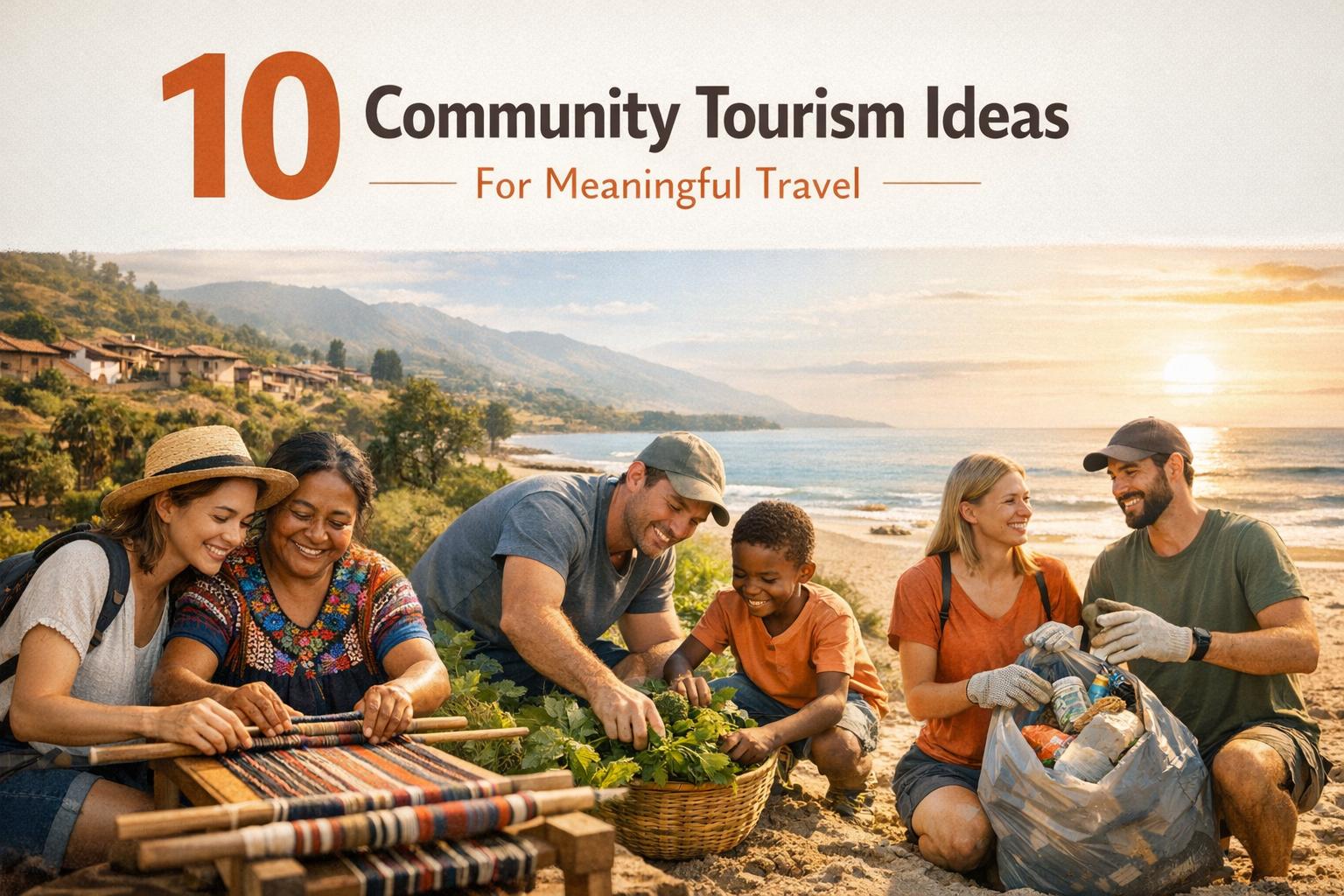
Community tourism is all about connecting with locals while ensuring your travel dollars directly support the places you visit. It prioritizes local leadership, sustainability, and authentic experiences, creating a win-win for travelers and communities alike. Here’s a quick breakdown of 10 impactful ways to engage with community tourism:
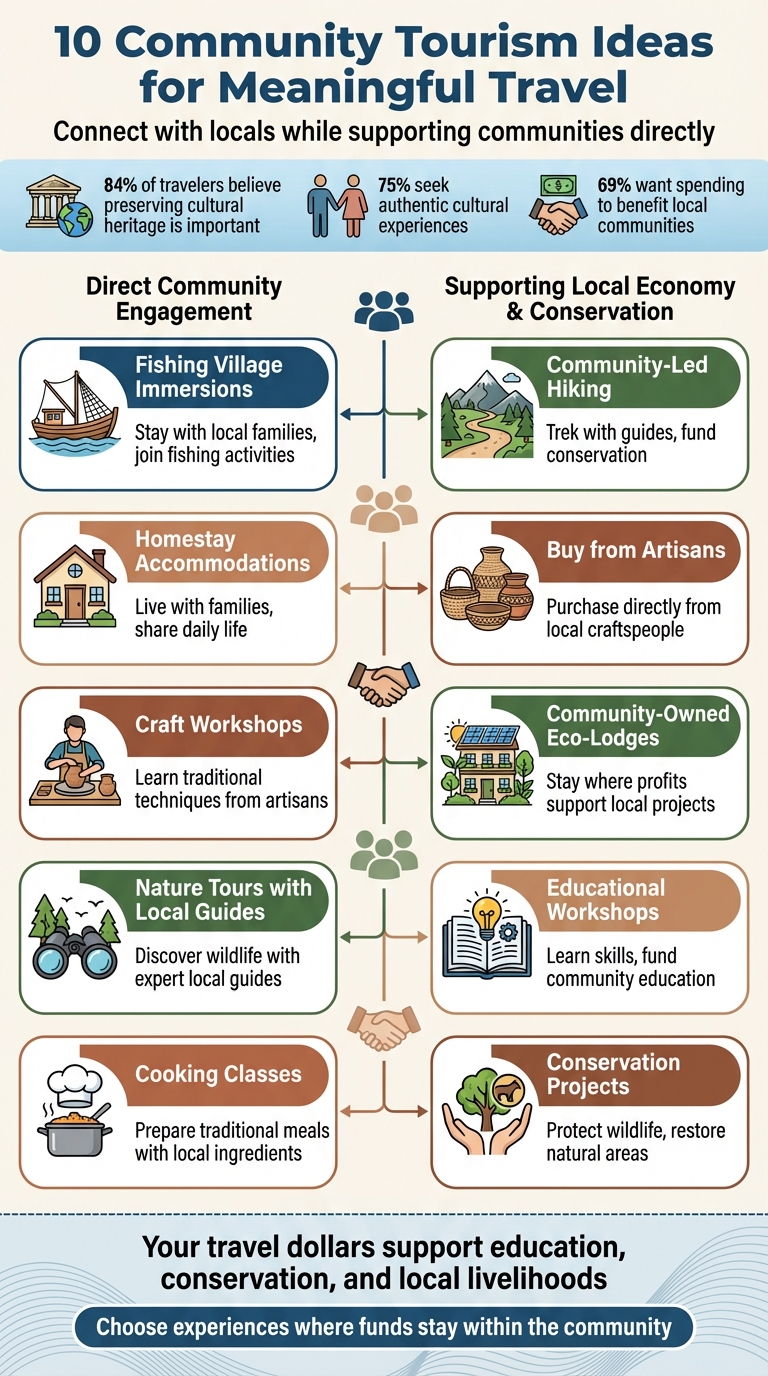
- Fishing Village Immersions: Stay in local homes, join fishing activities, and support families directly.
- Homestays: Experience daily life with local families while contributing to education and community projects.
- Craft Workshops: Learn age-old techniques like weaving or pottery while supporting artisans.
- Nature Tours with Local Guides: Discover hidden gems and wildlife with guides who know the land best.
- Cooking Classes: Prepare meals with locals using fresh, local ingredients.
- Community-Led Hiking: Trek with local guides while helping fund conservation and development initiatives.
- Buy from Artisans: Support craftspeople directly by purchasing handmade goods.
- Community-Owned Eco-Lodges: Stay in accommodations that reinvest profits into local projects.
- Educational Workshops: Learn skills while funding community education and training programs.
- Conservation Projects: Participate in efforts to protect wildlife and restore natural areas.
These approaches ensure your travels leave a positive impact, supporting education, conservation, and local livelihoods. Choose experiences where funds stay within the community to make your trips more meaningful.
10 Community Tourism Ideas for Meaningful Travel
1. Fishing Village Immersion Experiences
Learning from Local Fishermen and Their Daily Routines
Spending time in a fishing village offers a window into the lives of families whose daily rhythms are shaped by the sea. Take Klemtu, British Columbia, for example. Here, the Kitasoo/Xai’xais First Nation transformed their community’s focus after traditional industries waned in the mid-1990s. At Spirit Bear Lodge, visitors dive into Indigenous culture and wildlife conservation, guided by locals who once relied on commercial fishing. The experience includes storytelling, traditional songs, and dances performed in the community’s "traditional big house".
"The lodge has created opportunities for young and old to thrive in their homelands, while educating people from around the world with our rich culture."
– Roxanne Robinson, Guest Services Manager, Spirit Bear Lodge
During your visit, you may witness sustainable practices aimed at protecting marine and forest ecosystems or even try your hand at crafting traditional items. These efforts not only preserve cultural heritage but also ensure that tourism directly supports the livelihoods of local families.
Direct Income for Village Families
Choosing a fishing village homestay means your spending has a direct impact. Families benefit entirely from your stay, including home-cooked meals and accommodations. Local fishermen often serve as guides, using their deep understanding of the marine environment to lead activities like wildlife spotting, snorkeling, or traditional fishing trips.
In Thailand, communities along the Andaman Sea have developed rotational hosting systems to share tourism income fairly among households. The Ban Nai Nang Tourism Community in Krabi is a shining example. This coastal, Muslim-majority group combines tourism with conservation efforts, such as protecting mangrove forests, managing a blue swimming crab bank, and diversifying income through beekeeping and food processing. These initiatives help reduce reliance on fishing alone, shielding families from the uncertainties of fluctuating fish stocks.
Low-Impact Tourism Practices
Sustainability is at the heart of these experiences. Local guides often opt for eco-friendly transportation, like sailing or rowing, to minimize harm to reefs and marine biodiversity. Many villages also limit visitor numbers to protect their natural resources and infrastructure.
To truly connect with the community, treat the village as more than just a destination. Join in daily activities, whether it’s helping prepare meals or participating in fishing routines. Learning local customs – like greetings, food etiquette, and dress codes – can further enrich your stay. With 69% of travelers wanting their spending to benefit local communities directly, this approach ensures tourism remains respectful and supports traditional ways of life.
What Community Tourism in Action looks like
2. Homestay Accommodations
Homestays are a cornerstone of community-based tourism, offering a genuine exchange of experiences and traditions between travelers and local families.
Living with Local Families and Sharing Daily Life
Choosing a homestay takes you off the beaten path and into the heart of local life. Instead of the detached experience of a hotel, a homestay immerses you in the rhythms of daily living – waking up to the sounds of the neighborhood and enjoying meals prepared with fresh, local ingredients. It’s a chance to connect deeply with the culture and see how families truly live.
Take Ecuador’s Yunguilla community, for example. Visitors stay in rural family homes, participating in activities like caring for livestock and making cheese. Journalist Hannah Singleton shared her experience from April 2024, describing how she became part of an extended family’s sustainable lifestyle rather than just observing it. This level of involvement fosters a meaningful exchange – guests learn about local traditions, while hosts gain insight into the visitor’s world through shared conversations and photos.
Supporting Host Families Directly
When you stay in a homestay, your payment goes straight to the host family, helping fund household needs, education, and even larger community projects. This direct support is significant – 76% of travelers prioritize ensuring their spending benefits the local community.
In Peru, the Ccaccaccollo Women’s Weaving Cooperative is a shining example. Located near Cuzco, this group of over 65 women uses homestays and weaving demonstrations to support education and empower their community. Alfonso, a homestay host on Atauro Island in Timor-Leste, sums it up perfectly:
"The main benefit of the homestays is that it allows us to take care of our family and all the income stays in the community".
A Smaller Environmental Impact
Homestays are inherently eco-friendly. By utilizing existing homes and sourcing local ingredients, they reduce environmental strain compared to hotels.
Ryan Lewis, Technical Advisor at Blue Ventures, highlights their value:
"In small-scale fishing communities, homestays have proven to be an inclusive and rewarding community initiative that provides reliable income for families that are amongst some of the most vulnerable to our changing climate".
Additionally, the income often supports conservation projects, creating a positive cycle where tourism helps safeguard the environment.
A Hands-On Experience with Local Customs
Homestays provide an unmatched opportunity to engage with local traditions. Whether it’s learning traditional cooking techniques, weaving, or harvesting vegetables, these experiences offer insights that hotels simply can’t. You might even discover the cultural significance behind certain foods or practices.
Before your visit, it’s a good idea to learn basic etiquette – such as local greetings, appropriate attire, and dining customs – to show respect and avoid misunderstandings. Be prepared for simpler amenities than a hotel and embrace the chance to contribute, whether by helping prepare meals or assisting with daily chores. As Andrew Lewis, Marketing Manager at Nutty Adventures, puts it:
"One or two nights at a homestay will give you a far better insight into the lives of ordinary Thai people and their culture than any hotel or guest house could ever do".
This level of personal involvement not only enriches your stay but also lays the groundwork for future community-focused travel adventures.
3. Hands-On Craft Workshops
Craft workshops offer more than just keepsakes – they provide a meaningful connection to traditions passed down through generations. Whether you’re shaping pottery, weaving textiles, or crafting baskets, you’re not just making something; you’re actively contributing to the preservation of age-old practices. These experiences blend tradition with creativity, offering a deeper way to engage with local communities.
Learning Skills Rooted in History
In Peru’s Sacred Valley, the Ccaccaccollo Women’s Weaving Cooperative is a shining example of preserving heritage. This cooperative, which revives nearly forgotten Inca weaving techniques, grew significantly through a 2022 collaboration with Planeterra, expanding to include over 65 members. This initiative not only helped the first generation of participants achieve literacy in Spanish but also opened doors to higher education for many. When you join these artisans, you’ll work with tools and materials that have been used for centuries, creating a tangible link to the past.
Supporting Local Artisans and Their Communities
The fee you pay for a workshop often goes straight to the artisan leading the session, directly supporting their family and community. In fact, 69% of travelers express a desire for their spending to benefit local communities. Before booking, it’s worth asking how the workshop is structured and what portion of the fee reaches the artisans. Dr. Albert Kimbu, Head of Tourism and Transport at the University of Surrey, highlights the importance of this connection:
"When communities become aware that what they have is a product that can be sold, then they have a stake in protecting it".
This financial support helps families stay together by reducing the need for younger generations to migrate to cities for work. For example, Radical Weavers, a non-profit studio in Stirling, Scotland, uses traditional textile skills to uplift marginalized groups, including members of the LGBT community and those at risk of social isolation. Such initiatives strengthen community bonds and ensure these crafts continue to thrive.
Keeping Traditional Techniques Alive
Workshops also play a vital role in sustaining the demand for traditional materials like local clays, plant fibers, and natural dyes . When travelers show genuine interest in these crafts, it encourages communities to stick with traditional methods instead of adopting modern substitutes. This aligns with the values of 84% of travelers, who believe that preserving cultural heritage is essential. As Jamie Sweeting, CEO of Planeterra, explains:
"And there has been an uplift in the pride in their culture. They’re embracing it. They can see that people from dozens of countries travel to visit them because they have something special to offer".
Crafting Your Own Masterpiece
One of the highlights of these workshops is the chance to create something uniquely yours – a glazed mug, a woven scarf, a hand-crafted basket, or even a traditional hat. Sessions can vary from a few hours to multi-day programs, depending on the depth of skill you want to achieve. Before signing up, check what’s included in the fee – materials, safety gear, and packaging for your finished piece – and inquire about international shipping options for larger items like pottery. Make sure to choose workshops that suit your experience level, offering clear steps to progress from beginner to more advanced techniques.
4. Local Guide Nature and Wildlife Tours
Discover the wonders of nature with local guides who bring generations of knowledge to the table. Their deep understanding of the environment reveals rare species like the elusive white Kermode bears in British Columbia’s Great Bear Rainforest or the vibrant orchids thriving in Ecuador’s cloud forests. In Yunguilla, Ecuador, for instance, Galindo Parra offers orchid-spotting walks at an altitude of 8,530 feet (about 2,600 meters), showcasing flowers in shades from pale white to striking purple. These guided experiences not only enhance wildlife encounters but also provide a deeper connection to the local culture.
Insights from Local Knowledge
Local guides act as guardians of their ecosystems, sharing traditional ecological knowledge passed down through generations. They understand animal behaviors, seasonal migrations, and the role native plants and animals play in their communities. This expertise makes wildlife tours safer and more fulfilling. For instance, guides know how to navigate sensitive habitats without disturbing nesting sites or harming coral reefs. As Jane Marsh puts it:
"Locals understand the value and delicate balance between wildlife and their ecosystem and are therefore more likely to provide a sustainable experience for guests without upsetting this balance".
Supporting Communities Through Your Visit
Hiring local guides directly benefits their communities. For example, Spirit Bear Lodge transitioned from fishing to wildlife tourism after the decline of the fishing industry. The revenue generated now supports rainforest conservation and has led to a ban on bear hunting. Roxanne Robinson highlights this impact:
"The lodge has created opportunities for young and old to thrive in their homelands, while educating people from around the world with our rich culture".
Conservation Through Responsible Tourism
Community-led tours contribute to conservation efforts in meaningful ways. Take Rwanda’s Sabyinyo Silverback Lodge, which has raised $4 million since 2006 to fund projects that have helped mountain gorilla populations recover. When booking a tour, ask operators how much of your fee stays within the community and which conservation initiatives it supports.
Hidden Gems Beyond the Tourist Trail
Local guides can unveil hidden treasures that standard maps or search engines often miss. These off-the-beaten-path adventures not only provide more genuine experiences with nature but also help reduce the strain on overcrowded tourist hotspots. For instance, in Thailand’s Ban Nai Nang, community-led tours take visitors through protected mangrove forests, where beekeeping and conservation initiatives support both the local economy and blue swimming crab habitats.
5. Cooking Classes with Local Families
Preparing Regional Dishes with Local Cooks
A local kitchen isn’t just a place for cooking – it’s where stories, traditions, and emotions come alive. When you step into a home and prepare traditional dishes with local cooks, you’re not just learning recipes; you’re uncovering how food brings people together – to celebrate, to grieve, and to bond. These hands-on moments shift you from being an observer to an active participant, creating meaningful exchanges with the community. Franco Negri, CEO and Co-founder of La Base Lamay, captures this beautifully:
"It’s not like I will make you a show or I’m working for you. We will walk together… We talk. It’s part of the essence of the community".
In Belize, visitors join families to craft farm-to-table dishes. In South Africa, the ‘Kammama’ network offers women-led cooking courses in Soweto and the Cape Winelands. These aren’t polished, commercial kitchens – they’re authentic family spaces where daily traditions are shared. Beyond learning new culinary skills, these experiences also help strengthen local economies.
Income for Home Cooks and Small Businesses
Cooking classes do more than teach; they directly support local families and small businesses. By participating, you’re putting money into the hands of home cooks, empowering women, and uplifting community-run ventures. Travel Belize explains it best:
"Every meal made supports a farmer, a fisher, a cook, and their families".
This ripple effect extends to local farmers, fishers, and markets, helping communities become less dependent on single industries like farming. This diversification creates financial stability and resilience. In fact, a 2023 Booking.com survey found that 69% of travelers want their spending to benefit local communities. Cooking classes are a perfect way to make that happen.
Using Seasonal and Local Ingredients
The ingredients you’ll work with often come straight from nearby farms, rivers, or gardens, bypassing global supply chains. For instance, in Ecuador’s Yunguilla community, families teach visitors to make cheese, yogurt, and marmalade using mountain papaya and other local fruits. In Thailand’s Ban Nai Nang community, honey from their beekeeping projects is woven into traditional dishes. This farm-to-table approach keeps money circulating within the community while also preserving agricultural traditions that might otherwise fade away.
Learning Recipes and Techniques from the Source
Cooking alongside locals means you’ll gain a deeper understanding of every ingredient, tool, and technique – knowledge that has been handed down through generations. Whether you’re mastering the balance of flavors in Thai cuisine in Bangkok or perfecting the art of hand-rolling pasta in Bologna, Italy, these lessons are as authentic as it gets. Beyond preserving culinary traditions, these classes inspire younger generations to take pride in their heritage. The recipes you bring home aren’t just instructions – they’re living traditions that no cookbook can replicate. By taking part in these classes, you’re not only enriching your own experiences but also actively supporting and celebrating the communities that welcome you.
sbb-itb-289f5f2
6. Community-Led Hiking and Trekking
Walking with Guides Who Know the Land
Exploring with local guides offers more than just a path through the wilderness – it’s a journey into the heart of the region’s history, culture, and environment. These guides bring an intimate knowledge of medicinal plants, wildlife behavior, and local traditions to your trek, enriching the experience in ways a map never could . Plus, hiring locally ensures that tourism dollars stay within the community. Take the Yunguilla Community in Ecuador, for example. Once reliant on charcoal production, they’ve transformed their economy and environment by reforesting the land and focusing on conservation-driven tourism. Today, residents lead visitors through these rejuvenated forests, sharing their story of change and resilience. Every step you take with a local guide helps fund these vital conservation efforts.
Hiring Local Porters and Guides
Spending money on local guides and porters doesn’t just improve your trek – it uplifts entire communities. In Morocco, for instance, a 5% community fee added to bookings at Kasbah du Toubkal has funded critical services like ambulance access, trash collection, and even a community hammam. Dr. Albert Kimbu, Head of Tourism and Transport at the University of Surrey, highlights the importance of this approach:
"When communities become aware that what they have is a product that can be sold, then they have a stake in protecting it."
This kind of income diversification is especially crucial for farming communities grappling with unpredictable crop yields caused by climate shifts . In Nepal’s Madi Valley, a 2017 collaboration between WWF-Nepal, Intrepid Travel, and the Australian Department of Foreign Affairs and Trading helped Shivadwar Village create a sustainable tourism model. By 2024, nearly 40% of the village’s households are operating guesthouses, providing a much-needed financial cushion for farmers dealing with crop losses from wildlife. These partnerships make every trek a step toward stronger local economies and sustainable development.
Following Established Trails to Protect Ecosystems
Sticking to marked trails isn’t just about staying on course – it’s about safeguarding the landscapes you’ve come to admire. Designated paths help prevent habitat destruction and give fragile ecosystems a chance to recover . A great example comes from British Columbia, Canada, where the Kitasoo/Xai’xais First Nation launched the Spirit Bear Lodge in the 1990s. By transitioning from industries like fishing and logging to conservation-focused tourism, they’ve not only preserved the Great Bear Rainforest but also secured a ban on bear hunting. Roxanne Robinson, the lodge’s Guest Services Manager, explains:
"The lodge has created opportunities for young and old to thrive in their homelands, while educating people from around the world with our rich culture."
This community-led approach has inspired conservation efforts elsewhere, such as in Rwanda’s Volcanoes National Park. Here, tourism revenue has played a key role in protecting mountain gorillas, helping their population grow to 10 distinct groups.
Visiting Remote Villages and Meeting Residents
Community-led treks often take you off the beaten path, offering a rare glimpse into the rhythms of daily life in remote villages. The Meket Community Tourism Walk in Ethiopia is a great example. It employs local guides and features six accommodations (tukuls) managed by residents along the route. Similarly, since around 2011, Village Ways has collaborated with communities in India and Nepal to establish guesthouses and trekking routes that work alongside traditional farming practices rather than replacing them. Before you book, it’s worth asking tour operators how much of your trek fee supports local guides and community funds. And don’t underestimate the power of small gestures – a warm smile, learning a few local greetings, or respecting dress codes can make your visit more meaningful and respectful .
7. Buying Directly from Local Artisans
Meeting the Makers of Handcrafted Goods
There’s something special about buying directly from local artisans – it’s a chance to connect with the people behind the craftsmanship. In Peru’s Sacred Valley, the Ccaccaccollo Women’s Weaving Cooperative brings this idea to life. As of July 2024, this cooperative is owned and operated by 46 Quechuan women who showcase traditional Andean dyeing and weaving techniques using alpaca textiles. Visitors can watch these ancient methods in action and purchase directly from the weavers. Similarly, in Stirling, Scotland, Radical Weavers offers hands-on craft courses where visitors can dive into Scotland’s rich textile history. This independent non-profit also uses weaving as a tool to empower LGBT individuals and those facing social isolation.
Buying directly from artisans ensures that your money goes straight to the creators, cutting out intermediaries.
Full Payment Goes to the Creator
When you purchase directly from artisans, you’re ensuring they receive the full payment for their work. According to a 2023 Booking.com survey, 69% of travelers want their spending to benefit local communities. The Ccaccaccollo cooperative is a great example of this in action – revenues from direct sales have funded training programs for younger generations and helped women in the community achieve full literacy in Spanish for the first time. Before making a purchase, it’s worth asking about how the revenue is distributed and using local currency to maximize the artisan’s earnings.
Beyond the financial benefits, this kind of support sustains traditional methods and strengthens local economies.
Supporting Local Materials and Methods
Traditional crafts are often deeply tied to local resources and techniques that have been passed down for generations. When travelers show interest in these methods, it encourages artisans to preserve them. In Panama City, Movimiento Identidad, founded by Efraín Guerrero, offers tours through neighborhoods like Santa Ana and Chorrillo. These tours highlight local customs and arts, creating economic opportunities for residents and supporting youth education. The streets themselves become an "open-air museum". Dr. Albert Kimbu from the University of Surrey sums it up well:
"When communities become aware that what they have is a product that can be sold, then they have a stake in protecting it."
This kind of engagement not only preserves cultural traditions but also supports education and skill development.
Taking Home One-of-a-Kind Items with Stories
Mass-produced souvenirs can’t compare to the personal connection that comes with handcrafted items. When you buy from a weaver, potter, or woodcarver, you’re taking home more than just an object – you’re carrying a piece of their story. The materials they’ve gathered, the skills passed down through generations, and the hours of labor all become part of what you’ve purchased. According to a 2023 survey, 75% of travelers seek authentic experiences that reflect local culture. Look for cooperatives where artisans manage the business themselves and decide how to reinvest profits into their communities. Each item you bring home is not just a keepsake but a testament to living history.
8. Staying at Community-Owned Eco-Lodges
Interacting with Staff from Nearby Villages
Community-owned eco-lodges provide a unique opportunity to connect with locals who share their culture and traditions. At Spirit Bear Lodge in British Columbia, Canada, staff members from the Kitasoo/Xai’xais First Nation guide visitors through their homeland, sharing stories and traditions that offer a deeper understanding of their way of life. Similarly, in Ethiopia’s Meket Community Tourism project, local guides lead treks through the Ethiopian Highlands, with guests staying in tukuls, traditional thatched huts that are part of the local heritage . These lodges often invest in training local staff, creating opportunities for skill development that benefit the surrounding community .
Profits Shared Among Community Members
When you book a stay at a community-owned lodge, your money directly supports local development projects rather than going to large corporations. These funds often help build infrastructure like roads and schools or support local farms. Even families who aren’t directly involved in hosting guests benefit – some work as cooks or maintenance staff, while others supply fresh ingredients from their farms for meals . Before booking, consider asking how much of your payment stays within the community and what specific projects it supports .
Eco-Friendly Design and Operation
Eco-lodges such as Spirit Bear Lodge and Kapawi Ecolodge prioritize sustainability. They use locally sourced materials, limit the number of guests to avoid overburdening resources, and prepare meals with local ingredients to reduce environmental impact . In Ecuador, the Yunguilla Community shifted from cutting trees for charcoal to sustainable tourism, allowing the surrounding forest to regenerate. By April 2024, tourism income had become a key driver for conservation and sustainable farming in the area. Revenue from these lodges often supports conservation efforts and protects natural habitats .
Designed to Reflect Local Architecture and Values
Eco-lodges are crafted to honor local traditions and architectural styles. For example, the Meket Community Tourism project in Ethiopia features tukuls that blend into the landscape while showcasing traditional building techniques . In Hawaii, the Volcano Eco Retreat is celebrated for its LEED-certified bamboo construction, which combines sustainability with thoughtful design. A 2023 survey revealed that 75% of travelers seek experiences that authentically reflect local culture. Staying at these lodges allows you to immerse yourself in spaces that embody local craftsmanship, materials, and values.
9. Skills-Building and Educational Workshops
Workshops like these go beyond being just activities – they deepen your connection to the local culture while contributing to community growth.
Learning from Local Experts and Teachers
Community-led workshops give you the chance to learn directly from local experts who have mastered traditional skills. For example, in Peru’s Sacred Valley, the Ccaccaccollo Women’s Weaving Cooperative introduces travelers to ancient Inca weaving and dyeing techniques using alpaca textiles. This cooperative, which now has over 65 members, has also helped its members achieve literacy in Spanish, opening doors to further education. Meanwhile, in Malawi, Orbis Expeditions organizes 11-day "Women’s Partnership Challenge" trips, featuring Entrepreneurs Business Workshops in Blantyre. One participant, Trinitas Kunashe, CEO of Tina Pads, attended seven workshops in 2021. Reflecting on her experience, she shared:
"I’ve attended seven workshops with Orbis and learned everything from financial management and bookkeeping skills to social media and how to refine our elevator pitch".
These experiences not only equip travelers with new skills but also contribute to the economic and educational growth of the host communities.
Funding Community Education Programs
The fees from these workshops directly support local education projects. For instance, in Morocco, boardinghouses funded by workshop revenues have significantly improved pass rates for students. Similarly, at Maringi Sumba in Indonesia, income from hotel villas is used to fund hospitality training programs. Graduates from these programs gain the expertise to work in five-star hotels while also sharing their traditions and culture with visitors.
Using Local Resources and Knowledge
Workshops often highlight the unique materials and techniques of their regions. In Ecuador’s Yunguilla Community, you can try your hand at making cheese and marmalade using local ingredients like golden berries and mountain papaya. In Thailand, the Ban Nai Nang community offers workshops on beekeeping and coastal conservation, including managing blue swimming crab populations. Over in Belize, farm-to-table cooking classes celebrate Maya, Creole, and Garifuna culinary traditions.
Gaining Practical Skills You Can’t Learn Elsewhere
These workshops provide hands-on opportunities to dive into unique cultural practices. You could learn Garifuna drumming, Magar dance, or even Maya hieroglyphs. A survey conducted in 2023 revealed that 75% of travelers are looking for authentic cultural experiences, and 69% want their spending to directly benefit local communities.
10. Joining Community Conservation Projects
Getting involved in conservation projects can transform your travels, offering meaningful experiences while directly benefiting local communities. These initiatives, often led by the communities themselves, safeguard natural habitats and support local livelihoods.
Working Alongside Local Conservation Teams
When you participate in community-led conservation projects, you collaborate directly with the people who dedicate their lives to protecting these areas. Take Spirit Bear Lodge in Canada’s Great Bear Rainforest, for example. Here, the Kitasoo/Xai’xais First Nation organizes wildlife expeditions where visitors help spot rare species like Kermode bears, wolves, and whales. This initiative has had a profound impact, leading to the protection of the surrounding rainforest and a ban on bear hunting since May 2022. Roxanne Robinson, Guest Services Manager at Spirit Bear Lodge, highlights the significance of their work:
"The lodge has created opportunities for young and old to thrive in their homelands, while educating people from around the world with our rich culture".
In Madi Valley, Nepal, the Shivadwar Village partnered with WWF-Nepal and Intrepid Travel in 2017 to create a community-based tourism project. This initiative helps local farmers address wildlife conflicts from nearby Chitwan National Park. Tourism revenue is used to fund essential services like schools, healthcare, and biodiversity conservation. These projects, from Canada to Nepal, showcase the power of community-driven conservation.
Supporting Community-Managed Protection Efforts
Community-owned conservation initiatives ensure that tourism dollars are reinvested into local protection efforts. For instance, Sabyinyo Silverback Lodge in Rwanda, established in 2006, is entirely owned by the Sacola community non-profit. Over the years, it has generated $4 million for community and conservation projects, directly contributing to the protection of mountain gorillas in Volcanoes National Park. Today, the park is home to 10 protected gorilla groups. Similarly, in Ecuador’s Amazon, the Kapawi Ecolodge, managed by the Achuar people, uses tourism revenue to pursue sustainable economic alternatives to deforestation, preserving their ancestral lands.
Helping Restore and Protect Natural Areas
Around the world, communities are using tourism to protect and restore ecosystems. In La Ventanilla, Mexico, a local cooperative on Oaxaca’s Pacific Coast runs mangrove tours and sea turtle conservation efforts. The funds support nighttime patrols to safeguard nesting turtles and reforestation of mangrove areas. Meanwhile, the Yunguilla Community in Ecuador shifted from charcoal production to conservation 40 years ago. Starting in July 2024, visitors can hike through restored forests, learn about sustainable practices, and stay with rural families. These grassroots efforts are the backbone of long-term environmental stewardship.
Supporting Long-Term Conservation
By choosing lodges and projects owned and operated by the community, you help ensure that profits stay local and contribute to sustainable initiatives. Your participation can have a tangible impact, helping protect natural areas for generations to come.
Conclusion
Community-based tourism creates a meaningful exchange between travelers and local communities. Imagine staying in a family-run homestay, learning traditional crafts from skilled artisans, or working alongside locals on conservation projects. These experiences go beyond sightseeing – they connect you directly to the culture and people, turning travel into something far more enriching.
By participating in community tourism, your spending directly supports schools, healthcare, and environmental initiatives instead of lining corporate pockets. In fact, 84% of travelers believe preserving cultural heritage is important, and 69% want their travel dollars to benefit local communities. Choosing community-operated experiences ensures that every dollar stays within the local economy, making a tangible difference.
Take Peru’s Sacred Valley as an example. The Ccaccaccollo Women’s Weaving Cooperative has flourished, now involving over 65 women. Tourism revenue and training have enabled these women to become the first generation in their community to achieve full literacy in Spanish. Many now have children pursuing higher education. Jamie Sweeting, CEO of Planeterra, highlights this beautifully:
"When you’re able to experience something owned and run by a community, it’s much more rewarding, and a more equitable experience for the host and the guest".
As you plan your next trip, ask yourself a few key questions: Who owns the business you’re supporting? Are the staff members local? Does the money stay in the community? Look for operators with partnerships through trusted organizations like Planeterra or Tourism Cares, or seek out B Corp-certified businesses. These small but impactful choices ensure your travel dollars contribute to lasting positive change while offering the immersive experiences that 75% of travelers now prioritize.
FAQs
How can I make sure my travel spending supports local communities?
To make sure your travel spending benefits the local community, consider community-based tourism. Opt for family-run guesthouses, dine at neighborhood eateries, and participate in workshops or tours led by local artisans. These choices ensure your money stays within the community, directly supporting the people who live there.
When it comes to souvenirs, choose handmade goods and buy directly from the artisans or local cooperatives. These purchases often fund important initiatives like education, conservation, or programs supporting women. Additionally, use local transportation, tip generously, and ask your hosts about other ways to contribute, such as volunteering or supporting community projects.
By focusing on locally-owned accommodations, dining, and activities, you’re not just enjoying your trip – you’re helping to boost the local economy, preserve traditions, and encourage tourism that’s mindful of its impact.
How does community-based tourism benefit the environment?
Community-based tourism (CBT) plays a crucial role in protecting the environment by directing traveler spending into local communities. A portion of the revenue from CBT often goes toward safeguarding ecosystems through initiatives like reforestation, wildlife monitoring, sustainable farming, and marine conservation. These programs focus on low-impact activities – think guided nature walks or reef cleanups – that not only help maintain biodiversity but also educate visitors about the importance of environmental stewardship.
CBT also helps shrink tourism’s environmental footprint. Visitors typically stay in smaller accommodations, such as homestays, and purchase locally sourced goods, which cuts down on transportation emissions and encourages sustainable land use. Some communities have even transitioned from resource-heavy industries, like deforestation, to tourism, enabling them to preserve natural habitats while building eco-conscious livelihoods. Opting for CBT doesn’t just create opportunities for meaningful cultural connections – it also supports a greener, healthier planet.
How do community-led workshops support local education and skill-building?
Community-led workshops act as vibrant hubs for learning, where local traditions and practical skills are kept alive and shared. These workshops, crafted by the community itself, often revolve around hands-on activities like weaving, pottery, preparing regional dishes, or adopting eco-friendly practices. They’re not just about learning a craft – they’re about safeguarding a community’s heritage.
Beyond skill-building, these workshops open the door for mentorship. Elders share their wisdom and traditional know-how with younger generations, creating a meaningful exchange of ideas and experiences. The fees collected from these sessions or sales of crafted items often go toward local schools, scholarships, or community projects, directly fueling education and growth. For travelers, these workshops offer more than just new skills – they provide a genuine connection to the culture and help carry that appreciation far beyond the community itself.