
Eco Travel vs. Budget Travel: Can You Do Both?

Yes, you can combine eco travel and budget travel. With smart planning, it’s possible to save money while making eco-conscious choices. Here’s how these two styles overlap and differ:
- Transportation: Trains and buses are cheaper than flights and emit less carbon. Public transit, biking, or walking are both wallet- and planet-friendly.
- Accommodations: Local guesthouses, hostels, and eco-lodges can cut costs while supporting local communities.
- Dining: Eating local, seasonal food at small restaurants or markets reduces costs and supports local farmers.
- Activities: Free or low-cost options like hiking, public parks, and walking tours align with both approaches.
Quick Comparison
| Category | Eco Travel | Budget Travel | Where They Overlap |
|---|---|---|---|
| Transportation | Trains, buses, fewer flights | Public transit, budget flights | Trains and buses reduce costs and emissions |
| Accommodations | Eco-lodges, green-certified stays | Hostels, guesthouses, shared rentals | Simple lodgings save money and resources |
| Food | Local, seasonal meals | Street food, home-cooked meals | Eating local is affordable and supports communities |
| Activities | Nature-focused, low-impact tours | Free or low-cost attractions | Hiking, parks, and walking tours fit both styles |
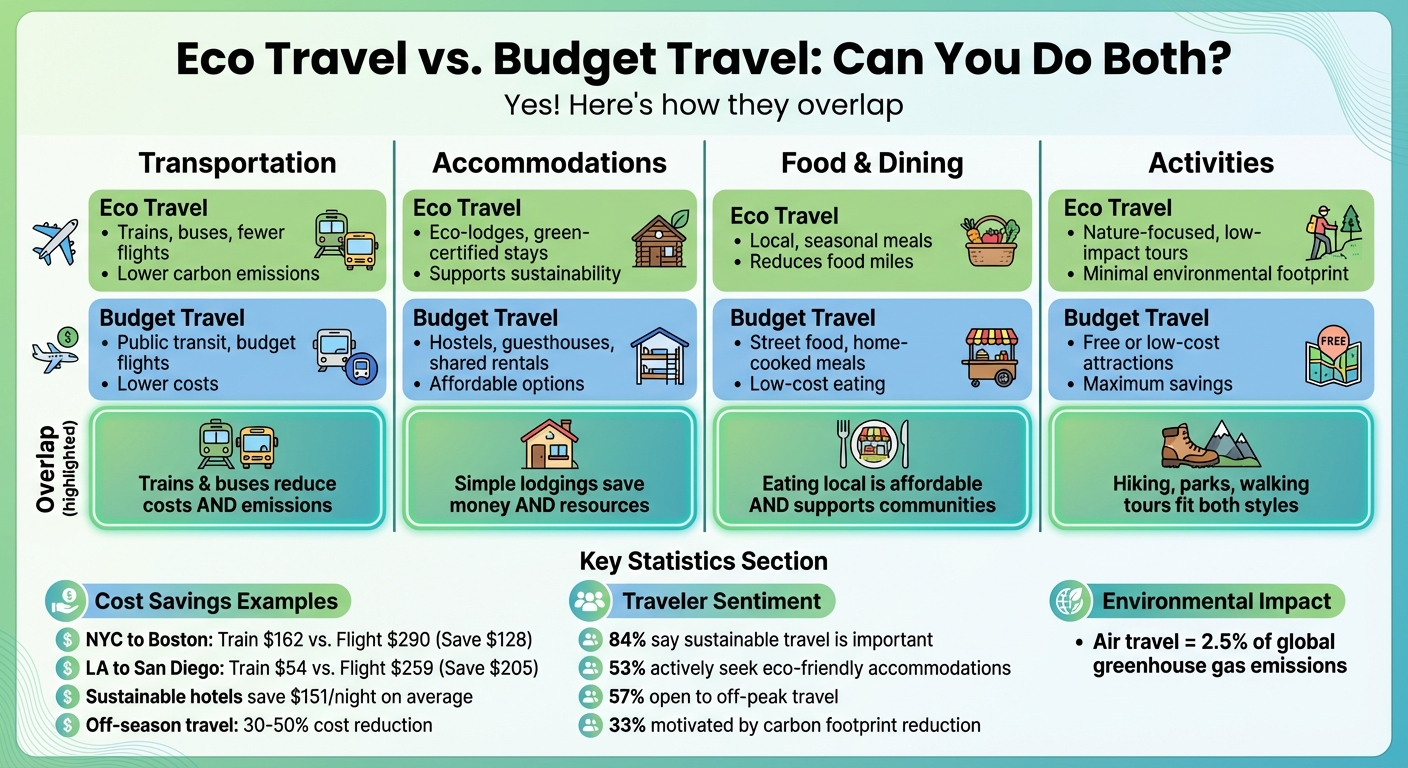
Eco Travel vs Budget Travel: Cost and Environmental Impact Comparison
Eco Travel: Pros and Cons
Benefits of Eco Travel
Eco travel offers a way to cut down on carbon emissions while saving money. For instance, trains on popular U.S. routes emit significantly less than airplanes. Air travel accounts for about 2.5% of global greenhouse gas emissions, making alternatives like rail travel a more eco-friendly choice. Plus, it’s often cheaper. A train ride from New York to Boston typically costs about $162, compared to $290 by air – a savings of around $128. Similarly, traveling by train from Los Angeles to San Diego costs just $54, while a flight can set you back $259, saving $205 in the process. These examples highlight how eco travel can align environmental benefits with financial savings.
Beyond reducing emissions, eco travel supports local economies. Opting for family-run guesthouses, local restaurants, and hiring community guides ensures your money stays in the region rather than going to large corporations. This approach also cuts down on food miles, offering fresher, seasonal meals. On top of that, it fosters genuine connections with the community. In fact, 84% of travelers say sustainable travel is important to them, and 53% actively look for eco-friendly accommodations that balance comfort with innovative design.
Eco-friendly stays also help reduce costs through energy-efficient practices. Many eco-hostels, solar-powered bed-and-breakfasts, and smaller lodges offer rates that compete with or even undercut those of larger chain hotels. While these advantages are compelling, it’s important to look at the challenges eco travel can present.
Drawbacks of Eco Travel
Despite its appeal, eco travel isn’t without its hurdles. Nearly half of travelers believe sustainable options are too expensive, and this sentiment has grown by 11 percentage points since 2022. While some eco-friendly choices can lead to long-term savings, certain certified eco-lodges, niche tours, or remote accommodations often come with higher upfront costs that may deter budget-conscious travelers.
Availability is another issue. In remote areas or developing regions, finding eco-certified options can be difficult. This often forces travelers to choose between sustainability and convenience. Researching genuine certifications, renewable energy use, and ethical practices can also be time-consuming. Additionally, some eco accommodations trade luxury amenities for low-impact features like solar showers or composting toilets, which may not appeal to everyone.
Comparison Table: Pros and Cons of Eco Travel
| Aspect | Pros | Cons |
|---|---|---|
| Environmental Impact | Lower carbon emissions with trains, buses, and direct flights; reduced resource use | Some destinations still require flights; limited low-carbon infrastructure in some regions |
| Cost | Trains often cost less than flights; sustainable hotels can save travelers about $151 per night | Premium prices for some eco-lodges and tours; perception that eco options are expensive |
| Local Communities | Supports local jobs, guides, and restaurants, keeping money in the community | Popular eco destinations may face overtourism pressures |
| Experience | Promotes cultural immersion, nature-focused activities, and meaningful travel | Requires more planning; fewer all-inclusive conveniences; may lack luxury amenities |
| Convenience | Growing availability of eco-hotels and sustainable transport options | Limited choices in some areas; verifying certifications to avoid greenwashing can be tricky |
Budget Travel: Pros and Cons
Benefits of Budget Travel
Traveling on a budget can significantly cut costs, allowing you to take more trips or extend your stays. Spending less per trip means you can explore new places more often throughout the year.
Budget travel also encourages stronger connections with local communities. Staying in hostels, guesthouses, or homestays often puts you in closer contact with residents and other travelers. Eating at family-run restaurants and using public transportation not only enhances these interactions but also directly supports local businesses.
Another perk? It builds adaptability. Spontaneous plans and last-minute deals can lead to unexpected adventures. Whether it’s figuring out a new bus route, stumbling upon a hidden café, or managing your expenses creatively, budget travel often leads to experiences that foster personal growth.
Interestingly, budget-friendly choices can sometimes align with a lighter environmental footprint. For example, hostels generally have lower carbon emissions per guest due to shared spaces requiring less energy. Using public transit instead of taxis, preparing meals with local groceries, and choosing simpler accommodations can further minimize resource use.
Of course, these savings come with a few trade-offs that are worth considering.
Drawbacks of Budget Travel
Comfort and convenience are often the first sacrifices. Budget travelers might have to settle for shared dorms, communal bathrooms, and basic furnishings. Transportation could mean long bus rides, multiple layovers, or cramped seats instead of direct, comfortable flights. Dining on street food or groceries can also lack the predictability and variety of sit-down restaurants.
There are also ethical concerns tied to budget travel. Ultra-low-cost airlines, for example, might prioritize cheap fares over fuel efficiency, leading to higher emissions per passenger. Similarly, budget accommodations under pressure to keep prices low may cut corners on waste management, energy use, or fair labor practices – issues travelers might unknowingly support when chasing the cheapest options.
Finally, budget travel can contribute to overtourism in popular, affordable destinations. When large numbers of travelers flock to the same budget-friendly areas, it can strain infrastructure, drive up rents for locals, and lead to overcrowding, which diminishes the overall experience for everyone.
The table below highlights the key contrasts between budget travel’s advantages and challenges.
Comparison Table: Pros and Cons of Budget Travel
| Aspect | Pros | Cons |
|---|---|---|
| Cost | Lower expenses; more frequent or longer trips; savings on lodging | Quality may be compromised; hidden costs can add up |
| Experience | Flexibility; deeper local immersion; skill-building opportunities | Reduced comfort and privacy; longer travel times; fewer amenities |
| Environmental Impact | Lower energy use in shared accommodations; reliance on public transit | Budget airlines may emit more; cheapest options may lack eco-friendly practices |
| Local Communities | Supports small businesses and local guides | Can lead to overtourism; pressure on operators may result in underpaid labor |
| Convenience | Freedom for spontaneity; last-minute deals | Requires more planning; fewer all-inclusive services; potential for discomfort |
Eco Travel vs. Budget Travel: Direct Comparisons
Transportation: Sustainable vs. Affordable Options
When it comes to getting from point A to point B, trains and buses strike a great balance between cost and environmental impact, especially for trips under 500–600 miles. While budget airlines may lure travelers with low fares, the environmental cost is steep – commercial aviation contributes about 2.5% of global greenhouse gas emissions. Many low-cost carriers focus on cutting prices rather than improving fuel efficiency. On the other hand, trains and intercity buses produce significantly fewer emissions per passenger mile while keeping travel expenses manageable. Once you reach your destination, opting for public transit, biking, or walking is not only easier on the wallet but also reduces your carbon footprint compared to rental cars or rideshares.
This approach to transportation mirrors the cost-conscious and eco-friendly mindset seen in accommodation choices.
Accommodations: Eco-Lodges vs. Budget Stays
Eco-friendly lodging options are often more affordable than expected, making sustainable travel accessible to a broader audience.
Budget accommodations like hostels, guesthouses, and homestays naturally align with eco-travel values. These options lower energy use per person through shared spaces, support local businesses, and generate minimal carbon emissions per guest-night. However, they may not always have formal green certifications or advanced eco-friendly features due to their limited resources.
On the flip side, well-operated eco-lodges can rival mid-range hotels in terms of environmental performance. Surprisingly, a modest guesthouse that relies on natural ventilation and solar-powered water heating can sometimes outperform a luxury "eco-resort" that consumes significant energy with amenities like constantly running pools and air conditioning.
Comparison Table: Eco Travel vs. Budget Travel
| Category | Eco Travel | Budget Travel | Where They Overlap |
|---|---|---|---|
| Transportation | Trains, buses, and minimal flying; focuses on low emissions | Public transit, budget flights, and ridesharing; prioritizes low cost | Trains and buses combine affordability with reduced emissions |
| Accommodations | Eco-lodges, certified green hotels, sustainable homestays | Hostels, guesthouses, and budget hotels with shared spaces | Simple lodging options keep costs and resource use low |
| Food & Dining | Local, sustainable dining choices | Street food, markets, and family-run restaurants | Eating local supports communities and saves money |
| Activities | Sustainable tours, nature experiences, cultural immersion | Free walking tours, public parks, and affordable cultural sites | Low-impact activities like hiking or museum visits are budget- and eco-friendly |
| Trip Planning | Off-season travel, slow travel, and exploring lesser-known spots | Flexible timing, advance booking, and avoiding peak prices | Off-peak travel reduces both environmental strain and costs |
sbb-itb-289f5f2
How to Combine Eco Travel and Budget Travel
Plan Ahead for Affordable, Sustainable Choices
Planning ahead can help you snag low-cost, eco-friendly travel options. Booking train or bus tickets well in advance often saves money and reduces your carbon footprint compared to flying. For example, a train ride from New York to Boston costs around $162, which is about $128 cheaper than the $290 airfare – and it’s better for the environment, too.
The same principle applies to accommodations. Early reservations at eco-hostels, guesthouses, or locally owned lodges can help you avoid peak-season price hikes. Many of these places emphasize sustainability with features like solar-powered showers or energy-efficient operations, which not only help the planet but also keep costs down.
Travel Off-Season and Explore Hidden Gems
Once you’ve booked your trip, consider traveling during the off-season to save even more. For instance, visiting Croatia in May or September or Vietnam in April or May can cut accommodation and flight costs by 30–50% compared to peak summer months. Off-season travel also reduces overcrowding, easing the strain on local infrastructure and making for a more relaxed experience.
If you’re open to exploring less touristy spots, you’ll often find even better deals. In rural Vietnam or on Croatia’s smaller islands, eco-friendly guesthouses can cost as little as $15–$25 per night during shoulder seasons, compared to $50 or more during peak times. Plus, avoiding heavily visited areas helps combat overtourism and supports smaller communities that may not rely as heavily on tourist income. Interestingly, 57% of travelers are open to trips closer to home or during off-peak times, with 33% motivated by the goal of reducing their carbon footprint.
Embrace Slow Travel
Another way to combine eco-consciousness with budget travel is by adopting a slow travel mindset. This means staying longer in fewer places and using local transportation instead of rushing between multiple cities. Not only does this approach cut costs, but it also reduces emissions. Spending two to three weeks in one U.S. region and relying on buses, commuter trains, or bikes eliminates the need for multiple flights or long car journeys. Considering air travel contributes about 2.5% of global greenhouse gas emissions, skipping even one or two flights can make a noticeable impact.
Longer stays also bring practical perks. Weekly rental discounts, shopping at local markets, and cooking your own meals can significantly lower expenses. Many hostels with shared kitchens make it easy to prepare meals while keeping energy use minimal. By traveling slower and staying in one area, you’ll also have more opportunities to support local businesses, like family-owned restaurants and shops, while keeping your overall trip expenses in check.
How to save money while travelling – without hurting the planet
Conclusion: Can You Do Both?
Combining sustainability and affordability in travel isn’t just a dream – it’s entirely doable with some smart planning. In fact, many eco-friendly choices naturally align with saving money. Think about it: taking trains instead of short flights, staying at locally owned guesthouses, enjoying vegetarian meals at neighborhood spots, or diving into free outdoor activities. These choices not only lighten your carbon footprint but also ease the strain on your wallet. The trick lies in intentional planning rather than assuming eco travel always comes with a hefty price tag.
Research shows that making sustainable travel decisions often leads to noticeable savings. Simple, smarter choices can create a win-win for both your finances and the environment.
You don’t need to choose between sticking to your budget and staying true to your values. Focus on a few impactful practices, like choosing train travel over flights or booking locally owned accommodations. Adjusting travel dates or opting for longer stays in fewer locations can also help manage costs. Even small changes, like skipping a flight or enjoying more local meals, add up over time. With a bit of thought, every trip can strike a balance between being eco-friendly and budget-conscious.
For U.S. travelers looking to plan these hybrid trips, resources like Take More Adventures offer valuable tools. From eco-friendly travel tips to adventure guides, they provide practical advice to help you explore responsibly without breaking the bank. Whether you’re taking the train to national parks, camping on a budget, or seeking affordable eco-lodges, the overlap between sustainable and budget travel is very real. With the right strategies, your next trip can deliver both cost savings and meaningful environmental benefits.
FAQs
Is it possible to travel sustainably without spending a lot of money?
Planning a trip that’s kind to both your wallet and the planet is easier than you might think. Start by choosing eco-friendly accommodations that won’t break the bank – places like hostels, guesthouses, or eco-lodges often fit the bill. For getting around, consider public transportation, walking, or renting bikes. Not only are these options more affordable, but they also help minimize your carbon footprint.
When it comes to food, go for local and seasonal dishes. These meals tend to be cheaper and come with the added bonus of being more sustainable. For activities, focus on outdoor experiences such as hiking, swimming, or exploring national parks. These adventures are not only budget-friendly but often require little to no extra gear.
A bit of planning goes a long way. Researching and booking sustainable options ahead of time can help you snag discounts while staying eco-conscious. With some thoughtful preparation, you can enjoy a trip that’s both affordable and environmentally mindful.
How can I find affordable eco-friendly accommodations?
Finding places to stay that are both eco-friendly and budget-conscious isn’t as tricky as it might seem. Look for accommodations with green certifications or those that emphasize sustainability – these are usually a good sign of their environmental efforts. Plus, booking ahead of time can often secure you better rates, especially in high-demand spots.
For a more affordable stay, think about hostels, guesthouses, or eco-lodges. These options are typically easier on your wallet compared to larger hotels. Another tip? Check out places located outside the main tourist areas – they’re often cheaper. When browsing online, use filters to zero in on properties with eco-friendly practices, making your search quicker and more focused.
Is slow travel a more affordable and eco-friendly option than traditional travel?
Yes, slow travel can often save you money and be kinder to the environment compared to traditional travel. When you stay in one location for an extended period, you cut back on frequent transportation expenses and reduce emissions, which helps lessen your environmental footprint. Plus, longer stays can lead to better accommodation rates and give you the chance to dive deeper into the local way of life, making your experience not only more affordable but also richer and more rewarding.