
Geotourism and Community Workshops
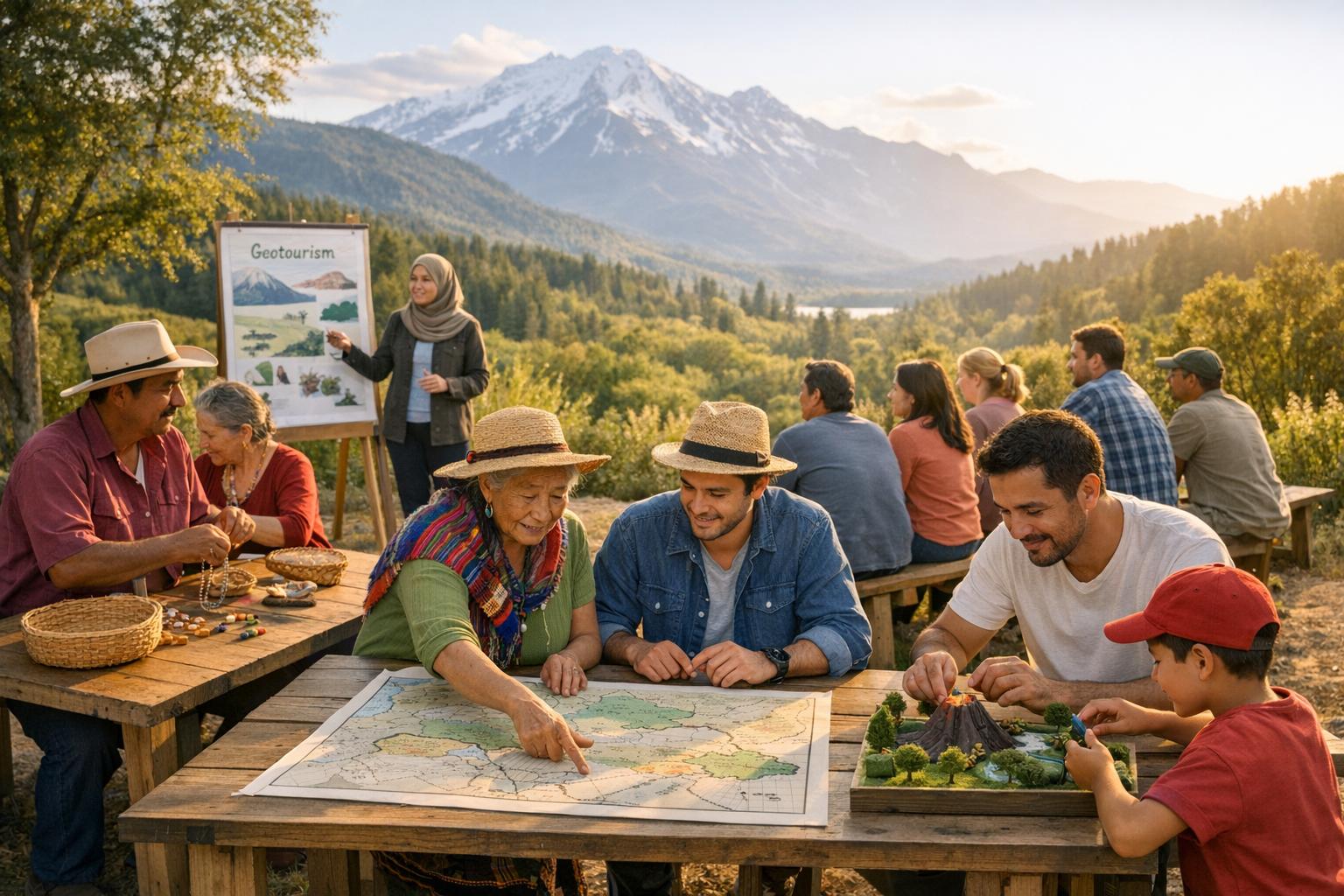
Geotourism prioritizes preserving a location’s environment, heritage, and local well-being while promoting responsible tourism. Community workshops play a key role by involving locals in planning and managing tourism efforts. These workshops focus on four areas:
- Destination Planning: Involves locals in creating tourism strategies that align with community goals.
- Product Development: Helps entrepreneurs and artisans create marketable goods and experiences.
- Capacity Building: Empowers communities with skills to manage tourism and resources effectively.
- Visitor Education: Engages travelers in hands-on learning about a destination’s history, geology, and traditions.
These initiatives benefit locals by boosting economic opportunities and pride in their heritage while offering travelers meaningful, well-managed experiences. With half of U.S. traveling households seeking responsible travel, geotourism is becoming a preferred approach for sustainable tourism growth.
1. Destination Planning Workshops
Main Audience
Destination planning workshops gather a diverse group of participants, including community leaders, economic development teams, Chambers of Commerce, tourism agencies, local business owners, residents, and conservation groups. This mix ensures that tourism strategies align with the community’s shared goals and values, while also supporting geotourism’s central idea: protecting both the environment and local culture through responsible stewardship.
Primary Goal
"Geotourism is defined as tourism that sustains or enhances the geographical character of a place – its environment, culture, aesthetics, heritage, and the well-being of its residents".
The overarching aim is to create economic opportunities without compromising the community’s identity or natural resources. These workshops lay the foundation for meaningful community engagement and collaboration.
Community Involvement
A key feature of these workshops is the Community Visioning process, where residents answer three pivotal questions: "What do we want?", "What help do we need?", and "Who will take time to work on it?" This bottom-up approach ensures that local voices drive the initiatives. Matt Brueseke from Kansas State University emphasizes this, stating:
"Find local champions; it needs to be bottom-up and not top-down".
To maintain consistency and local leadership, communities often establish a Geotourism Stewardship Council. These councils, made up of residents, businesses, and NGOs, help ensure that policies remain stable even when political leadership changes. Another engaging activity is "Hands-On Branding", where residents identify authentic attractions and hidden gems for destination guides. A great example of this is the Appalachian Geopark Project, where Robert Burns of West Virginia University collaborated with three counties to highlight coal mining heritage and cave systems as new economic opportunities.
Educational Depth
Participants in these workshops are introduced to a geotourism mindset that blends elements of ecotourism, heritage tourism, and agritourism. Training sessions help attendees become effective ambassadors for their communities and shape a shared narrative about their destination. For professionals, these workshops even offer 6.00 Continuing Maintenance credits for certified planners, showing the level of expertise and practical skills they provide. This focus on education benefits both the local community and visitors.
Outcomes for Locals and Travelers
For locals, these workshops inspire pride in their community, offer economic incentives to protect local assets, and foster self-sustaining tourism models. A standout example comes from the Keweenaw Peninsula in Michigan, where Erika Vye and William Rose from Michigan Technological University developed geotours. These included passenger-boat tours and water trails, which not only increased Earth science literacy but also created sustainable economic opportunities tied to the region’s copper and rock heritage.
For travelers, the workshops result in authentic and unique experiences. Locally curated guides highlight the true essence of a destination. One notable initiative is the Lewis and Clark National Historic Trail project. The National Park Service launched an online travel guide (lewisandclark.travel), where residents and businesses could nominate authentic attractions – from scenic viewpoints to artisan shops. This effort supported local economies while offering visitors a deeper connection to the places they explored. It’s a clear example of how geotourism strengthens the bond between communities and travelers.
2. Product Development and Experience Design Workshops
Main Audience
These workshops bring together a mix of local talent. Product development sessions are geared toward entrepreneurs, artisans, and farmers looking to enhance the commercial appeal of their goods. On the other hand, experience design workshops cater to guides, storytellers, site managers, and community members who interact directly with visitors. Additionally, these workshops welcome community and economic development staff, Chambers of Commerce, and heritage site managers. This diverse group ensures that the workshops tap into local strengths and translate them into meaningful, market-ready offerings.
Primary Goal
Product workshops focus on identifying "OUV critical" assets – resources that are central to a site’s Outstanding Universal Value, like traditional agricultural products. The goal is to turn these assets into marketable goods that command a "provenance premium", appealing to consumers who value a unique story behind their purchases. Experience design workshops, meanwhile, center on crafting authentic visitor experiences through storytelling. Michele Archie, Principal of The Harbinger Consultancy, highlights how geotourism supports place-based education, conservation, historic preservation, and local entrepreneurship.
Community Involvement
Communities play an active role by launching projects such as MapGuides and themed festivals, which amplify local stories and boost economic benefits. The UNESCO Sustainable Tourism Toolkit underscores the importance of authenticity in these efforts:
"For experiences to be authentic they need to be brought forth by the host community in a way they feel is respectful, authentic, and beneficial to them, as well as to the visitor."
Additionally, communities take steps to protect their intellectual property, ensuring that the revenue generated from local stories and traditional designs stays within their hands.
Educational Depth
Experience design workshops delve into topics like Earth science literacy, cultural heritage storytelling, and place-based education. Product workshops, on the other hand, address branding, intellectual property rights, and modernizing traditional products for commercial success. Some workshops even offer professional credits. Pricing typically ranges from $250 (on-demand) to $525 (regular), with early-bird rates between $375 and $425. These sessions provide communities with the tools they need to maximize local value and deliver richer experiences to visitors.
Outcomes for Locals and Travelers
For local communities, these workshops open doors to sustainable livelihoods while helping them capture the added value of provenance premiums. By diversifying their offerings – like pairing nature tours with local crafts – they can reduce economic risks and build a more resilient tourism economy. For travelers, the benefits come in the form of deeper connections to the destination. Whether it’s savoring local foods, learning traditional crafts, or uncovering regional heritage, these immersive experiences create lasting memories. As Sustainable Tahoe puts it, "Geotourism is the future of travel if destination uniqueness is to survive the traffic." These workshops ensure that locals gain economic opportunities while visitors leave with meaningful, authentic experiences.
3. Capacity Building and Skills Training Workshops
Main Audience
These workshops bring together key players shaping the future of their destinations. Participants include community and economic development staff, representatives from Chambers of Commerce, small business owners, conservation groups, and heritage site managers. The goal? To strengthen local expertise rather than depending on external consultants. As Nicole Manapol, Former Community Development Specialist at SUNY Geneseo, explains:
"This is a great opportunity for small communities and organizations that may not have the funding to hire top consulting talent".
The sessions also draw in park managers and local artisans eager to expand their role in tourism development. These efforts emphasize community-driven decision-making, building on the groundwork laid during earlier planning workshops.
Primary Goal
The overarching aim is to shift the focus from merely attracting visitors to managing tourism in a way that benefits both the community and its environment. This approach prioritizes the well-being of residents and the preservation of local identity. Matt Brueseke from Kansas State University highlights the importance of grassroots involvement:
"Find local champions; it needs to be bottom-up and not top-down".
Through these workshops, communities learn to take control of their narrative and craft sustainable tourism policies that can withstand political shifts. With about 50% of U.S. traveling households seeking destinations that balance character and responsibility, there’s a ready audience for communities embracing this approach. These training programs empower local leaders to step up and actively manage tourism in their areas.
Community Involvement
The workshops strengthen existing Stewardship Council structures by teaching members practical management skills. Participants work through steps like defining a vision, adopting a geotourism charter, and launching impactful projects – examples include locally curated MapGuides or themed festivals. Communities also learn to establish self-sustaining revenue streams, such as business certifications or membership dues, to ensure the council’s long-term operations.
Educational Depth
The workshops offer hands-on training in skills directly tied to capacity building. Participants learn techniques like collaborative storytelling and grassroots digital marketing. For professionals, the workshops also provide continuing education credits – 6.00 credits for the American Institute of Certified Planners (AICP) and the Landscape Architecture Continuing Education System (LA CES). Pricing for participation ranges from $250 to $525 per attendee.
Outcomes for Locals and Travelers
These workshops help communities pivot toward sustainable tourism management. For locals, they provide the tools to manage resources collaboratively, encourage entrepreneurial growth, and create new job opportunities, especially in towns transitioning from industries like mining to tourism. Residents also become ambassadors for their communities, promoting them through authentic storytelling.
For travelers, the benefits are destinations that retain their unique charm while offering sustainable tourism infrastructure. The growing interest in geotourism and ecotourism reflects this demand. In fact, the global ecotourism market, closely tied to geotourism, was valued at $181.1 billion in 2019 and is expected to grow to $333.8 billion by 2027. This shift highlights the increasing appeal of authentic, well-managed travel experiences.
Grass roots tourism: How community engagement fuels tourism development
sbb-itb-289f5f2
4. Visitor-Focused Educational Workshops
Visitor-focused educational workshops take a hands-on approach to connecting travelers with the rich stories and unique features of a destination. These workshops build on community-driven efforts like planning, product development, and capacity-building initiatives, but with a direct focus on engaging visitors.
Main Audience
These workshops are designed for geotourists – travelers who prioritize meaningful, authentic experiences over run-of-the-mill tourist attractions. In the U.S. alone, this group includes around 50% of traveling households, or more than 65 million households. Beyond geotourists, the workshops also attract younger audiences and those seeking memorable, off-the-beaten-path adventures that highlight a destination’s natural and cultural essence.
Primary Goal
The overarching aim is to safeguard and celebrate a destination’s unique identity while educating visitors and benefiting local residents. By tapping into local expertise, these workshops help travelers gain a deeper appreciation of what makes a place truly special.
Community Involvement
The heart of these workshops lies in the active participation of local residents. Artists, craftsmen, storytellers, and historians take center stage, sharing their community’s heritage and traditions directly with visitors. Jonathan Tourtellot, the creator of the geotourism concept, captures the essence of this approach:
"Local people are the ultimate geotourism asset".
This dynamic exchange transforms residents into enthusiastic ambassadors for their communities, creating authentic and engaging storytelling experiences. By involving locals in such a direct way, these workshops offer visitors truly immersive and hands-on learning opportunities.
Educational Depth
The workshops delve into a destination’s full geographical character, covering its environment, culture, history, and even aesthetics. Activities might include guided nature walks, shipwreck explorations, craft-making sessions, or cooking lessons featuring local cuisine. Visitors also learn about geological landmarks and other unique features of the area. The National Geographic Geotourism Charter emphasizes the value of this kind of "interactive interpretation", where both visitors and hosts learn from one another, fostering mutual respect and local pride.
Outcomes for Locals and Travelers
These workshops create a win-win situation. For locals, they offer economic benefits and encourage the preservation of community assets while instilling pride in their heritage. For travelers, they provide responsible, meaningful access to destinations that retain their distinctive character. As Jonathan Tourtellot points out:
"One of the most rewarding ways for local people to gain appreciation for their own natural and cultural heritage is to present it to visitors… the best way to learn a subject is to teach it".
The rising popularity of these experiences is evident in the global ecotourism market, which was valued at $181.1 billion in 2019 and is expected to grow to $333.8 billion by 2027. This trend underscores the growing appeal of immersive, community-driven travel experiences.
Advantages and Disadvantages
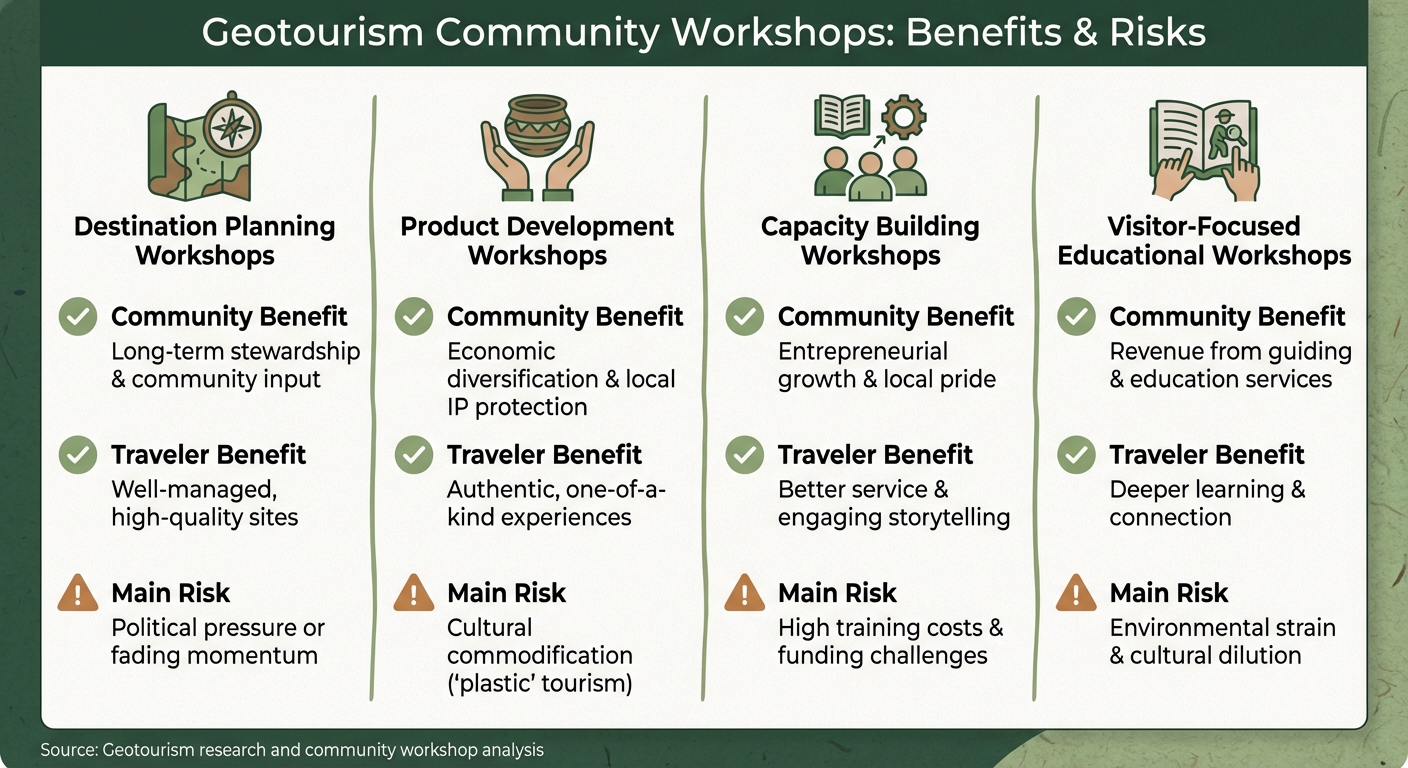
Four Types of Geotourism Community Workshops: Benefits and Risks Comparison
Each type of workshop comes with its own set of strengths and challenges, offering different opportunities and risks for communities and travelers alike.
Destination Planning Workshops:
These workshops are excellent for fostering long-term stewardship through community-led councils that can operate independently of political changes. For travelers, they ensure well-managed and high-quality sites. However, these efforts often require sustained funding, and without clear deadlines or specific "catalytic projects", community enthusiasm can fade over time.
Product Development Workshops:
These sessions help diversify local economies by adding value to regional goods, like crafts and agricultural products, often creating a "provenance premium". Travelers benefit from unique, meaningful experiences that go beyond typical tourist attractions. On the downside, poorly managed efforts can lead to "plastic" or inauthentic cultural experiences, which commodify heritage rather than celebrate it. For these workshops to succeed, authenticity must come from within the community itself.
Capacity Building Workshops:
These workshops empower local entrepreneurs and turn residents into passionate "word-of-mouth ambassadors". However, the initial costs for training can be steep, and since the closure of the formal National Geographic program in 2016, finding expert support has become more challenging. Grassroots involvement is critical for success:
"Find local champions; it needs to be bottom-up and not top-down".
Visitor-Focused Educational Workshops:
These workshops offer mutual benefits. Travelers gain a deeper understanding of Earth sciences through hands-on activities, while communities earn direct income from guiding and educational services. However, they come with risks like environmental strain – such as firewood depletion – and the potential for outside cultural influences to dilute indigenous traditions. This can erode the long-term benefits for communities. As author and climber Conrad Anker points out:
"There’s no clear answer to finding a balance… the first step is not to appropriate local culture, but rather to respect it and better understand it".
The table below provides a quick comparison of the key benefits and risks associated with each workshop type:
| Workshop Type | Community Benefit | Traveler Benefit | Main Risk |
|---|---|---|---|
| Destination Planning | Long-term stewardship & community input | Well-managed, high-quality sites | Political pressure or fading momentum |
| Product Development | Economic diversification & local IP protection | Authentic, one-of-a-kind experiences | Cultural commodification ("plastic" tourism) |
| Capacity Building | Entrepreneurial growth & local pride | Better service & engaging storytelling | High training costs & funding challenges |
| Visitor-Focused | Revenue from guiding & education services | Deeper learning & connection | Environmental strain & cultural dilution |
Conclusion
Geotourism workshops create a foundation that benefits both local communities and travelers in meaningful ways. By exploring the various workshop types, it’s clear how their combined efforts make a significant impact. Community-run Stewardship Councils and well-timed, impactful projects empower locals to safeguard their heritage while fostering development opportunities. Travelers, on the other hand, gain access to one-of-a-kind experiences, while locals acquire new skills and economic options that don’t rely on resource-intensive industries.
The secret to making this work? A bottom-up approach. As Matt Brueseke from Kansas State University explains:
"Find local champions; it needs to be bottom-up and not top-down".
This underscores the importance of locals taking the lead, with government playing a supportive, rather than controlling, role.
Travelers can also play their part by using resources like community-branded travel guides – such as lewisandclark.travel – to discover locally-owned businesses and authentic destinations. With around 50% of U.S. traveling households already showing interest in exploring unique destinations responsibly, the demand for these experiences is clear.
When approached collectively, geotourism delivers on its promise: empowering communities while offering travelers enriching experiences. Each workshop serves a distinct purpose in this strategy – planning ensures governance, product development crafts authentic experiences, capacity-building supports local entrepreneurs, and educational sessions enhance understanding for both visitors and hosts. Together, these efforts transform geotourism into more than just a form of travel – it becomes a powerful tool for preservation, learning, and community growth.
FAQs
How do geotourism workshops support local communities?
Geotourism workshops give local communities the tools to transform their natural and cultural treasures into tourism opportunities that benefit everyone. These sessions guide residents in creating visitor experiences that highlight their region’s landscapes, geology, and heritage. The ripple effect? New jobs, more income for local artisans, and a greater share of tourism dollars staying within the community. Think small-business grants, guided tours, and handcrafted souvenirs – initiatives that often spring to life from these workshops.
But the impact goes beyond economics. These workshops empower locals to take charge of their tourism story. From forming community-led councils to marketing their region and developing educational programs, participants gain skills that help preserve traditions, revitalize culture, and boost community pride. The outcome is a community that’s not only stronger but also more connected, with better infrastructure and an improved quality of life for its residents.
For those eager to support these efforts, Take More Adventures provides guides and resources to help travelers connect with community-led geotourism projects across the United States.
How do local residents contribute to geotourism efforts?
Local residents are at the heart of geotourism, bringing destinations to life by sharing their stories, traditions, and perspectives. Their participation ensures that tourism reflects the true essence of a place while directly benefiting the community. Whether it’s leading workshops, contributing to planning efforts, or managing visitor sites, locals play a hands-on role in crafting memorable experiences for travelers.
When residents take an active role in shaping tourism, they help safeguard their heritage, encourage environmentally conscious practices, and keep tourism dollars circulating within the community. This partnership not only strengthens the bond between visitors and the destination but also inspires locals to celebrate and protect their culture and surroundings.
What are some ways travelers can practice responsible geotourism?
Geotourism is all about appreciating and preserving the distinctive environment, heritage, and traditions of a destination while ensuring local communities benefit. Travelers can make a positive impact by supporting local businesses, joining community-led activities, and treating both the natural and cultural surroundings with respect.
Here are a few ways to travel responsibly with geotourism in mind:
- Opt for eco-friendly transportation: Walk, bike, or use low-emission vehicles, and always stick to marked trails to minimize environmental impact.
- Practice Leave No Trace principles: Carry out all trash, respect wildlife, and avoid disturbing private property or fragile ecosystems.
- Support local businesses: Purchase food, crafts, and services directly from local vendors. For example, consider spending $25–$50 on a guided hike with a local expert.
- Be thoughtful on social media: Share your experiences in a way that respects the host community, and give proper credit when sharing photos or stories.
By adopting these habits, travelers can enjoy enriching experiences while contributing to the preservation of the geological and cultural treasures of their destinations.