How to Kayak Responsibly in Marine Sanctuaries
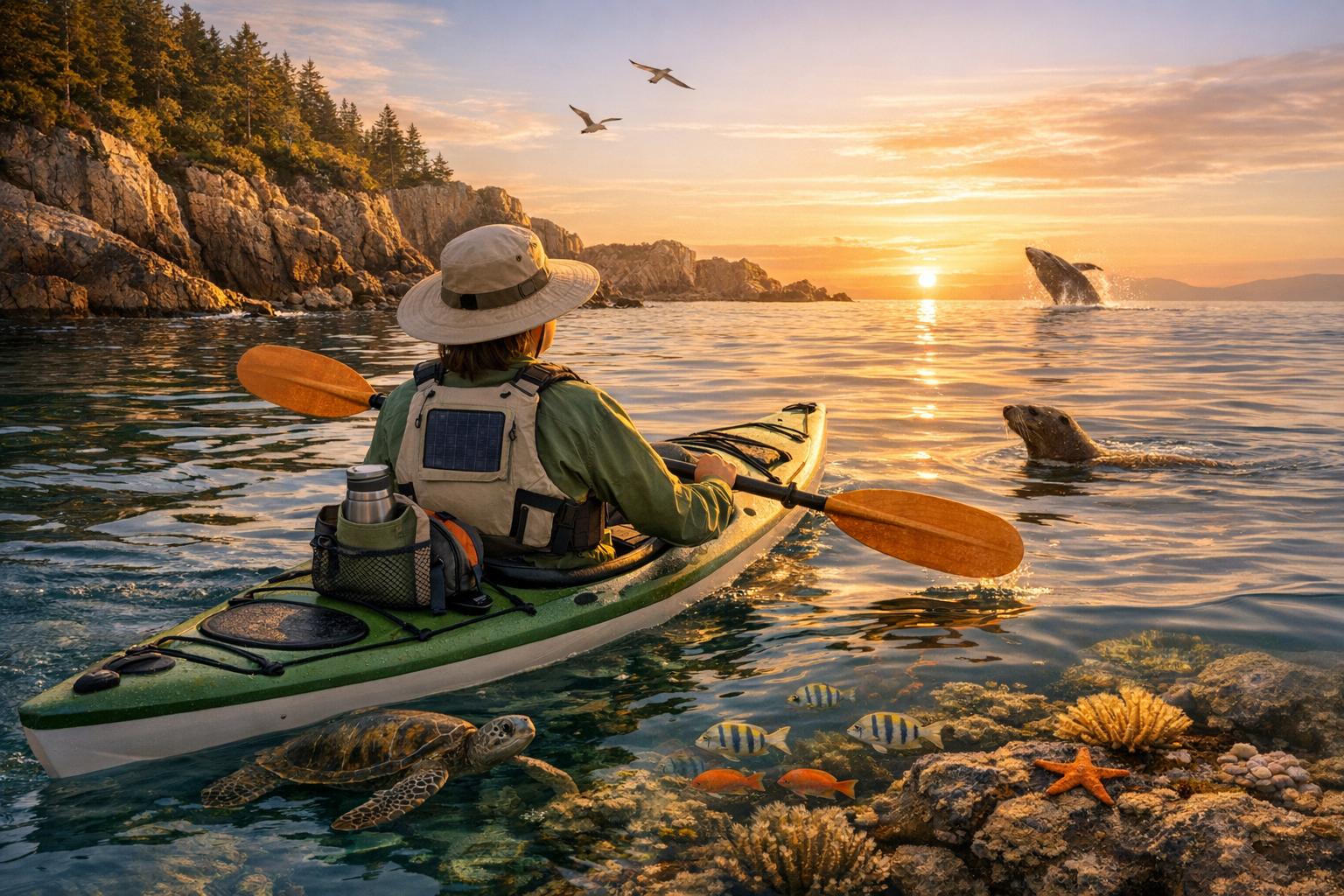
Kayaking in marine sanctuaries offers a unique opportunity to experience protected waters and wildlife, but it comes with responsibilities. Here’s what you need to know to kayak safely and responsibly:
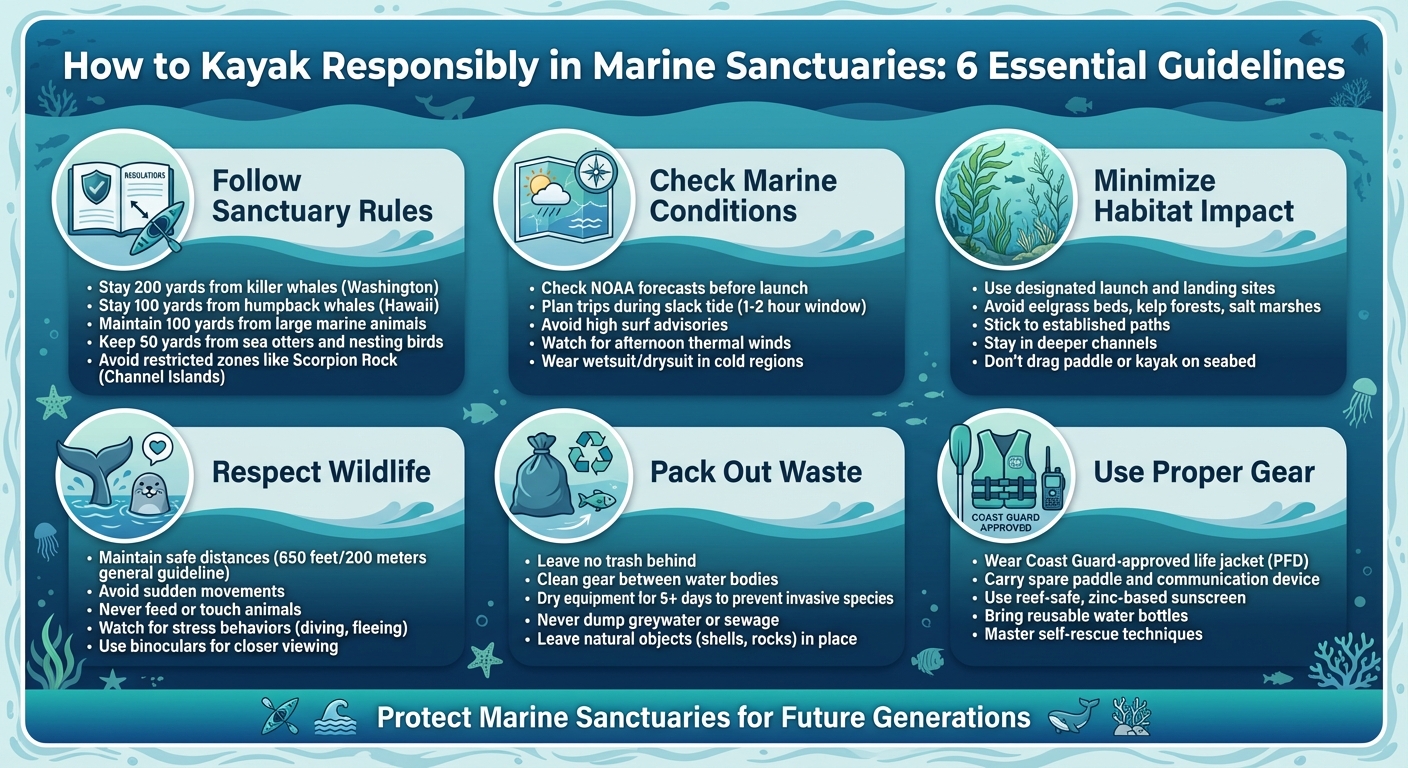
- Follow Sanctuary Rules: Review specific regulations for the area, including wildlife buffer zones and no-landing areas. For instance, stay 200 yards away from killer whales in Washington waters and avoid restricted zones like Scorpion Rock in Channel Islands.
- Check Marine Conditions: Always check NOAA forecasts for wind, wave heights, tides, and currents. Plan trips during slack tide for calmer conditions and avoid high surf or strong winds.
- Minimize Habitat Impact: Use designated launch and landing sites, avoid sensitive areas like eelgrass beds and tide pools, and stick to established paths.
- Respect Wildlife: Maintain safe distances (e.g., 100 yards from humpback whales), avoid sudden movements, and never feed or touch animals.
- Pack Out Waste: Leave no trash behind, clean your gear to prevent spreading organisms, and avoid dumping anything into the water.
- Use Proper Gear: Wear a Coast Guard-approved life jacket, carry safety equipment, and use eco-friendly products like reef-safe sunscreen.
Essential Guidelines for Responsible Kayaking in Marine Sanctuaries
Planning and Preparing for Your Kayak Trip
Research Sanctuary Rules and Zones
Before heading out, take some time to review the specific rules and zones for the sanctuary you plan to visit. NOAA’s National Marine Sanctuaries website (sanctuaries.noaa.gov) is a great resource for this. Each sanctuary operates under its own set of regulations, outlined in 15 CFR Part 922, with specific subparts for locations like Monterey Bay (Subpart M). Pay attention to required wildlife buffers, such as maintaining a distance of 100 yards from large marine animals and 50 yards from sea otters and nesting birds. Also, note any areas where landing or entry is off-limits.
Some sanctuaries have strict zone restrictions. For example, Alcatraz Island in San Francisco Bay prohibits landings and enforces a 300-foot buffer. Similarly, Marin Islands require a 100-foot shore buffer, and Don Edwards Refuge bans landings above the high tide line. At Channel Islands National Park, it’s illegal to land on offshore rocks, islets, or inside sea caves. The Scorpion Rock area is also a designated no-take marine reserve, meaning you can’t disturb any living or geological resources there.
Be aware of overlapping protections, such as national wildlife refuges or state marine protected areas, which may have additional rules. For instance, the Bodega Marine Reserve within the Greater Farallones Sanctuary prohibits trespassing above the mean high tide line to protect sensitive habitats and ongoing research. To avoid surprises, contact the sanctuary’s visitor center or ranger station for the latest guidelines.
Once you’re clear on the rules, shift your focus to current marine conditions to ensure a safe trip.
Check Marine Conditions
Marine conditions can make or break your kayaking adventure, so it’s essential to check NOAA marine forecasts (weather.gov) and Tides & Currents (tidesandcurrents.noaa.gov) before heading out. Look for information on wind, waves, tides, and currents. Ideally, plan your launch during slack tide – the 1–2-hour window around high or low tide – when currents are at their weakest. Strong ebb or flood currents, particularly in areas like Monterey Bay and Elkhorn Slough, can be dangerous and unpredictable.
Steer clear of paddling during high surf advisories or when afternoon thermal winds are expected, especially along exposed coastlines. In colder regions like Point Reyes, wearing a wetsuit or drysuit is a must, even in warmer months, to guard against hypothermia. Wildlife-sensitive seasons, like bird nesting or seal pupping periods, are another factor to consider – postponing your trip during these times helps protect the animals and their habitats.
With safe conditions confirmed, it’s time to plan your route and gear with the environment in mind.
Choose Low-Impact Routes and Equipment
When mapping out your route, avoid areas with sensitive habitats such as eelgrass beds, kelp forests, salt marshes, or salt ponds. For instance, salt ponds and marshes are off-limits in Don Edwards Refuge, and in the Greater Farallones Sanctuary, disturbing tide pool ecosystems should be avoided. At Bolinas Lagoon, stick to designated launch sites and main channels. Navigation apps like Navionics can help you identify paths that minimize your impact on these delicate environments.
For gear, opt for a stable, non-motorized kayak and make sure you have essentials like a Coast Guard–approved life jacket, a spare paddle, a communication device, and proper cold-water clothing. Use reef-safe, zinc-based sunscreens and reusable water bottles to reduce waste. If you need an anchor, choose one designed to avoid damaging the seabed, such as kelp-friendly options. The right gear not only protects the environment but also ensures you comply with sanctuary rules on submerged lands and waste discharge.
Launching and Landing Responsibly
Use Designated Access Points
Thoughtful planning and preparation can go a long way in ensuring your launch and landing practices align with the sanctuary’s protection goals. Always stick to designated boat ramps and access points instead of using non-designated areas. These spots are carefully chosen to reduce environmental harm and provide safe access without disturbing delicate areas like dunes, marshes, or nesting sites. Before heading out, check the sanctuary’s website to confirm which launch sites are open and whether any require permits or have seasonal restrictions.
If you’re paddling with a group of 10 or more, make sure to pre-register your trip. This helps reduce congestion and protects these access points from overuse. When it’s time to approach the shore, handle it with care to avoid damaging sensitive habitats.
Minimize Shoreline Impact
Be mindful of where you step when entering or exiting the water. Fragile habitats like tide pools, eelgrass, and marshes are home to countless marine species and should be avoided. Use established footpaths whenever possible. If you need to cross a beach, stick to walking on sand or rocks rather than stepping on plants.
Leave natural objects such as rocks, shells, and driftwood exactly where they are. These items play an essential role in providing habitat for marine life and shouldn’t be collected or moved. Lastly, ensure that all waste and gear are managed properly to leave the area as pristine as you found it.
Manage Waste and Gear
Take all trash, food scraps, and packaging with you when you leave. As the Leave No Trace Center for Outdoor Ethics points out, "Garbage is one of the greatest threats to marine wildlife".
To prevent the spread of invasive species, clean and dry all your gear before moving between water bodies. Scrub off any visible plants, animals, or mud, and drain all water from your kayak, sponges, and bailers. If possible, rinse everything with high-pressure hot water. When transitioning between different water bodies, dry your equipment for at least five days to ensure any tiny, hard-to-see organisms are no longer viable. And remember, never dump wash water, greywater, or holding tank contents into the bay.
Paddling Responsibly Around Wildlife and Habitats
Maintain Safe Wildlife Distances
Keeping a respectful distance from marine wildlife is not just considerate – it’s essential. For instance, in Hawaii, it’s against the law to get closer than 100 yards to a humpback whale. For other marine animals like seals, porpoises, and whales, aim to stay about 650 feet (200 meters) away, whether you’re on the water or observing from the shore. These guidelines help minimize stress on the animals, allowing them to go about their natural routines undisturbed.
If an animal happens to approach you, stay calm and paddle away slowly without sudden movements. To get a closer look, rely on binoculars or a camera with a zoom lens instead. As NOAA advises, "When you keep your distance, you maximize your chances of seeing natural behaviors". Also, never feed or touch wildlife – it can harm their health and disrupt their behavior.
Respecting these distances also helps you notice potential signs of stress in the animals you’re observing.
Recognize and Avoid Stress Behaviors
Beyond maintaining a safe distance, it’s important to watch for signs that your presence might be causing distress. Stressed marine animals often change their behavior suddenly – they may startle, swim away quickly, or stop what they were doing. If you notice animals diving, altering their direction, or acting alarmed, increase your distance immediately.
When observing wildlife in shallow areas or tide pools, approach quietly and avoid casting shadows over them, which can scare them off. Be especially cautious during breeding, nesting, or winter seasons when animals are more vulnerable. If you come across sick or deceased wildlife, it’s best to notify sanctuary authorities rather than approach yourself.
Navigate Sensitive Habitats Carefully
Protecting wildlife also means safeguarding their habitats. Underwater ecosystems like kelp beds, coral reefs, and shallow seabeds can be easily damaged by kayak hulls or paddles. Stick to deeper channels when you can, and be mindful not to drag your paddle or kayak. Additionally, steer clear of designated island and shoreline sanctuaries meant to protect migratory birds and other species.
In estuaries and shallow waters, be on the lookout for eelgrass beds and submerged vegetation, which are vital habitats for young fish and invertebrates. Paddle gently through these areas, lifting your paddle cleanly out of the water instead of dragging it. Some sanctuaries even restrict motorized boats in certain zones to protect these delicate ecosystems – honor these boundaries and keep noise levels low as you navigate.
sbb-itb-289f5f2
Conservation and Kayaking on the Channel Islands with Chuck Graham
Practice Safety and Leave No Trace Principles
Building on safe launching and waste-management practices, these guidelines prioritize your safety while helping to preserve the untouched beauty of marine sanctuaries.
Follow Coastal Kayaking Safety Protocols
Your safety and the health of the environment are closely connected when kayaking in marine sanctuaries. Always wear a personal flotation device (PFD) – it’s the most important piece of safety gear you’ll have. If the conditions are beyond your skill level, it’s better to wait for a safer opportunity to paddle.
Before heading into sanctuary waters, make sure you’ve mastered basic self-rescue techniques, like re-entering your kayak from the water. A rescue operation not only puts you in danger but can also disrupt sensitive habitats and wildlife.
Prevent Pollution
Protecting sanctuary waters begins with mindful habits. Bring all your trash and food waste back with you – never toss anything into the water. Avoid discharging sewage into the ocean, and double-check that all your gear is secure before launching to prevent accidental littering during your paddle.
It’s also important to leave natural objects where they belong. Resist the temptation to take coral, shells, live rock, plants, or any other natural items from sanctuary waters.
Respect Other Water Users and Cultural Sites
Marine sanctuaries are shared spaces, accommodating kayakers, boaters, divers, and researchers alike. Give the right of way to larger vessels, follow speed limits, and respect zone restrictions. Historical shipwrecks and underwater archaeological sites are protected, so maintain a respectful distance from these areas.
Be mindful of others by keeping noise to a minimum and avoiding overcrowded spots. The Leave No Trace Center for Outdoor Ethics highlights seven principles – like planning your trip carefully, staying on designated routes, and respecting wildlife and fellow visitors – that help keep these sanctuaries unspoiled for future paddlers while safeguarding marine ecosystems.
Conclusion
Kayaking responsibly starts with thoughtful preparation. Take the time to research sanctuary guidelines, check the weather and tides, and ensure your gear is cleaned to avoid spreading invasive species. Once you’re out on the water, stick to designated routes, keep a respectful distance from wildlife, and make sure to pack out all your trash. These steps not only enhance your experience but also help protect the environment.
As Rachel Plunkett from NOAA’s Office of National Marine Sanctuaries puts it:
"Recreating responsibly in national marine sanctuaries is not only a matter of personal enjoyment, but also a commitment to conservation and sustainability. By following these seven tips, visitors can minimize their impact on these fragile ecosystems and contribute to their long-term preservation. Let’s all do our part to protect and cherish these special places for generations to come."
Marine sanctuaries play a critical role in advancing research on endangered species and climate change while supporting habitat restoration efforts to tackle today’s environmental challenges. Victoria Huber, a NOAA Ocean Guardian Youth Ambassador, underscores this importance:
"The ocean in its entirety is vital to our planet and deserves to be protected."
Ultimately, your choices have a direct impact on these delicate ecosystems. Whether it’s disposing of waste properly or keeping a safe distance from wildlife, every small action makes a big difference. By committing to these practices, you help preserve these sanctuaries for future generations and inspire others to do the same.
FAQs
What rules should I follow when kayaking in marine sanctuaries?
When kayaking in U.S. marine sanctuaries, following the rules isn’t just a suggestion – it’s key to protecting fragile ecosystems and the wildlife that call them home. Start by checking if your activity requires a permit, especially for group trips or commercial outings. Motorized kayaks are frequently restricted, and anchoring on coral reefs, seagrass beds, or historic shipwrecks is strictly off-limits to prevent harm. Be mindful of marine life – don’t touch, chase, or feed animals like sea turtles or seals. And always stick to “Leave No Trace” principles: pack out all your trash and opt for eco-friendly products like biodegradable sunscreen.
Each marine sanctuary has its own specific rules. For instance, the Florida Keys National Marine Sanctuary has a marine zoning system that paddlers must follow, which includes avoiding restricted areas like research zones. In Monterey Bay, kayakers need to stay within designated recreational zones and steer clear of no-take or no-anchor areas. Before heading out, take the time to review local regulations and posted signs. By doing your part, you’re helping to protect these incredible natural spaces for generations to come.
What are the best ways to kayak responsibly in marine sanctuaries?
Kayaking in marine sanctuaries offers an incredible chance to connect with nature, but it’s crucial to do so in a way that protects these fragile ecosystems. Here’s how you can minimize your impact while enjoying the experience:
- Do your homework: Before heading out, learn the rules and guidelines for the sanctuary you’re visiting. Check the weather forecast and share your trip details with someone for safety.
- Stick to designated spots: Use established boat ramps or kayak launch areas. Avoid landing in sensitive places like coral reefs, seagrass beds, or nesting beaches to prevent damage.
- Give wildlife their space: Stay at least 200 yards from whales and 100 yards from other marine animals. A pair of binoculars is a great way to observe them without getting too close.
- Paddle thoughtfully: Move smoothly and quietly to avoid disturbing the environment. Never anchor in areas with delicate habitats.
- Leave no trace: Bring trash bags to pack out all waste, and dispose of it properly onshore. Opt for eco-friendly items like reef-safe sunscreen to reduce harm to marine life.
- Honor protected zones: Follow marine zoning rules and avoid interfering with cultural or archaeological sites.
By keeping these tips in mind, you can enjoy a memorable kayaking trip while helping preserve the beauty and health of marine sanctuaries for years to come.
What should I do if I see wildlife while kayaking in a marine sanctuary?
If you come across wildlife while kayaking, the key is to stay calm and avoid any actions that might disturb the animals. Stop paddling right away to avoid startling them, and make sure to keep a safe distance. As a general guideline, stay at least 200 yards away from whales and dolphins, 50 yards from seals, sea lions, and porpoises, and 10 feet from sea turtles, sea otters, or birds.
Observe them quietly – no loud noises or sudden movements. Never try to touch, chase, or feed the animals. For a closer look, use binoculars or a camera with a zoom lens instead of getting closer. If you notice any signs of distress from the animal, back away slowly, ensuring you maintain the recommended distance. Only resume paddling once the animal has moved on and seems undisturbed.
By following these steps, you’re not only protecting marine life but also making the experience safer and more enjoyable for everyone involved.