How Wildlife Tourism Helps Endangered Species
Wildlife tourism is more than just observing animals – it’s a lifeline for conservation. Here’s why it matters:
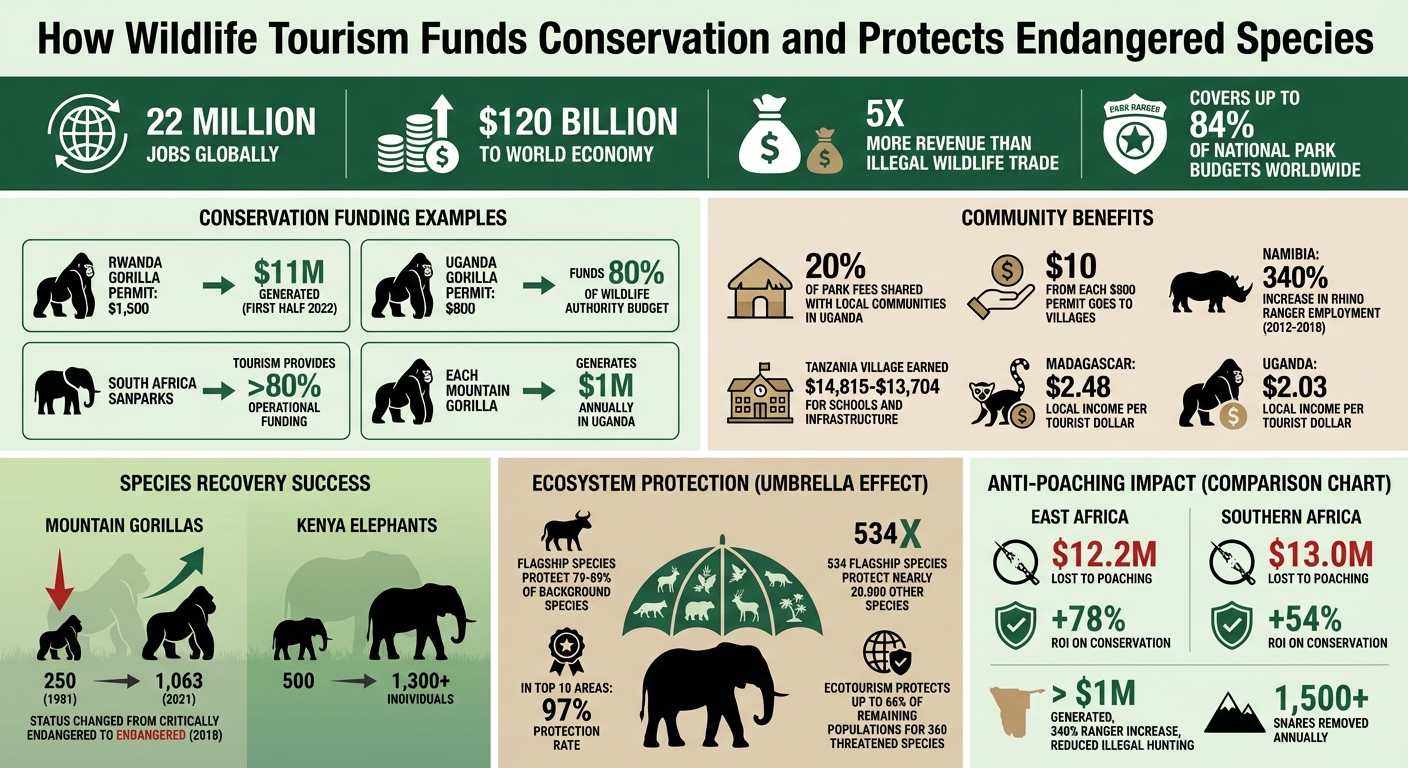
- Funding Conservation: Tourism generates critical revenue for national parks and reserves, covering up to 84% of their budgets worldwide. Countries like Uganda rely on gorilla trekking, which funds 80% of their wildlife authority budget.
- Community Support: Local communities benefit directly through revenue-sharing programs, job creation, and infrastructure projects. For example, $10 from each gorilla trekking permit in Uganda supports nearby villages.
- Combatting Poaching: Tourist presence and funding discourage illegal activities like poaching. In Namibia, rhino tourism boosted ranger employment by 340% and cut poaching rates.
- Ecosystem Protection: By safeguarding habitats for iconic species like gorillas, pandas, and jaguars, tourism indirectly protects countless other species in these ecosystems.
Wildlife tourism creates a win-win: it supports endangered species while uplifting local communities. The key lies in responsible management and fair revenue distribution.
How Wildlife Tourism Funds Conservation and Protects Endangered Species
Daily Dose of Nature | Wildlife Tourism & Animal Welfare Ethics & Impacts
How Wildlife Tourism Funds Conservation Programs
Wildlife tourism plays a crucial role in funding conservation efforts by channeling money from park fees and permits into essential areas like ranger salaries, anti-poaching tools, habitat restoration, and research on endangered species. These funds help sustain the delicate balance between protecting wildlife and supporting local economies.
In many cases, tourists are willing to pay high fees for the chance to see rare animals in their natural habitats. For example, in Uganda, gorilla tourism alone accounts for about 80% of the national wildlife authority’s total budget. This revenue goes toward daily ranger patrols to remove poaching snares, veterinary care for injured animals, and other critical conservation activities. Similarly, in South Africa, SANParks relies on tourism for more than 80% of its operational funding.
A portion of this revenue is also shared directly with local communities. In Uganda, for instance, $10 from every $800 gorilla trekking permit is allocated to nearby villages, along with 20% of annual park entry fees. This has led to initiatives like a 128-member group of former poachers who now work as wildlife watchdogs. Conservationist Gessa Simplicious from the Uganda Tourism Board highlights the importance of these funds:
The value of the gorilla money is very critical. It helps with building trust, but it also helps in the awareness of the need to conserve.
Real Examples of Tourism Revenue Supporting Conservation
The impact of wildlife tourism is evident in real-world examples. In Rwanda, Volcanoes National Park generated $11 million from gorilla trekking permits in just the first half of 2022. These funds supported anti-poaching patrols, habitat restoration, and community projects, contributing to an increase in mountain gorilla populations from 240 in the 1980s to over 600 in the Virunga region by 2016.
Akagera National Park in Rwanda reached near self-sufficiency in 2024, generating $4.7 million in revenue, with 97% coming from tourism activities. This income supported initiatives like a fishing cooperative that earned $130,731.92 for the park and beekeepers who collectively generated $60,000 in shared revenue.
Another example is Chumbe Island Coral Park in Zanzibar, which operates entirely on ecotourism funding. Every dollar from visitor fees is used to protect and manage one of the region’s most pristine coral reefs.
| Destination | Permit/Fee Type | Cost | Primary Conservation Use |
|---|---|---|---|
| Rwanda | Gorilla Trekking Permit | $1,500 | Anti-poaching, habitat restoration, community projects |
| Uganda | Gorilla Trekking Permit | $800 | Ranger salaries, community revenue sharing (20%) |
| DRC | Gorilla Trekking Permit | $400 | Species monitoring and habitat protection |
| South Africa | SANParks Entry/Fees | Varies | Provides >80% of total operational budget |
| Zanzibar | Chumbe Island Entry | Varies | 100% of marine park management costs |
The Numbers Behind Wildlife Tourism Revenue
Globally, wildlife tourism supports nearly 22 million jobs and contributes over $120 billion to the world economy. For many species on the IUCN red list, tourism funds are a lifeline – covering at least 5% of the remaining population’s needs for over half of these species, and up to 66% for some.
Wildlife tourism is also far more profitable than the illegal wildlife trade, generating five times the revenue and creating a strong economic incentive to protect animals rather than exploit them. In Uganda, each mountain gorilla generates approximately $1 million in annual revenue.
In 2019, the Rwanda Development Board allocated 1.4 billion Rwandan Francs (around $1.5 million) to its revenue-sharing program, using funds raised the previous year. These funds supported over 700 community projects, including clean water systems and health centers, demonstrating how tourism revenue can bring long-term benefits to both wildlife and local communities.
Economic Benefits for Local Communities
Wildlife tourism plays a vital role in fueling economic growth, extending its impact far beyond the boundaries of parks and reserves. When local communities gain financial benefits from tourism, wildlife shifts from being seen as a threat to crops or livestock to becoming a valuable resource worth safeguarding. This economic shift changes perspectives, turning wildlife into an asset that communities actively protect. Jobs generated directly by tourism include roles like safari guides, lodge staff, trackers, and community-employed "Rhino Rangers." Beyond these, tourism revenue ripples through nearby farms, shops, and other local businesses, creating indirect economic benefits.
On a global scale, the tourism industry employs about one in every ten people, with projections showing it could support 371 million jobs worldwide by 2025. The effects are even more pronounced in wildlife tourism hubs. For example, in Zambia’s South Luangwa National Park, tourism provides jobs for 30% of the working-age population. Similarly, in Fiji’s Mamanuca Islands, it supports 13% of local employment. The economic ripple effect is particularly striking: in Madagascar, every tourist dollar spent boosts local incomes by $2.48, while in Uganda, the figure is $2.03 per dollar.
How Economic Benefits Change Community Attitudes Toward Wildlife
When wildlife becomes a source of income rather than a competitor for resources, the shift in community attitudes is remarkable. Richard Damania, Lead Economist at the World Bank, explains:
If the benefits of tourism flow to the local communities, they will value the parks much more.
The numbers back this up. Between 2012 and 2018, a community-led rhinoceros tourism initiative in Namibia generated over $1 million in revenue for local institutions, leading to a 340% rise in the employment of local "Rhino Rangers". In Uganda, the government boosts this positive shift by sharing 20% of national park revenue with neighboring communities. These funds are used for infrastructure projects and service-related jobs, further encouraging locals to protect wildlife and ecosystems. Across regions like Kenya and Tanzania, communities now invest tourism earnings into essential projects, reinforcing anti-poaching efforts and ecological preservation.
Communities That Have Benefited from Wildlife Tourism
The Maasai communities in Kenya’s Maasai Mara region illustrate how tourism can transform lives. Since 2017, tribe members like Mdua Kirokor have used income from ecotourism-related beadwork to cover school fees, buy livestock, and improve household infrastructure with items like water tanks. This model of micro-enterprise allows pastoralist communities to thrive alongside wildlife while reducing conflicts.
In Tanzania’s Burunge Wildlife Management Area (BWMA), the village of Vilima Vitatu set aside 12,830 acres of land for conservation and tourism. This initiative earned the village $14,815 and $13,704 over two years, with the funds going toward building classrooms, village offices, and housing for teachers.
| Location | Annual Income/Benefits | Primary Uses | Employment Impact |
|---|---|---|---|
| Vilima Vitatu, Tanzania | $14,815–$13,704 (recent years) | Schools, teacher housing, village offices | Supports cultural groups and construction jobs |
| Maasai Mara, Kenya | Varies by household (since 2017) | School fees, livestock, water infrastructure | Beadwork micro-enterprises |
| South Luangwa, Zambia | N/A | Various community projects | 30% of working-age population |
| Namibia Conservancies | $1,000,000+ (2012–2018) | Rhino Ranger salaries and monitoring | 340% increase in ranger employment |
How Protecting Popular Species Helps Entire Ecosystems
Tourists flocking to see iconic animals like jaguars, pandas, or rhinos play a crucial role in conservation efforts that extend far beyond these individual species. These animals, often referred to as "umbrella species", require large, undisturbed habitats to thrive. By protecting their ranges, we inadvertently safeguard countless other organisms – from tiny soil fungi to large herbivores that share the same environment.
The numbers tell a compelling story. Conservation plans centered on flagship species can protect 79–89% of "background species" – the often-overlooked biodiversity, including insects, small mammals, and plants – that would otherwise be missed in plans focused solely on general biodiversity. When efforts are concentrated on the ten most impactful areas, this protection rate jumps to an astonishing 97%. A study examining 534 flagship species revealed that these animals could act as effective stand-ins for nearly 20,000 terrestrial and freshwater species. This "umbrella effect" underscores how flagship species can drive widespread ecosystem protection.
How Flagship Species Drive Ecosystem Protection
Sylvia Fallon, a Lead Conservation Scientist at NRDC, explains how protecting flagship species can ripple across entire ecosystems:
Grizzlies require large, intact, and relatively undisturbed ecosystems… when you keep spaces wild for grizzlies by limiting mining, oil exploration, and logging, you also save space for elk, deer, mountain goats, mountain lions, and bison.
Take the Giant Panda in China’s Hengduan Shan Conifer Forests. Conservation efforts aimed at this beloved species also protect animals like the Takin, Golden snub-nosed monkey, Snow Leopard, and Chinese softshell turtle. Similarly, in Brazil’s Pantanal, jaguar-focused ecotourism generates an impressive $8–9 million annually, making jaguars 52 times more profitable as a tourism attraction than the potential costs they pose to local ranchers. This revenue supports the preservation of the world’s largest tropical wetland, benefiting species such as giant otters, tapirs, and caimans.
In Colombia, efforts at the Hato La Aurora ranch between 2014 and 2022 combined jaguar tourism with conservation agreements across 19 neighboring ranches, covering over 66,700 acres. These initiatives led to a five-fold increase in jaguar numbers – from 5 to 28 individuals – and boosted the chances of tourists spotting a jaguar from 0% to 40%. Tourism-funded measures like electric fences and monitoring systems also reduced hunting of prey species, strengthening the entire ecosystem.
Habitat Preservation Through Wildlife Tourism
Tourism revenue doesn’t just protect existing ecosystems – it helps expand and restore habitats. For 360 threatened mammal, bird, and frog species, ecotourism funds protect up to 66% of their remaining populations. In some cases, it even supports up to 99% of the remaining habitats for certain species. National parks in some regions rely heavily on ecotourism, with as much as 84% of their funding coming from this source.
The presence of tourists and rangers creates a network of "watchful eyes", discouraging illegal activities like poaching and resource extraction that could devastate local wildlife. For example, in Sumatra, orangutan-focused ecotourism generates enough revenue and political support to counter commercial logging, which would otherwise destroy the rainforest ecosystem. Jennifer McGowan, a researcher featured in Nature Communications, highlights the importance of this approach:
Well-chosen flagship species attract funds and direct resources to conserve broader biodiversity.
sbb-itb-289f5f2
How Tourism Reduces Poaching and Illegal Wildlife Trade
Tourism plays a surprisingly effective role in curbing poaching and the illegal wildlife trade. When tourists visit protected areas, their presence acts as an informal surveillance system. A steady flow of visitors, along with guides and staff, creates a watchful network that makes it much harder for poachers to operate unnoticed. This "eyes on the ground" effect transforms remote areas into zones where illegal activities are far riskier to carry out.
Tourism revenue also directly supports efforts to combat wildlife crime. In many parks, income from tourist fees funds critical expenses like ranger salaries, vehicles, surveillance equipment, and veterinary services. In some cases, over half of a park’s routine operational budget comes from these fees. This financial support ensures that rangers are well-equipped and maintains a constant presence in protected areas, further discouraging poaching.
How Tourist Presence Deters Poaching
A great example of tourism’s impact can be seen in Namibia’s Conservancy Rhino Ranger Incentive Programme. Between 2012 and 2018, this initiative – led by Save the Rhino Trust, the Namibia Ministry of Environment, Forestry and Tourism, and local conservancies – generated over $1 million from rhino viewing activities. This funding led to a 340% increase in local ranger employment and contributed to a decline in illegal rhino hunting.
In Kenya, the Namunyak Wildlife Conservation Trust has shown similar success. Established in 1995 to counter elephant poaching in the Matthews Range, it uses tourism revenue to fund game guards. Thanks to these efforts, the local African elephant population grew from around 500 to more than 1,300 individuals.
Tourism Revenue vs Illegal Wildlife Trade Profits
When comparing the financial benefits of tourism to the illegal wildlife trade, the difference is stark. While poaching may offer short-term profits, tourism provides long-term, sustainable economic gains.
| Region/Species | Annual Tourism Value | Illegal Trade/Poaching Cost | Conservation ROI |
|---|---|---|---|
| East Africa (Elephants) | ~$12.2 million lost annually due to poaching | $597 million annually for ivory on Chinese black markets (2010–2012) | +78% ROI on conservation |
| Southern Africa (Elephants) | ~$13.0 million lost annually due to poaching | Anti-poaching costs: $565 per square mile | +54% ROI on conservation |
| Namibia (Black Rhinos) | >$1 million generated (2012–2018) | Reduction in illegal hunting through increased ranger employment | 340% increase in local rangers |
| Central Africa (Elephants) | $0.009 million in tourism revenue | $16.9 million in anti-poaching costs | –100% (costs outweigh revenue) |
These figures highlight a critical point: when communities earn more from protecting wildlife than from poaching, the economic motivation shifts. Wildlife becomes far more valuable alive than dead. This shift not only benefits conservation efforts but also fosters a deeper commitment among local communities to safeguard their natural heritage.
Species That Have Recovered Thanks to Wildlife Tourism
Wildlife tourism has played a crucial role in pulling several species back from the brink of extinction. By channeling visitor dollars into efforts like habitat restoration, anti-poaching patrols, and veterinary care, tourism has turned conservation goals into real-world achievements.
Mountain Gorillas: A Conservation Success Story
Mountain gorillas have made a remarkable comeback, with their population increasing from just 250 in 1981 to 1,063 by 2021. This recovery led to their status being downgraded from "Critically Endangered" to "Endangered" by the IUCN in 2018. Their resurgence is largely credited to a strategy known as "extreme conservation", which has been almost entirely funded by tourism. In Rwanda, Uganda, and the Democratic Republic of the Congo, high permit fees for gorilla trekking have generated significant revenue, supporting initiatives like monitoring, veterinary care, and community-focused programs.
Tourism dollars fund 24/7 monitoring and intensive veterinary care for gorilla groups accustomed to human presence. These habituated groups have shown a 4.1% annual population growth, compared to a 0.7% decline in unhabituated groups. Community engagement has been a cornerstone of these efforts. For example, the African Wildlife Foundation collaborated with the Sabyinyo Community Livelihoods Association and Governor’s Camp to establish the Sabyinyo Silverback Lodge in Rwanda. Over a decade, the lodge generated nearly $2.9 million, funding local projects like education, electrification, and small businesses.
"What has really brought mountain gorillas back from the brink of extinction is community engagement and cooperation."
- Andrew Seguya, Executive Director of the Greater Virunga Transboundary Collaboration
Tourism has also funded patrols in the Virunga region, which remove over 1,500 snares annually. In Uganda, a former poachers’ group now works as community watchdogs, following the tragic killing of a gorilla named Rafiki.
Other Species Recoveries: Rhinos, Orangutans, and More
The positive impact of wildlife tourism extends beyond mountain gorillas. Other species, such as rhinos, orangutans, and golden lion tamarins, have also experienced significant recoveries thanks to tourism-driven conservation efforts.
In Namibia, the Conservancy Rhino Ranger Incentive Programme generated over $1 million between 2012 and 2018. This initiative, led by Save the Rhino Trust, the Namibia Ministry of Environment, Forestry and Tourism, and local conservancies, increased local ranger employment by 340% and drastically reduced illegal rhino poaching. Revenue from ranger-led wildlife encounters grew by more than 200%, making rhino conservation economically viable.
In Aceh, Indonesia, high-intensity ecotourism has helped mitigate the effects of commercial logging on Sumatran orangutans, improving their chances of survival. Similarly, in Brazil, golden lion tamarins have transitioned from a projected decline to population growth, thanks to funding for habitat restoration and captive breeding programs. These examples show how tourism can provide a strong financial backbone for long-term conservation.
| Species | Region | Population Change | Tourism Contribution |
|---|---|---|---|
| Mountain Gorilla | Uganda, Rwanda, DRC | 250 (1981) to 1,063 (2021) | High-value permits funding veterinary care and monitoring |
| Black Rhino | Namibia | Decline reversed | Over $1M generated for community institutions (2012–2018) |
| Sumatran Orangutan | Aceh, Indonesia | Extinction prevented in models | Ecotourism offsetting logging impacts |
| Golden Lion Tamarin | Brazil | Decline reversed to growth | Funding for habitat restoration and captive breeding |
These success stories highlight how wildlife tourism can transform conservation efforts, offering hope for species that might otherwise face extinction.
How Tourists and Operators Support Conservation Directly
Travelers and tourism businesses have the power to go beyond simply visiting protected areas – they can take active steps that directly strengthen conservation efforts. These actions turn passive observation into meaningful contributions, creating real, measurable benefits for endangered species. By participating, individuals and businesses help drive system-wide changes that support both ecological and economic goals.
Ways Tourists Can Participate in Conservation
Tourists can make a real difference by engaging in programs and initiatives that directly support conservation:
- Joining ranger-led monitoring programs: These programs pair tourists with trained local rangers for tracking expeditions. Participants help collect valuable behavioral data, and their fees fund ongoing patrols. For example, the Conservancy Rhino Ranger Incentive program has shown how citizen involvement can boost local benefits and create jobs.
- Volunteering in conservation projects: For those seeking deeper engagement, volunteer programs offer hands-on opportunities. At the Little Fireface Project in Cipaganti, West Java, volunteers studying the Javan slow loris contributed over 50% of the project’s total behavioral research data between 2013 and 2021. Similarly, in northern Bali, the Tianyar Marine Conservation program recruits volunteers to restore a 3-kilometer coral reef damaged by harmful fishing practices. These volunteers also teach English to local fishermen who are transitioning to tourism-based livelihoods.
- Supporting conservation through permit fees: Financial contributions can make an immediate impact. In Uganda, the Uganda Wildlife Authority allocates $10 from each mountain gorilla permit and 20% of park entry fees to local community projects. This funding supports infrastructure and helps reduce human-wildlife conflict near Bwindi Impenetrable National Park. This revenue-sharing model ensures that funds directly benefit the communities living alongside endangered species.
Better Practices by Tourism Operators
Tourism operators also play a crucial role in conservation by adopting practices that directly protect wildlife and their habitats:
- Rotational use systems: These systems prevent over-stressing animal populations by varying viewing locations. Strict protocols ensure that tourists maintain safe distances, minimizing disturbances to sensitive species.
- Community-focused incentives: The Ruaha Carnivore Project in Tanzania, part of Oxford University’s Wildlife Conservation Research Unit (WildCRU), uses a payment-for-ecosystem-services model. This approach combines wildlife management with direct benefits for local communities, showing how tourism can balance conservation with development needs.
- Hiring local guides: Employing local guides not only sustains livelihoods but also integrates traditional knowledge into the tourist experience. These guides convey conservation messages that inspire visitors to adopt pro-conservation behaviors. As Richard Damania, Lead Economist at the World Bank, notes:
If the benefits of tourism flow to the local communities, they will value the parks much more.
- Profit-sharing with communities: Formal profit-sharing ensures that locals have a financial stake in protecting wildlife, fostering a sense of shared responsibility for conservation efforts.
Conclusion
Wildlife tourism serves as a crucial support system for both conservation efforts and local economies. By channeling funds into anti-poaching initiatives, veterinary services, and habitat restoration, it empowers local communities to take an active role in protecting wildlife.
The economic benefits go beyond conservation. Tourism revenue invigorates local economies, creating a powerful incentive to safeguard wildlife. When this income directly benefits communities, the commitment to wildlife protection grows stronger. For example, Namibia saw a 340% rise in Rhino Ranger employment between 2012 and 2018, which played a significant role in curbing illegal hunting. Similarly, the recovery of mountain gorilla populations and investments in schools and clinics illustrate how tourism can uplift both wildlife and the communities that coexist with them.
The real difference lies in how this revenue is distributed. Programs like revenue-sharing, local employment, and profit-sharing ensure that communities see direct benefits, fostering a sense of ownership in conservation efforts. This isn’t just about generosity – it’s a smart approach that funds conservation sustainably while helping people achieve economic stability.
FAQs
How does wildlife tourism support local communities financially?
Wildlife tourism plays a crucial role in boosting local economies by creating jobs and generating income. When visitors spend money on park entrance fees, guided tours, lodging, meals, transportation, and locally crafted goods, that money directly benefits nearby communities. It supports businesses like hotels, restaurants, taxi services, and souvenir shops, opening up new opportunities for local residents.
In many instances, tourism operators allocate a portion of ticket sales or concession fees to nearby villages, providing households with a steady income. This income can then be used for essential needs like education, healthcare, or starting small businesses. In remote areas where job options are often scarce, wildlife tourism has replaced harmful practices such as illegal hunting. A notable example is Tanzania, where wildlife tourism supports more than 850,000 jobs and makes a major contribution to the national economy.
By choosing responsible wildlife tourism, travelers not only get to experience unforgettable moments with iconic animals but also directly support the communities and individuals working tirelessly to protect these precious habitats.
How does wildlife tourism help reduce poaching?
Wildlife tourism, when done responsibly, can be a powerful tool in the fight against poaching. By generating income through activities like park entrance fees, guided safaris, and community-run lodges, it provides the funds needed to support anti-poaching measures. These funds go toward paying rangers, running patrols, and improving surveillance, all of which are essential for safeguarding endangered species.
Tourists themselves also play a role in discouraging poaching. With more visitors in protected areas, the chances of illegal activities being noticed or reported increase significantly. Beyond conservation, wildlife tourism supports local communities by creating jobs and sharing revenue. This provides sustainable income options that far outweigh the fleeting gains of poaching. When travelers choose ethical wildlife tourism, they contribute directly to preserving endangered species and ensuring their survival for future generations.
Why is protecting flagship species important for ecosystems?
Protecting flagship species – like tigers, elephants, or rhinos – does more than just ensure the survival of these well-known animals. It also helps maintain the overall health of ecosystems. These species play crucial roles in their environments, and efforts to conserve them often benefit countless other plants and animals that share the same space.
Many flagship species are either apex predators or keystone herbivores. This means they have a significant impact on their ecosystems by driving processes such as predation, seed dispersal, and nutrient cycling. For instance, conserving predators can lead to healthier prey populations and more balanced habitats. On top of that, wildlife tourism centered around these animals provides essential funding for conservation work. This includes initiatives like habitat restoration, anti-poaching measures, and programs that engage local communities.
By prioritizing flagship species, conservation efforts create a chain reaction that protects biodiversity, strengthens ecosystems, and benefits the communities that depend on these natural resources for their daily lives.