
Reusable Travel Items: What to Buy and Why
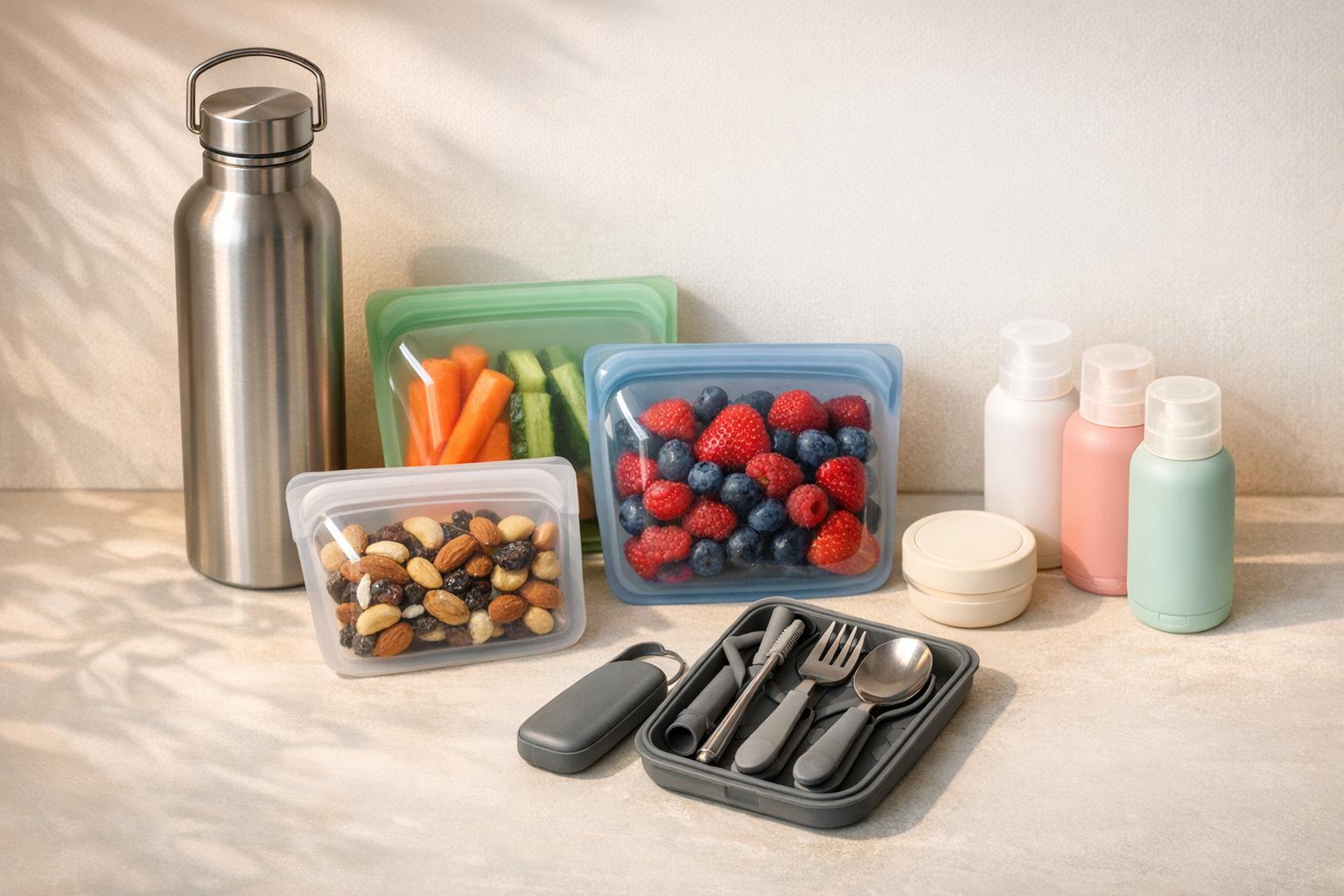
Reusable travel items are a simple way to cut waste, save money, and make travel more convenient. From refillable water bottles to silicone snack bags, these products replace disposable options, reducing plastic waste and keeping destinations cleaner. For example, a reusable water bottle costing $18–$50 can save you from buying $8 bottled water at airports. Similarly, a $20 set of toiletry bottles eliminates the need for single-use hotel amenities.
Key items to consider:
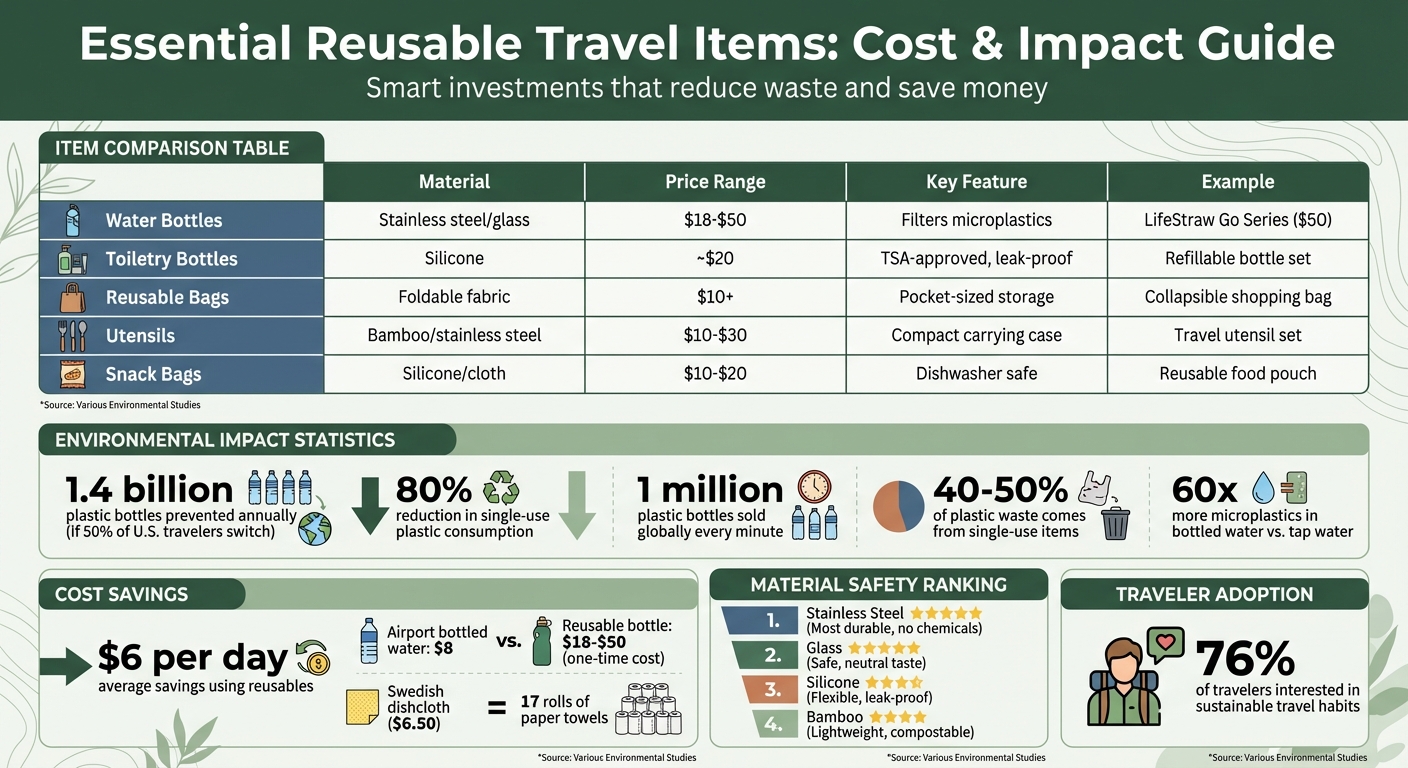
- Water Bottles: Stainless steel or glass options ($18–$50) are durable and safe.
- Toiletry Bottles: Refillable silicone bottles (~$20) are TSA-approved and leak-proof.
- Reusable Bags: Foldable bags ($10+) are perfect for shopping or extra storage.
- Utensils: Bamboo or stainless steel sets ($10–$30) replace plastic cutlery.
- Snack Bags: Silicone or cloth bags ($10–$20) are washable and reusable.
Investing in durable, compact, and multi-purpose items ensures long-term cost savings and less waste. Whether it’s a microfiber towel or a solid shampoo bar, these small changes can make a big difference.
Reusable Travel Items: Cost Comparison and Environmental Impact Guide
Sustainable Living | Zero Waste Travel Essentials
Best Reusable Travel Items to Buy
Switching to reusable travel gear doesn’t mean you need to completely overhaul your packing routine. By adding just a few key items, you can significantly cut down on waste and even save money over time. Here are some practical and eco-friendly essentials to consider.
Reusable Water Bottles
A refillable water bottle is a simple yet impactful addition to your travel kit. Stainless steel and glass bottles are the top choices – they’re durable, safe, and won’t leach chemicals into your water. As microplastics scientist Jenni Brandon, Ph.D., explains: "Stainless steel and glass are very safe."
"A refillable water bottle is a no-brainer; it belongs on every packing list." – Anne Betts, Travel Writer
Reusable water bottles range in price, starting at $18 for basic models and going up to $50 for those with built-in filtration systems. For example, the LifeStraw Go Series ($50) filters out contaminants and microplastics, making it ideal for international travel. For daily use, the Pura 22-ounce Insulated Water Bottle ($47) keeps drinks cold for hours and is completely plastic-free. Considering that bottled water can contain up to 60 times more microplastics than tap water, investing in a high-quality reusable bottle benefits both your health and the planet.
Next, let’s talk about simplifying your toiletries.
Reusable Toiletry Bottles
Refillable silicone toiletry bottles are an easy way to cut down on single-use hotel amenities. These TSA-approved, leak-proof bottles typically cost around $20. A 2024 travel review highlighted how these bottles help travelers avoid disposable hotel products while staying compliant with airport security rules.
Silicone bottles are flexible and less prone to breaking compared to rigid plastic ones. They’re easy to clean and work well for carrying shampoo, conditioner, body wash, or lotion. Alternatively, solid toiletries like shampoo bars are a great option – they bypass liquid restrictions entirely and eliminate packaging waste.
Foldable Reusable Bags
Lightweight, collapsible bags are another must-have for travelers. Starting at just $10, these bags are incredibly versatile. Use them for groceries, laundry, wet swimsuits, or even as extra storage in your suitcase.
Not only do they reduce packaging waste during shopping trips or airport purchases, but they also fold down to pocket size, making them easy to stash in your purse or daypack.
And for meals on the go, reusable utensils are a smart choice.
Reusable Utensils and Cutlery
Compact utensil sets made from bamboo or stainless steel are perfect for replacing single-use plastic cutlery. Bamboo sets are lightweight and compostable, while stainless steel options are more durable. Most kits include a fork, knife, spoon, and sometimes chopsticks or a straw, all neatly packed in a carrying case.
These sets typically cost between $10 and $30 and are ideal for picnics, takeout meals, or in-flight dining when utensils aren’t provided. Since single-use plastics account for 40 to 50 percent of plastic waste, carrying your own utensils can make a noticeable difference.
Reusable Snack Bags
Silicone or cloth snack bags are excellent alternatives to disposable plastic bags. Prices range from $10 to $20, and they’re perfect for storing snacks, sandwiches, fruit, or even small non-food items like charging cables or toiletries.
These bags are dishwasher safe, making them easy to clean and reuse for future trips. In May 2025, reports highlighted how travelers using reusable containers could help combat the staggering 1 million plastic bottles sold every minute globally. Packing snacks in reusable containers also reduces the need for wasteful packaging from convenience stores and airport shops.
Specialized Reusable Items for Travel
Expanding on the essentials, these specialized reusable items are designed to tackle specific travel needs while helping you cut down on waste. They go beyond basics like reusable water bottles, toiletry containers, and bags, offering solutions for items we often overlook – like paper towels or single-use soap bottles. These products not only save money but also reduce the environmental footprint of your trips.
Reusable Cloth Napkins and Towels
Microfiber towels and Swedish dishcloths are fantastic alternatives to disposable paper products. Swedish dishcloths, for instance, can absorb up to 15 times their weight in liquid and replace the equivalent of 17 rolls of paper towels. At about $6.50 each, they last up to nine months and can endure over 200 washes. Considering that the U.S. generates over 3,000 tons of paper towel waste annually, these cloths are a smart and sustainable choice.
"Two Swedish dishcloths equal a whopping 34 paper towel rolls!" – Ecologie by Danica
These cloths aren’t just eco-friendly; they’re practical for travel. They dry much faster than traditional sponges, reducing the risk of bacteria and odors – especially important when hopping between hotels or campsites. Use them to clean surfaces, wipe up spills, or even as a quick-drying towel for your hands and face.
Multi-Purpose Travel Soaps
Multi-functional bar soaps are a game-changer for travel. They can replace several items in your bag, serving as body wash, shampoo, laundry detergent, and even dish soap. A popular option is Dr. Bronner’s Magic Soap, which costs about $10 for a 16 oz bottle and boasts a 4.8 out of 5 user rating for its effectiveness.
"The best overall soap for travel is Dr. Bronner’s magic soap. It consistently gets rave reviews from experienced travelers." – Tortuga
Other solid soap options, like Sea to Summit Trek and Travel Liquid Soap, range from $8 to $12 and offer additional perks – they’re biodegradable, paraben-free, and highly concentrated. Solid soap bars also bypass TSA liquid restrictions, making them perfect for both urban trips and outdoor adventures. Pair them with a breathable soap case to keep them dry and prevent them from turning mushy in your luggage.
sbb-itb-289f5f2
How to Choose Quality Reusable Travel Products
Not all reusable travel items are built to last. The difference between something that serves you well for years and something that barely survives a couple of trips often boils down to three main factors: the materials used, how easy it is to carry, and whether it offers good value over time. Let’s break these down.
Material and Durability
The materials your reusable products are made from play a big role in how long they last and how safe they are to use. Stainless steel and glass are top choices for water bottles and food containers. They’re durable and don’t release harmful chemicals or microplastics, even when exposed to heat or frequent washing.
"Stainless steel is very safe and durable", says Jenni Brandon, Ph.D., a microplastics scientist and sustainability consultant.
For example, the S’well Glass Original 18-ounce Water Bottle ($45) offers a clean, neutral taste with no chemical concerns. Similarly, the Klean Kanteen 27-ounce Reflect Bottle ($33) is known for its minimalist design and long-lasting performance. If you’re traveling to places with questionable water quality, the LifeStraw Go Series Water Filter Bottle ($49) is a great option, thanks to its dual-filter system that removes contaminants, including microplastics. Other durable materials worth considering include silicone for collapsible items and bamboo for utensils.
After durability, it’s important to think about how easy these items are to pack.
Portability and Packability
Even the sturdiest reusable item won’t do you much good if it’s too bulky to carry. Look for products that collapse, fold, or compress for easy storage. Silicone water bottles and coffee mugs, like those from Stojo ($25–$35), and quick-dry microfiber towels ($30–$45) are excellent space-saving options.
Multi-functional items can also save space. For instance, a single spork can replace multiple utensils, and a Buff can double as a scarf, headband, or beanie. Some products even come with built-in storage or carabiners so you can clip them to your bag. If you’re flying with just a carry-on, keep in mind that liquid containers must be 3.4 oz (100 ml) or smaller. Alternatively, solid shampoo and soap bars are a great way to avoid liquid restrictions altogether.
Cost vs. Long-Term Value
When you combine durability and portability with smart spending, you’ll find that reusable items often pay for themselves over time. While a $47 Pura 22-ounce Insulated Water Bottle might seem pricey upfront, its plastic-free design and long lifespan make it a worthwhile investment.
"Investing in quality reusable items not only benefits the environment but also saves money in the long run", says Anne Betts, Travel Writer.
A December 2024 study showed that travelers who switched to reusable water bottles cut their single-use plastic consumption by 80%. When weighing the value of a product, think about how often you’ll use it and how much you’ll save by avoiding disposable alternatives. For instance, the Cadence Capsule set for toiletries, priced at $117 or more, may seem expensive, but it can eliminate the need to repeatedly purchase travel-sized products. Materials like stainless steel, silicone, and bamboo add to a product’s lifespan, making the initial investment a smart choice for frequent travelers. These considerations make reusables not just eco-friendly but also practical and economical for the long haul.
Conclusion
Reusable travel items provide an easy and budget-friendly way to cut down on waste while traveling. In fact, a December 2024 study found that if just half of U.S. travelers switched to reusable water bottles, it could prevent more than 1.4 billion plastic bottles from ending up in landfills each year.
Another report from 2025 revealed that travelers who used reusable containers for food and drinks saved an average of $6 per day by avoiding disposable items. Products like stainless steel bottles and silicone bags not only last longer but also pay for themselves over time through repeated use. This ties back to the durability and portability features that make them a smart choice for travelers.
"By choosing reusable products, we not only reduce waste but also save money in the long run", says Kristin Hostetter, Sustainability Columnist at Outside Online.
When choosing reusable travel gear, opt for durable and compact items that suit your needs. Materials like stainless steel, glass, and silicone are great options because they hold up well to frequent use and washing. Look for designs that fold or collapse for easy packing, and prioritize multi-functional items that can serve more than one purpose.
With 76% of travelers expressing interest in adopting more sustainable travel habits, switching to reusables is a win-win for both the planet and your wallet. Start small with essentials like a sturdy water bottle and reusable bags, then build a travel kit that aligns with your style and eco-friendly goals.
FAQs
What are the must-have reusable travel items for beginners?
If you’re just starting to explore more eco-friendly travel habits, a few reusable basics can help you cut down on waste while keeping your packing light and practical. A collapsible, refillable water bottle is a great place to start. It’s lightweight, easy to stash in your bag, and eliminates the need for single-use plastic bottles. Pair that with silicone travel bottles for your toiletries – refill them with shampoo or body wash instead of using the tiny disposable bottles at hotels.
When it comes to meals and snacks, a compact reusable utensil set – like a spork or a small knife – and reusable snack bags are excellent alternatives to disposable cutlery and plastic baggies. Another must-have is a foldable tote bag. It’s incredibly versatile, whether you’re picking up groceries, carrying souvenirs, or heading to the beach, and it barely takes up any room in your suitcase. These simple swaps make it easier to travel with less waste, all while keeping your luggage manageable.
How can reusable travel items help you save money over time?
Investing in reusable travel items is a smart way to save money and reduce waste. Instead of constantly buying disposable products like water bottles, toiletries, or travel-sized containers, you can opt for durable alternatives that last for years. While the upfront cost might seem higher, these items quickly pay for themselves by cutting down on repeat purchases.
Take a sturdy water bottle or silicone travel containers, for instance. These can accompany you on countless trips, helping you avoid the expense of single-use options. Many of these reusable products are also designed to be compact and easy to pack, making them a practical and environmentally friendly choice for anyone on the go.
What are the best materials to look for in reusable travel gear?
When picking reusable travel gear, focus on materials that are long-lasting, sustainable, and practical for your adventures. For fabric-based items like bags, consider recycled polyester. It’s lightweight, water-resistant, and built to last. Some brands even use materials like ECOPAK™ EPX, which offers impressive durability while minimizing environmental harm. Other great options include organic cotton, upcycled leather, or plant-based fabrics that combine strength with a natural texture.
For reusable containers, stainless steel and glass are top picks. These materials are non-porous, safe from harmful chemicals, and can handle temperature shifts without cracking or leaching. They’re perfect for carrying water, coffee, or snacks while you’re on the move.
If you’re packing quick-drying clothing, go for polyester blends with moisture-wicking properties. These fabrics dry faster, resist shrinking, and are perfect for humid destinations or multi-day trips. Choosing responsibly sourced materials not only ensures dependable gear but also helps cut down on waste, making your travels more eco-conscious.