Ultimate Guide to Eco-Tourism for Families

Eco-tourism offers families a chance to travel responsibly while learning about nature, supporting local communities, and reducing their environmental impact. By choosing eco-friendly destinations, transportation, and activities, you can make your trips more meaningful and leave a positive impact.
Key Takeaways:
- Eco-tourism Benefits: Educates kids on issues like wildlife conservation and climate change while boosting local economies.
- Budget Tips: Domestic trips, economy flights, and local guesthouses reduce costs and emissions.
- Packing Smart: Use reusable items (e.g., water bottles, bamboo straws) and eco-friendly toiletries (e.g., shampoo bars).
- Top Destinations: Costa Rica for wildlife, U.S. national parks for education, and Thailand for ethical animal interactions.
- Activities for Kids: Junior Ranger programs, turtle conservation, and citizen science projects engage and educate young travelers.
Quick Travel Tips:
- Transportation: Trains are 34% more energy-efficient than flights.
- Lodging: Look for certifications like Green Key or LEED.
- Wildlife: Observe animals from a safe distance and avoid harmful interactions.
Eco-tourism is about making small, intentional choices that preserve destinations for future generations while creating unforgettable family memories.
Family Adventures in Costa Rica: Explore the Wild with Sukia Travel

How to Plan Your Family Eco-Tourism Trip
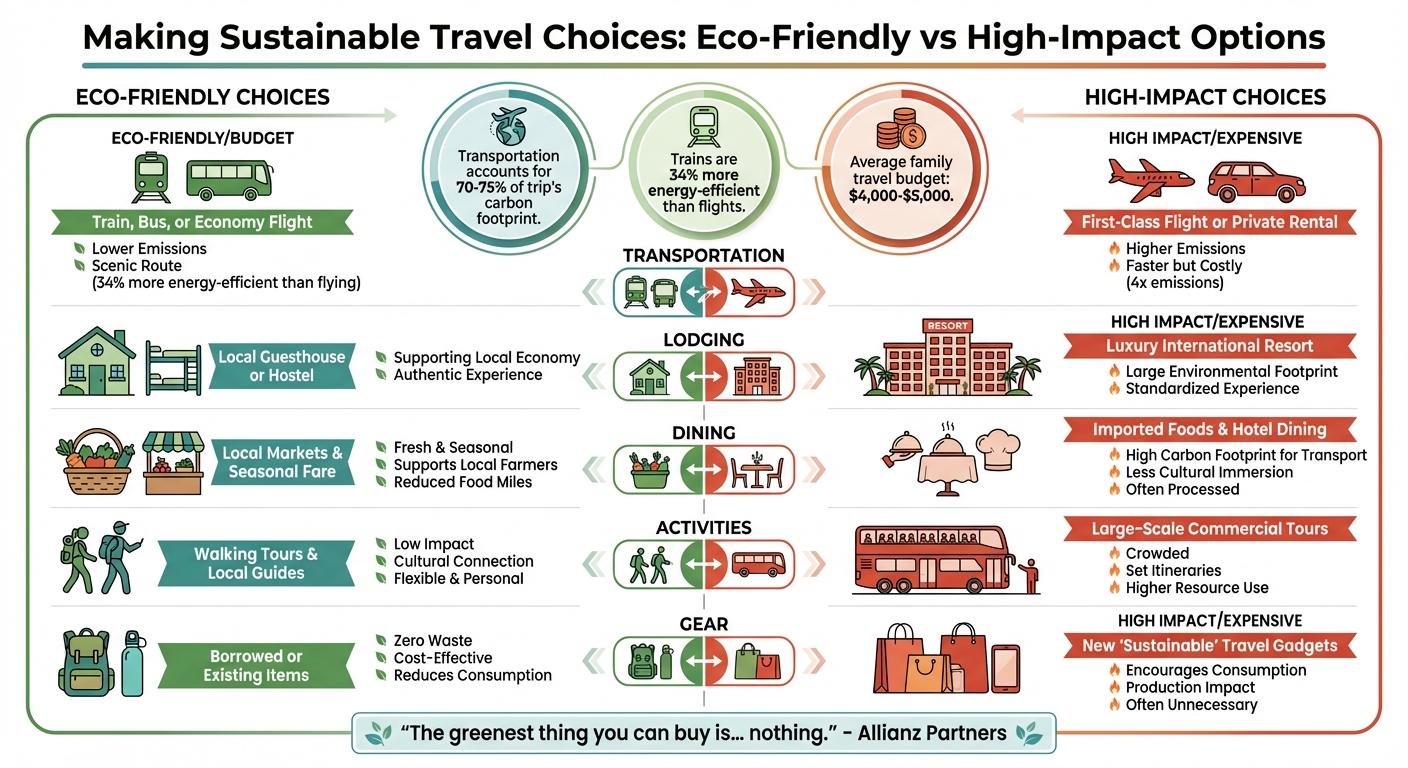
Eco-Friendly vs High-Impact Travel Choices for Families
Creating a Budget and Picking Your Destination
For most American families, a travel budget typically ranges between $4,000 and $5,000. To keep costs manageable and reduce your environmental impact, consider domestic trips instead of international ones. Domestic travel not only cuts down on long-haul emissions but also allows you to explore lesser-known destinations, helping to avoid over-tourism. Think about visiting under-visited national parks or smaller cities – they offer great experiences while being easier on both your wallet and the environment.
Transportation is a major factor, accounting for 70%–75% of your trip’s carbon footprint. If flying is necessary, stick to economy class and aim for direct flights, as first-class seats can generate up to four times the emissions. For medium distances, trains are a great alternative – they’re roughly 34% more energy-efficient. When it comes to accommodations, choose locally owned guesthouses instead of large international hotel chains. This keeps your spending within the local community, supporting small businesses.
| Factor | Eco-Friendly/Budget Choice | High Impact/Expensive Choice |
|---|---|---|
| Transport | Train, Bus, or Economy Flight | First-Class Flight or Private Rental |
| Lodging | Local Guesthouse or Hostel | Luxury International Resort |
| Dining | Local Markets & Seasonal Fare | Imported Foods & Hotel Dining |
| Activities | Walking Tours & Local Guides | Large-Scale Commercial Tours |
| Gear | Borrowed or Existing Items | New "Sustainable" Travel Gadgets |
"The greenest thing you can buy is… nothing." – Allianz Partners
When to Travel and What to Pack
Once your travel plans are set, focus on packing smartly and sustainably. Traveling light not only makes getting around easier but also reduces fuel consumption. Opt for a capsule wardrobe with versatile, quick-dry clothing made from materials like organic cotton, hemp, or bamboo. To cut down on waste, replace liquid toiletries with solid shampoo bars and toothpaste tablets.
Don’t forget to pack reusables to avoid single-use plastics. Bring items like a stainless steel or bamboo straw, a collapsible coffee cup, cloth shopping bags, and a reusable water bottle with a built-in filter – especially useful in areas where tap water isn’t safe. If your trip involves water activities, use reef-safe sunscreen to protect marine ecosystems. Additionally, check out the "Pack with a Purpose" website to see if your destination could benefit from specific items, like school supplies, that you can bring to support the local community.
Finding Certified Eco-Friendly Options
With your budget and packing list ready, it’s time to ensure your bookings align with sustainability goals. Look for accommodations certified by programs like Green Key, EarthCheck, or LEED. Platforms like Booking.com and TripAdvisor offer filters to help you find eco-certified options. Businesses affiliated with organizations such as The International Ecotourism Society or nonprofits like Tourism Cares are also great choices.
"Sustainable tourism is all about making simple choices to lessen your negative impact on a given destination." – Susanne Etti, Global Environmental Impact Manager, Intrepid Travel
To further reduce your environmental footprint, consider budgeting for carbon-offset programs. Services like Jet-set Offset allow you to donate as little as one cent per mile. The sustainable tourism industry is growing fast – in 2023, it accounted for nearly 7.5% of the global market, with the ecotourism segment valued at over $258 million and expected to surpass $663 million by 2033.
Where to Stay: Eco-Friendly Accommodations for Families
Types of Eco-Friendly Lodging
Finding the perfect eco-friendly place to stay depends on your family’s preferences for comfort and adventure. Eco-lodges, often set in pristine natural environments, are designed using sustainable materials to reduce their impact on the planet. A great example is Teniqua Treetops in South Africa, where treehouses are perched on stilts within the lush Knysna Forest. They offer activities like goat petting and wildlife tours, making it a fun and educational experience for kids. Many eco-lodges also provide guided nature walks and wildlife spotting tours led by naturalists, blending relaxation with learning.
Farmstays and ranches are another fantastic option, offering hands-on experiences like milking goats, harvesting fresh produce, or baking traditional bread in clay ovens. For families seeking a blend of comfort and the outdoors, glamping is an excellent choice. Think luxury tents, yurts, or domes equipped with beds, electricity, and perks like stargazing and campfire storytelling. Prices vary widely: camping can cost $10–$40, budget eco-cabins range from $100–$150, mid-range eco-lodges fall between $175–$200, and luxury eco-resorts can exceed $500 per night.
Urban boutique eco-hotels are perfect for city-loving families. These accommodations often feature LEED-certified buildings, rooftop gardens, and organic kids’ menus. A standout example is Ashford Castle in Ireland, a historic 13th-century estate that has eliminated single-use plastics and sources 100% of its electricity from renewable energy. They even have a "bug hotel" where kids can learn about insect habitats. For a more off-the-grid experience, tiny houses and secluded parcels encourage families to slow down, unplug, and reconnect with nature. Whatever you choose, make sure your pick aligns with verified sustainability practices.
How to Verify Certifications and Green Practices
Once you’ve narrowed down your options, it’s essential to confirm that your chosen lodging is genuinely eco-friendly. With 73% of global travelers expressing a desire to stay at eco-friendly accommodations at least once in the next year, distinguishing authentic green properties from those practicing greenwashing is more important than ever. Verifying these credentials ensures that your stay aligns with eco-tourism’s goal of minimizing environmental impact while enriching your travel experience.
Start by checking for third-party certifications that involve independent, on-site audits – these are far more reliable than self-reported claims. Look for recognized labels like LEED, Green Key Global, EarthCheck, Green Globe, and the Global Sustainable Tourism Council.
"Data helps you separate fact from fiction, and cut through the greenwashing." – Maudie Tomlinson, Director, The Conscious Travel Foundation
Before booking, ask the property about its certifications, sustainability initiatives, and community involvement. Do they track and share data on their environmental impact, like renewable energy usage or waste reduction? Do they employ local staff and follow ethical wildlife policies? For example, Rio Perdido in Costa Rica turned former cattle-farming land into a thriving natural retreat over 15 years, with 90% of its staff now coming from nearby communities. Genuine eco-friendly properties often highlight advanced practices like greywater reuse, industrial composting, or anaerobic digestion systems . By choosing accommodations that prioritize transparency and measurable impact, you can ensure your family’s stay supports a greener future.
Best Eco-Tourism Destinations for Families
If you’re planning a family trip that combines eco-friendly practices with unforgettable experiences, these destinations are worth exploring. They not only promote sustainability but also offer enriching adventures for all ages.
Costa Rica: Rainforests and Wildlife
Costa Rica is a standout destination for family eco-tourism. With 26% of its land protected and more than 5% of the planet’s biodiversity packed into less than 1% of Earth’s surface, it’s a haven for nature lovers. The country also takes sustainability seriously, generating 90% of its electricity from renewable sources.
Families can explore three diverse regions:
- La Fortuna: Home to Arenal Volcano, this area offers volcanic landscapes, hot springs, and plenty of outdoor activities.
- Monteverde: Known for its cloud forests, this region features canopy walks and the magical Children’s Eternal Rainforest, where guided night tours reveal creatures like pit vipers and sleeping toucans.
- Tortuguero: Perfect for hands-on turtle conservation, this coastal area lets families participate in turtle nest surveys and egg relocation programs. These efforts have helped over 26,000 hatchlings safely reach the ocean.
Costa Rica also leads the way in wildlife protection. The "Stop Animal Selfies" campaign, launched in 2019, educates visitors on avoiding harmful interactions with animals. When choosing accommodations, look for those with the Certification for Sustainable Tourism (CST) to ensure your stay aligns with eco-friendly practices. Dining at local "sodas" – small, family-run eateries – is another great way to support the local economy.
For those interested in organized programs, options include the Wildlife & Permaculture experience by GIVE Volunteers starting at $2,395 or the GLA Costa Rica 14-day Ocean & Wildlife Adventure priced at $5,199, which covers all in-country expenses.
U.S. National Parks: Nature and Education
America’s national parks provide accessible eco-tourism options with a strong educational focus. Programs like the Junior Ranger initiative engage children with hands-on activities that teach environmental stewardship. Families can also participate in volunteer opportunities such as habitat restoration and scientific research.
These parks emphasize Leave No Trace principles, encouraging visitors to stay on trails, avoid disturbing ecosystems, and carry out all waste to protect fragile habitats. For instance, in Washington State, families can join Global Family Travels’ "Learn, Serve & Immerse" adventure. This program includes restoring salmon habitats along the Elwha River and Nisqually River Delta by removing invasive plants and planting native vegetation. Participants also work alongside Coast Salish tribal members, gaining insight into their environmental initiatives.
"Regenerative travel is about actively improving the places we visit – restoring ecosystems, uplifting communities, and preserving cultures." – Global Family Travels
Many eco-lodges near national parks are designed with sustainability in mind, featuring LEED Platinum certifications, rooftop solar panels, and eco-friendly building materials.
Thailand: Culture and Nature Combined
Thailand offers a rich combination of cultural experiences and ethical wildlife interactions, making it an excellent choice for families. Many elephant advocacy programs now focus on "elephant immersion", which prioritizes observation and care over rides or performances. These activities, suitable for children as young as five, also introduce families to mahout culture while supporting animal welfare.
The country’s tourism model is rooted in Asset-Based Community Development (ABCD), which uses local resources to create sustainable tourism that directly benefits residents. Families can join community programs that include traditional crafts, cooking classes, and farm visits.
When participating in wildlife experiences, it’s important to choose sanctuaries that avoid restrictive enclosures or staged interactions. Respecting animals means maintaining a minimum distance of 65 feet (20 meters), keeping noise levels low, and refraining from feeding or touching them.
"Memories are deeply encoded when you share an emotional connection with that place or the people within it. That is what GIVE provides when you travel, a connection to yourself, others, and this planet." – Amber Parucha, Lead Guide, GIVE Volunteers
sbb-itb-289f5f2
Green Travel Practices for Families
When it comes to eco-tourism, even small, thoughtful changes in your travel habits can make a big difference for the environment and local communities. You don’t need to overhaul your entire trip – just a few intentional choices can help reduce your family’s environmental impact while exploring the world.
Cutting Down on Plastic and Waste
Plastic straws consistently rank among the top 10 items collected during global beach cleanups. To minimize waste, consider packing an eco-kit that includes a bamboo utensil set, a stainless steel straw, and a cloth napkin. These items are perfect for meals at food stalls or theme parks. Carrying a water filtration bottle, like a GRAYL, is another great way to avoid single-use plastic bottles while ensuring access to safe drinking water in destinations where tap water may not be potable.
"Vacation habits often increase waste through unnecessary plastics and disposable items." – Nicky Omohundro, Little Family Adventure
Digitize your travel documents by using electronic tickets, reservations, and itineraries on your phone. Prepare snacks in reusable containers instead of relying on packaged foods, and opt for accommodations that offer eco-friendly practices, like on-demand linen changes or beverages served in glassware instead of plastic. To further reduce waste, try solid toiletries such as shampoo bars or refillable silicone bottles, and carry a foldable tote bag for any spontaneous shopping.
These small changes not only reduce waste but also help you travel more thoughtfully. And your spending choices can have an even broader impact.
Supporting Local Economies
Eco-tourism isn’t just about protecting the environment – it’s also about uplifting local communities. By choosing locally owned guesthouses and family-run restaurants, you ensure that your travel dollars stay within the community. Research tour companies and hotels to see if they are locally owned, pay fair wages, and source food from nearby farmers.
When shopping, seek out handmade crafts directly from artisans instead of mass-produced goods. For example, in Cancun, Mexico, some gift shops sell "traditional" sombreros that are actually imported from China. Instead, sustainable travelers can support local artisans who handcraft authentic hats. While these may cost more, they help preserve cultural heritage and provide jobs for local communities.
Visiting farmers’ markets or local grocery stores is another way to support the local food system while enjoying fresh, regional snacks. For transportation, opt for public transit, trains, or bike rentals to reduce your carbon footprint while contributing to municipal infrastructure. Traveling by Amtrak train is 34% more energy-efficient than flying domestically and 46% more energy-efficient than driving.
Avoid giving money, sweets, or clothing directly to children, as this can foster dependency. Instead, consider donating to reputable local charities or social programs that can make a more meaningful impact.
Responsible Wildlife Viewing and Nature Activities
Respect for wildlife is a crucial part of sustainable travel. Always observe animals from a safe distance – at least 15 feet – to avoid causing them stress or aggression. Never touch or feed wild animals, as this protects both them and your family. Avoid activities that involve direct contact with captive animals, such as elephant rides, swimming with captive dolphins, or posing for photos with drugged predators.
If your travels take you near the ocean, use "Ocean Safe" or "Reef Safe" sunscreens. Traditional sunscreens often contain chemicals that can harm coral reefs and marine ecosystems.
Getting Kids Ready for Eco-Tourism
Getting kids involved before an eco-tourism trip can make the experience more meaningful for them. When children understand the why behind sustainable choices, they’re more likely to embrace them. Nicole Sturzenberger from Sustainable America explains, "If we don’t explain why composting keeps material out of landfills, they may never know". The trick is to make learning about conservation fun and engaging rather than turning it into a lecture. This approach sets the stage for hands-on activities before the trip and practical roles during the journey.
Educational Activities Before Your Trip
Teaching kids about local ecosystems before you travel can deepen their connection to eco-tourism. Start by introducing the destination through books, documentaries like Planet Earth or Go Jetters, and interactive apps such as Stack the Countries or iNaturalist. For younger children, Usborne’s Lift the Flap Picture Atlas provides a playful introduction to geography, while older kids might enjoy the children’s edition of Prisoners of Geography.
You can also bring learning to life with creative activities. Cook traditional dishes from your destination using resources like The Around The World Cookbook. Or spark their imagination by having them create landmarks out of recycled materials – a fun twist on "junk modeling." Watching live wildlife webcams on platforms like Explore.org is another great way to help kids connect with nature. They can observe puffins, walruses, and other animals in real-time, creating excitement for the trip ahead.
Getting Kids Involved in Green Practices
Once you’ve laid the groundwork, involve your kids in sustainable practices at home to prepare them for eco-friendly habits on the trip. Assign them small but meaningful roles that make them active participants. For example, they could be the family "Plastic Buster", reminding everyone to skip single-use plastics, or the "Unplugger", ensuring chargers and devices are disconnected when not in use. Another fun role is the "Navigator", where they help plan routes using public transportation – learning geography while reducing your travel footprint.
Introduce eco-friendly products like shampoo bars, bamboo toothbrushes, and reef-safe sunscreen. These small changes can have a big impact – globally, around 80 billion plastic shampoo and conditioner bottles are thrown away every year. Teach kids a simple mantra like "Take 3 for the Sea", encouraging them to pick up three pieces of trash whenever you’re at a beach or park. For a deeper connection, consider joining a citizen science project such as the Great Global Nurdle Hunt, where children collect and count plastic pellets to support environmental research. These activities not only educate but also empower kids to make a difference.
Conclusion
Eco-tourism for families offers more than just a getaway – it’s an opportunity to show your kids that their choices have a lasting impact. By focusing on the three pillars of sustainability – protecting the environment, supporting local economies, and respecting cultural traditions – families can enjoy travel that’s not only rewarding but also meaningful for everyone involved. As Samantha Hogenson from the Center for Responsible Travel puts it, "Eco-friendly families understand their impact on the Earth and make decisions that positively affect it. It’s important to them that their vacation destinations will be enjoyed by others for years to come".
This approach doesn’t just help the planet – it also creates deeper, more memorable experiences for your family. Whether it’s planting trees, cleaning up beaches, or learning about conservation efforts, these activities strengthen family bonds while fostering lifelong environmental awareness. Kids who engage in these efforts often carry these values with them, shaping a future generation committed to protecting the Earth.
You don’t have to overhaul your travel plans to make a difference. Start small – pick one destination and stay longer instead of jumping between cities. Whenever possible, choose trains over flights, as trains emit far less carbon. These simple adjustments can make your trips more sustainable while still being exciting and enriching. Considering that family travel spending in the U.S. ranges from $136 billion to $170 billion annually, these small changes can have a big impact.
And don’t think sustainable travel means giving up comfort or fun. As Samantha Bray from the Center for Responsible Travel explains, "Traveling responsibly doesn’t mean giving something up. It means appreciating the place you are visiting and acting in a way that ensures it is taken care of for the community that lives there and future generations". Your family can discover amazing destinations while ensuring they remain just as wonderful for others – a legacy worth leaving behind.
FAQs
What are some eco-friendly tips for packing on family trips?
When preparing for family trips, making eco-friendly choices can make a big difference. Start with multi-purpose clothing crafted from organic or sustainable materials. These not only reduce waste but also contribute to greener practices. Don’t forget to bring reusable essentials like water bottles, travel utensils, and biodegradable toiletries to cut down on single-use plastics. For added care, choose eco-friendly sunscreens and lightweight travel gear to keep your environmental impact in check.
Another smart tip? Pack only what you truly need. Lighter luggage means less weight, which can help lower your carbon footprint during travel. By planning ahead with thoughtful, eco-conscious items and embracing a “less is more” approach, you’ll keep your family comfortable while traveling more sustainably.
How can families ensure their accommodations are truly eco-friendly?
Families aiming to stay in truly eco-friendly accommodations should start by checking for reputable third-party certifications like Green Globe or Biosphere Sustainable. These certifications confirm that a property actively follows sustainable practices, including conserving resources, protecting the environment, and supporting local communities.
Pay attention to how transparent the property is about its efforts. Look for published sustainability reports or detailed descriptions of initiatives like energy-saving measures, waste management programs, or water conservation efforts. Be wary of vague claims or "greenwashing" – prioritize places that back up their promises with measurable actions and results. Opting for accommodations with verified credentials and clear sustainability efforts ensures your stay benefits both the planet and the local community.
What are some top eco-tourism destinations for families with young children?
Costa Rica is an incredible destination for families with young children, blending natural wonders, wildlife, and activities that everyone can enjoy. With over a quarter of its land designated as protected areas, the country is a treasure trove of rainforests, beaches, and national parks. Places like the Monteverde Cloud Forest Reserve and the Osa Peninsula are perfect for spotting wildlife, strolling along treetop walkways, and enjoying gentle adventures that are ideal for kids.
Beyond its natural charm, Costa Rica stands out for its safety, well-maintained infrastructure, and eco-conscious lodging options. Many tourist areas are welcoming to English-speaking visitors, making it easier for families to get around and fully immerse themselves in the experience. Whether you’re lounging on a sandy beach, wandering through lush nature trails, or learning about conservation efforts, Costa Rica promises a memorable and sustainable getaway for the whole family.