Ultimate Guide to Low-Impact Trekking
Low-impact trekking is about enjoying nature while minimizing harm. It’s simple: stick to trails, pack out all waste, and respect wildlife. This guide covers everything you need to trek responsibly, from planning and eco-friendly gear to Leave No Trace principles and post-hike care. Key takeaways:
- Plan ahead: Research trails, check regulations, and prepare for weather.
- Use eco-conscious gear: Opt for durable, recycled materials and reusable items.
- Follow Leave No Trace principles: Stay on trails, dispose of waste properly, and avoid disturbing wildlife.
- Pack light: Carry multi-purpose items and keep your load manageable.
- Post-hike care: Clean gear, report trail issues, and reflect on your impact.
Small actions, like walking through puddles instead of around them, help preserve trails for everyone. Ready to make a difference? Let’s dive into the details.
Planning and Preparation
Research Trails and Regulations
Before heading out, check official resources like national park or national forest websites to gather details on trail difficulty, elevation gain, and terrain. This will help you decide if the trail matches your abilities and ensure you stick to established paths, avoiding risks like exhaustion or getting lost.
Pay attention to seasonal conditions by reading recent trip reports or ranger updates. For instance, trails can be especially prone to erosion after spring snowmelt or heavy rain, so try to plan your hike during periods when the ground is more stable. Don’t forget to check hourly weather forecasts for the highest elevation on your route – mountain weather can change drastically, with temperature drops, strong winds, or sudden thunderstorms.
If you’re heading into a U.S. wilderness area, check for permit requirements and quotas. These often include rules on campfires, group size (usually capped at 10), pets, and mandatory use of bear canisters. Choose a trail that suits the slowest hiker in your group to avoid situations where someone might veer off-trail, which can harm the environment and lead to emergencies.
Once you’ve confirmed trail conditions and regulations, you can focus on gathering the right gear to minimize your environmental footprint.
Choose Eco-Friendly Gear
When selecting gear, opt for items made from recycled polyester or nylon and treated with PFC-free (PFAS-free) waterproofing to avoid introducing harmful chemicals into the environment. Look for Bluesign-approved textiles to ensure fewer hazardous substances were used during production.
Durability matters, too. Instead of going for the cheapest options, invest in gear like waterproof jackets, backpacks, and boots with reinforced seams and sturdy zippers. Many brands offer repair programs, so you can fix your gear rather than replace it. If you’re on a budget, check out used-gear programs at outdoor retailers for quality pre-owned options. Don’t forget essentials like reusable water bottles or hydration reservoirs, a lightweight trowel for proper waste disposal, and trekking poles with rubber tips to protect the trail surface.
Pack Light and Smart
Once you’ve chosen eco-friendly gear, pack efficiently to reduce both your load and your environmental impact. Aim to keep your pack weight at 20–25% of your body weight to avoid unnecessary strain and reduce trail wear. Start with a checklist of essentials – navigation tools, shelter, insulation, food, water, first aid supplies, fire-making tools, repair kits, sun protection, and emergency gear. Then, simplify by choosing multi-purpose items, like a bandana that can double as a sweat rag or a pot holder.
At home, repackage your food into fewer containers to cut down on trash and avoid leaving microtrash behind. Build your clothing system around versatile layers instead of packing extra, bulky items. Bring a repair kit to handle gear fixes on the go, and clean your boots and gear before hitting the trail to prevent spreading invasive seeds. Plan your water sources ahead of time and carry a filter, eliminating the need for disposable bottles.
Be An Outdoor Ambassador: How To Implement Low-Impact Hiking Skills
Leave No Trace Principles
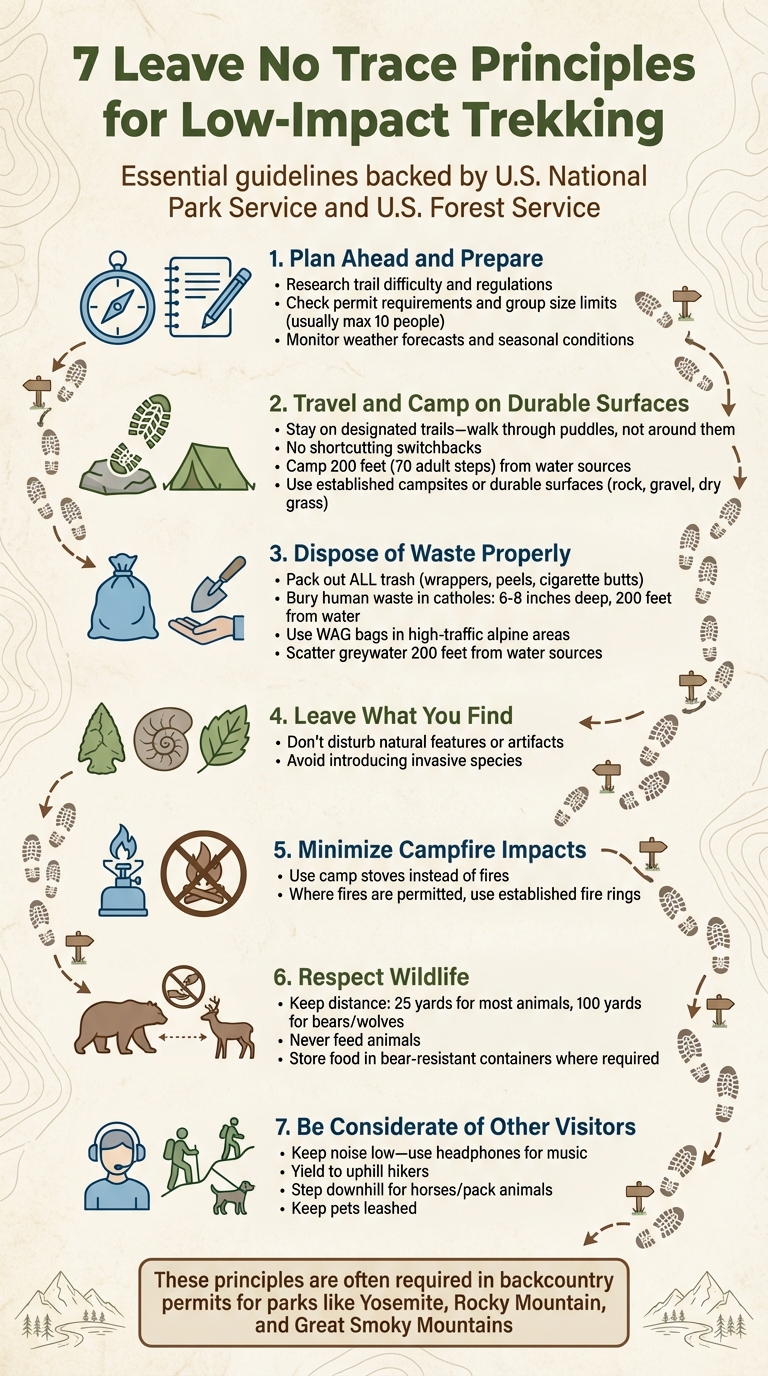
7 Leave No Trace Principles for Low-Impact Trekking
Once your gear is packed, how you behave on the trail plays a big role in minimizing your impact on nature. The Leave No Trace framework – created by the Leave No Trace Center for Outdoor Ethics and backed by organizations like the U.S. National Park Service and U.S. Forest Service – offers clear steps to help preserve the wild places you love. These principles aren’t just friendly advice; they’re often included in backcountry permits for parks like Yosemite, Rocky Mountain, and Great Smoky Mountains. They also tie directly into the sustainable trail practices discussed later.
Travel and Camp on Durable Surfaces
Stick to designated trails at all times. Walking around puddles or obstacles might seem harmless, but it widens trails and damages the vegetation along their edges. Studies show that informal, user-made paths can double the area of impact compared to sticking to a single designated trail. Also, resist the temptation to shortcut switchbacks on steep trails – this speeds up erosion and creates unstable paths that can take years to fix.
When it’s time to set up camp, use established sites or pick durable surfaces like rock, gravel, dry grass, or compact soil. Always camp at least 200 feet (roughly 70 adult steps) from water to protect sensitive riparian zones and reduce pollution risks. If you’re in a remote area with no established sites, spread out your tents and foot traffic to avoid creating a noticeable new campsite.
Be especially careful in delicate environments like alpine tundra or desert soils, which can take decades to recover from even a single footprint. For example, in Colorado’s Mount Elbert area, land managers have documented hundreds of unburied waste sites and significant vegetation damage during peak hiking seasons, showing how off-trail travel can worsen waste management problems.
Dispose of Waste Properly
Thoughtful campsite selection is just the start – handling waste correctly is equally critical. Pack out everything you bring, from food wrappers and bottle caps to cigarette butts and fruit peels. In areas where digging is allowed, human waste should be buried in a cathole 6–8 inches deep in organic soil, at least 200 feet from water, campsites, and trails. Use a small trowel to dig the hole, then cover and disguise it when you’re done.
In high-traffic areas like alpine routes or canyons, traditional catholes may not be sustainable. To address this, some locations, such as Mount Whitney in California, require hikers to use waste bag systems (WAG bags) to pack out human waste. For dishwashing, strain out food scraps, scatter greywater at least 200 feet from water sources, and pack out any solid waste. Use biodegradable soap sparingly – or better yet, skip it altogether – and never wash dishes directly in lakes or streams.
Respect Wildlife and Other Hikers
Keep a safe distance from wildlife: at least 25 yards (75 feet) for most animals and 100 yards (300 feet) for bears and wolves. Don’t feed animals or leave food where they can find it. Improperly stored food and trash contribute to thousands of human–wildlife conflicts in U.S. parks every year. For instance, bears accustomed to human food have been known to break into dozens of vehicles annually, which is why bear-resistant containers are required in many parks.
Keep noise levels down, and if you want to listen to music, use headphones to preserve the natural soundscape. On trails, hikers heading uphill generally have the right of way. If you encounter horses or pack animals, step to the downhill side of the trail to let them pass. Politely announce yourself when overtaking someone, give faster hikers room to pass, and avoid blocking the trail during breaks. If you’re hiking with a pet, keep it leashed where permitted and under control to avoid disturbing wildlife or other hikers. By following these guidelines, you help ensure that trails remain enjoyable and sustainable for everyone.
sbb-itb-289f5f2
Low-Impact Gear
Recommended Gear
Selecting gear that aligns with Leave No Trace principles can make a big difference in reducing your impact on the environment. Start with clothing made from recycled materials, like recycled polyester or nylon for shirts and pants, merino wool for base layers, and recycled fleece or certified down for insulation. These materials help cut down on the use of new petroleum resources. Plus, merino wool has natural odor resistance and temperature-regulating properties, meaning you can wear it multiple times before washing – saving water and detergent.
When shopping for gear, look for labels like bluesign-approved, Global Recycled Standard (GRS), OEKO-TEX, and Fair Trade Certified. These certifications indicate safer chemical use, better working conditions, and a lower manufacturing footprint. For footwear, consider hiking boots or shoes with re-solable outsoles or brands that offer repair services. Pairing boots with gaiters can also help prevent trail widening and protect delicate vegetation.
Your shelter and sleeping gear should also prioritize sustainability. Look for tents and sleeping bags made with recycled or bluesign-approved fabrics, and opt for insulation made from recycled materials or certified down to minimize energy use and support animal welfare. When it comes to cooking, a compact canister or alcohol stove is a great alternative to campfires, and reusable titanium or stainless-steel pots paired with durable food bags or containers cut down on single-use plastics. Pre-pack your meals into washable, lightweight containers or zip-style bags to reuse for future trips.
Hydration is another area where you can make eco-friendly choices. A long-lasting water filter or purifier (such as pump, squeeze, or UV styles) used with reusable water bottles or hydration reservoirs eliminates the need for disposable plastic bottles. To protect trails, use trekking poles with rubber tips, as recommended by the Appalachian Trail Conservancy, to avoid damaging rocks and scarring trails. Other helpful items include a headlamp with rechargeable batteries, solar chargers or small power banks for electronics, and a reusable trowel for waste disposal – all of which support low-impact practices and reduce waste.
Packing Tips for Durability and Weight
Once you’ve chosen eco-conscious gear, it’s time to pack smart. Focus on investing in durable, high-quality essentials like your backpack, shelter, sleeping system, and footwear. While these may cost more upfront, they last longer and reduce waste over time. Keep your base weight (your pack weight without food and water) manageable for typical U.S. trail conditions. A lighter pack not only reduces fatigue but also helps you stay on established trails, minimizing the temptation to step off durable surfaces or cut switchbacks.
To keep your load efficient, go for multi-purpose items. For example, a trekking pole-supported shelter, a pot that doubles as a bowl, or a rain jacket that also serves as a windbreaker can help you carry less without sacrificing functionality. When packing, place heavier items close to your back and centered to maintain balance. This ensures safer movement on trails and reduces the risk of stumbling into vegetation. Use reusable sacks or repairable dry bags to protect your gear from moisture and wear. For electronics, pairing a small power bank with a solar charger provides backup power while keeping your setup lightweight and practical, even on cloudy days.
Post-Hike Cleanup and Reflection
Gear Cleaning and Maintenance
Taking care of your gear after a hike is key to keeping it in good condition and avoiding contamination. Start by rinsing your boots and gaiters to get rid of mud and any invasive seeds that might have hitched a ride. For items like your tent and backpack, stick to mild soap – harsh chemicals can harm waterways. Let everything air-dry completely to prevent mold from setting in.
When it comes to sleeping bags, a front-loading machine with eco-friendly detergent is your best bet. Tumble dry on low heat to keep the material in good shape, effectively doubling its lifespan. Don’t forget to inspect your gear: check backpack straps and seams for wear, and look at the tips of your trekking poles. Adding sharp rubber caps to the poles not only protects the trails but also extends the life of your equipment. Spending just 10-15 minutes on this routine after your trip doesn’t just save your gear – it also keeps you prepared for your next adventure. And if you notice any trail issues, take a moment to report them to help preserve these natural spaces.
Trail Condition Reporting
Keeping trails in good shape is something we all share responsibility for. If you spot issues, report them to the right organization – whether that’s the National Park Service, U.S. Forest Service, or even through apps like AllTrails. Problems like fallen trees blocking paths, trail widening from shortcuts, eroded switchbacks, or wildlife concerns (like bear activity) are worth flagging.
When submitting a report, include as much detail as possible: photos, GPS coordinates, and specifics like, “Erosion 0.5 miles from trailhead”. For issues on the Appalachian Trail, you can contact the Appalachian Trail Conservancy directly through their website or hotline. Reports like these make a real difference – organizations such as the Washington Trails Association have cleared over 200 trail blockages annually, thanks to hiker input.
Personal Impact Assessment
After your hike, take a moment to reflect on your actions. Did you stick to durable surfaces, handle waste properly, and avoid feeding wildlife? Rate yourself on a scale of 1-10 and think about what you could do better next time, like using a stove instead of building a campfire.
Journaling is a great way to track your progress. For example, you might note, “Shortened strides on descents to reduce trail compaction”. Reviewing photos from before and after your hike can also help you spot any impacts you might have missed. Experts from Leave No Trace suggest shifting your mindset from simply leaving no trace to making a “positive trace.” This means picking up micro-trash left by others and actively improving the areas you visit. This small effort can have a big impact – reducing campsite expansion by 50% per group and cutting trail hazards by 30% through timely reporting. Regular self-assessment helps reinforce your commitment to low-impact hiking and leaves the trails better for everyone.
Conclusion
Low-impact trekking boils down to simple habits that safeguard trails, enhance safety, and make your outdoor adventures more enjoyable. Following established paths, packing out all waste, and using stoves instead of open fires are small steps that help preserve our parks and forests. Even minor missteps, like cutting across switchbacks or leaving behind trash, can lead to erosion, trail closures, and stricter rules. These easy practices ensure we leave the trails better for everyone.
Key principles are easy to follow. Stick to durable surfaces like marked trails, rocks, or gravel, and walk through puddles rather than skirting around them to prevent widening paths. Pack lightly to ease strain on both your body and the trail. Carry out everything you bring, including food scraps, and dispose of waste responsibly by digging catholes 6–8 inches deep, at least 200 feet from water sources. Respect wildlife and other hikers – keep your distance, keep noise levels low, and yield appropriately on trails. After your hike, clean your boots to remove any invasive seeds and report major trail damage to local authorities.
These habits don’t just protect the environment – they can also improve your trekking experience. A lighter pack means less fatigue and a lower risk of injury on longer hikes. Sticking to marked trails reduces the chance of getting lost or injured, and proper food storage helps avoid unwanted wildlife encounters. Plus, maintaining your gear regularly saves money in the long run by extending its lifespan.
Pass on what you know to friends and fellow hikers, and lead by example when you’re out on the trail. For more tips and gear recommendations, check out Take More Adventures (https://takemoreadventures.com) to further your commitment to responsible trekking. By adopting low-impact practices, you’re not just protecting nature – you’re helping ensure these wild spaces remain open and thriving for generations of adventurers to come.
FAQs
What are the Leave No Trace principles and why do they matter?
The Leave No Trace principles offer seven essential guidelines to help outdoor enthusiasts minimize their impact on nature. These principles are simple yet powerful steps to protect the environment while enjoying it:
- Plan ahead and prepare: Thoughtful planning helps prevent unnecessary harm to the environment and ensures a safe and enjoyable experience.
- Travel and camp on durable surfaces: Stick to established trails and campsites to avoid damaging fragile ecosystems.
- Dispose of waste properly: Pack out all trash, leftover food, and litter to keep natural areas clean.
- Leave what you find: Preserve the environment by not disturbing plants, rocks, or historical items.
- Minimize campfire impact: Use camp stoves or established fire rings to reduce the risk of wildfires and protect the landscape.
- Respect wildlife: Observe animals from a distance and never feed them, as human food can harm their health and behavior.
- Be considerate of others: Share the outdoors respectfully, ensuring a positive experience for everyone.
By following these principles, you contribute to the protection of nature, the preservation of wildlife habitats, and the ability for future generations to enjoy unspoiled outdoor spaces. Each small action adds up to make a big difference in keeping our natural world thriving and beautiful.
What’s the best way to choose eco-friendly gear for low-impact trekking?
When selecting gear, go for options crafted from recycled, biodegradable, or environmentally conscious materials. Certifications like Green Seal or OEKO-TEX can help you identify products that align with these values. Whenever possible, steer clear of single-use or non-recyclable items and focus on brands that embrace greener manufacturing practices.
Take a moment to read product labels to understand their environmental impact. Supporting local or small businesses is another great way to reduce your carbon footprint. Additionally, investing in durable, well-made gear can significantly cut down on waste over time.
What should I do if I see wildlife while trekking?
When encountering wildlife during your trek, stay calm and maintain a safe distance. Avoid walking closer, feeding them, or making any sudden moves that might frighten the animal. If you ever feel threatened, try to make yourself look bigger, back away slowly, and create noise to discourage any aggression. Above all, respect the animals and their natural environment – your safety and theirs depend on it.