Ultimate Guide to Reforestation Travel

Reforestation travel combines hands-on forest restoration with travel experiences. Instead of just visiting scenic spots, you actively contribute to planting trees, restoring ecosystems, and supporting local communities. With deforestation wiping out 18 million acres of forest annually and 80% of natural forests already gone, these trips offer a way to directly address these challenges.
Key Takeaways:
- What You Do: Plant trees, maintain nurseries, protect regeneration areas, and assist communities in sustainable practices.
- Why It Matters: Forests absorb CO₂, regulate water, and support 80% of land species. Restoring them helps combat climate change and biodiversity loss.
- Destinations: Popular spots include Iceland (birch tree planting), the Amazon (rainforest restoration), and Costa Rica (cloud forest recovery).
- Costs: Programs range from $20/day (volunteer-focused) to $3,000+ (all-inclusive packages). Additional costs like flights and gear apply.
- Preparation: Pack durable gear, build fitness for physical tasks, and check health/vaccination requirements.
Reforestation travel lets you make a real impact while exploring diverse ecosystems. Whether it’s planting birch trees in Iceland or aiding rainforest recovery in the Amazon, every effort contributes to restoring our planet’s forests.
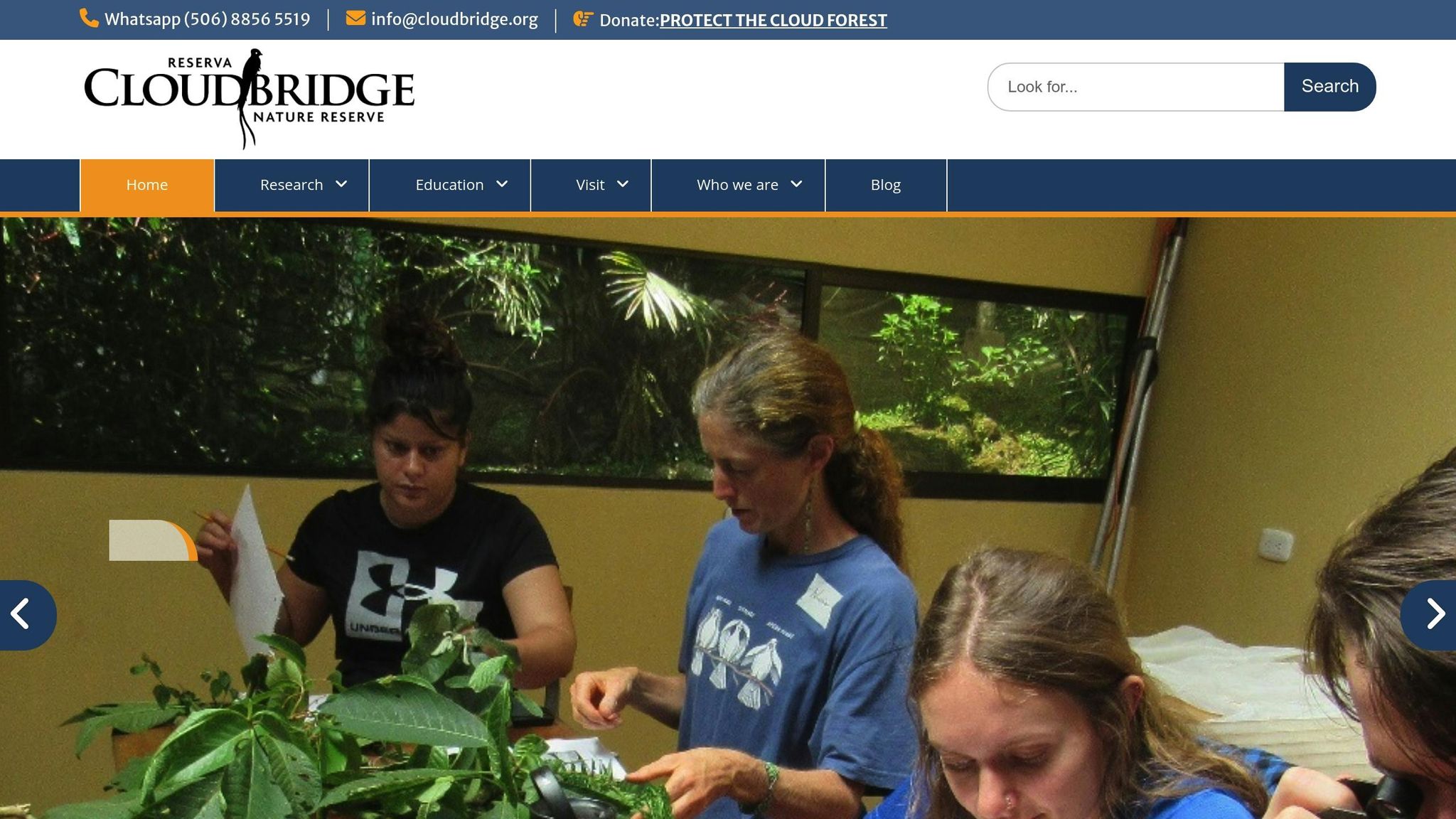
Volunteering in Costa Rica | Cloudbridge Nature Reserve
Best Destinations for Reforestation Travel
Choosing the right destination for your reforestation efforts can offer a chance to experience diverse ecosystems while tackling unique environmental challenges. Below are some standout locations where you can get involved in meaningful restoration work.
Iceland’s Tree-Planting Projects
Iceland’s reforestation journey is rooted in history. When Vikings arrived in the 9th century, forests covered about 25% to 33% of the island. Today, that figure has plummeted to just 2%, representing a staggering loss of over 90% of its forest cover.
Modern initiatives aim to reverse this trend by focusing on native birch tree restoration and carbon sequestration. Volunteers play a key role by planting birch trees, fertilizing young saplings, collecting seeds, and maintaining trails in areas like Heiðmörk and Esja. These efforts also help combat erosion and desertification. Programs typically cost around $450 for two weeks and are highly rated on WorkingAbroad. If you’re planning to join, be sure to pack windproof clothing and durable footwear to brave the unpredictable arctic weather.
Amazon Rainforest Programs
The Amazon is home to the richest biodiversity on Earth, but it’s under serious threat. Nearly 20% of the rainforest has already been lost, and much of what remains is suffering from degradation. Deforestation in this region contributes to about 15% of global greenhouse gas emissions, making restoration efforts here vital.
Programs in Peru and Ecuador focus on restoring rainforests and cloud forests damaged by logging and fragmentation. Volunteers engage in activities like seed collection, nursery maintenance, transplanting seedlings, and conducting forestry inventories to monitor growth and survival rates. Many projects also incorporate agroforestry techniques, helping local communities rebuild their livelihoods while restoring degraded land. In Peru, IVHQ offers programs starting at roughly $23 per day, with glowing reviews, including a 4.90/5 rating from 141 participants.
"Overall the program was so much better than I ever could have imagined. The perfect place to spend 2 weeks working with reforestation."
- Kasie Kirkpatrick.
Costa Rica’s Rainforest Restoration
Costa Rica’s reforestation efforts blend tree planting, mulching, trail building, carpentry, and field data collection to restore its lush cloud forests. For instance, the Corcovado Foundation is working toward reforesting 5,000 trees by 2030, covering an area of about 12.4 acres.
At the Cloudbridge Nature Reserve, volunteers can participate in these efforts while staying on-site. Accommodation costs range from $20 to $28 per day, with discounts for stays longer than 12 weeks. Veneta, a volunteer, described the emotional impact of planting a tree:
"I cannot describe to you the feeling of vulnerability of handling a young tree, or the feeling of Hope placed on it as I place it into the ground."
.
Most programs in Costa Rica require volunteers to be at least 18 years old (though Corcovado accepts participants as young as 16) and physically fit for 4–6 hours of daily labor.
Reforestation Travel Programs and Organizations
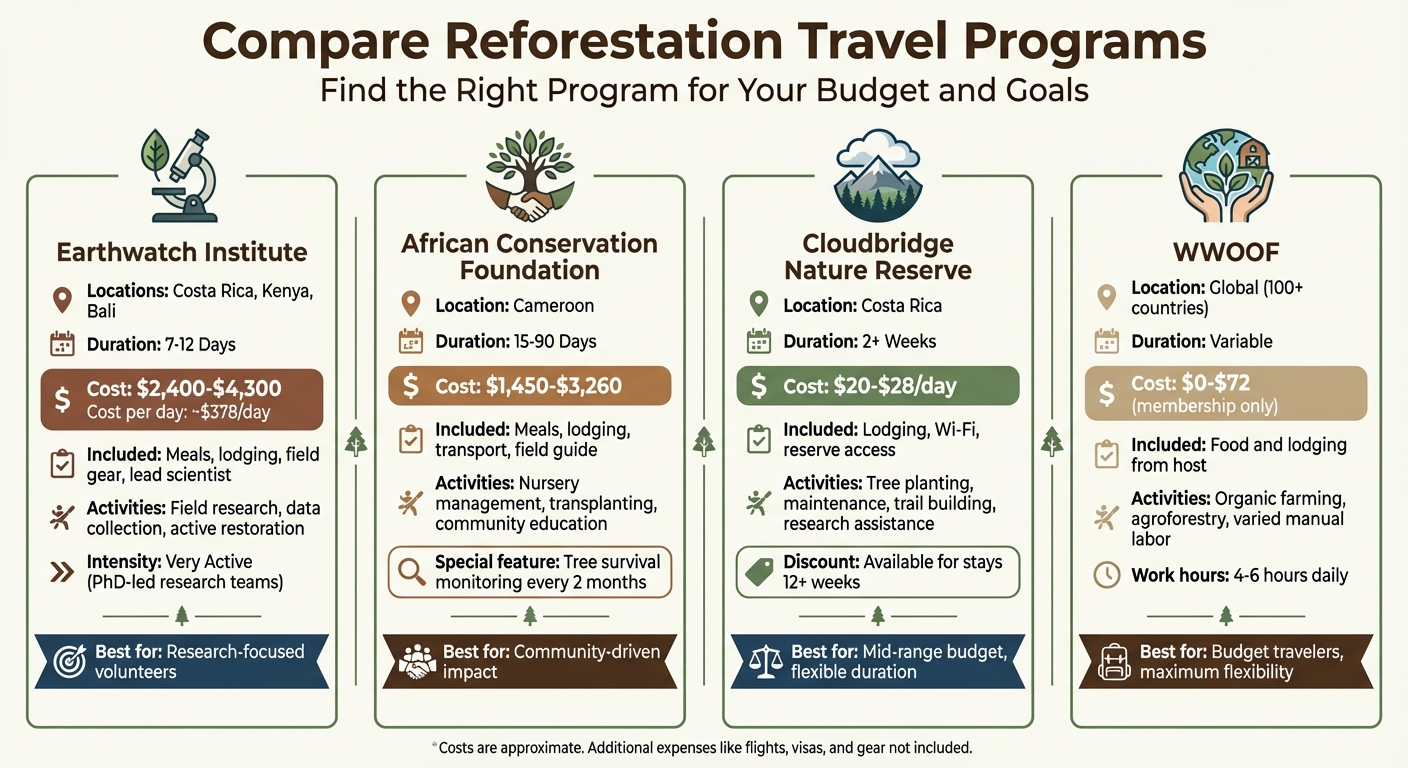
Reforestation Travel Programs Comparison: Costs, Duration, and Activities
When selecting a reforestation program, it’s important to find one that blends scientific precision with meaningful community collaboration. This combination helps create lasting environmental improvements.
Program Comparison
Different organizations cater to varying interests – whether you’re seeking hands-on research, deep community engagement, or a more affordable experience. Here’s a breakdown of some top programs to help match your priorities with the right opportunity:
| Organization | Primary Location(s) | Duration | Cost (Approx.) | What’s Included | Activity Focus |
|---|---|---|---|---|---|
| Earthwatch Institute | Costa Rica, Kenya, Bali | 7–12 Days | $2,400–$4,300 | Meals, lodging, field gear, lead scientist | Field research, data collection, active restoration |
| African Conservation Foundation | Cameroon | 15–90 Days | $1,450–$3,260 | Meals, lodging, transport, field guide | Nursery management, transplanting, community education |
| Cloudbridge Nature Reserve | Costa Rica | 2+ Weeks | $20–$28/day | Lodging, Wi-Fi, reserve access | Tree planting, maintenance, trail building, research assistance |
| WWOOF | Global (100+ countries) | Variable | $0–$72 (membership) | Food and lodging (from host) | Organic farming, agroforestry, varied manual labor |
Earthwatch Institute offers a unique opportunity for volunteers to work alongside PhD-led research teams addressing climate change. Their "Rainforest Revival" program in Costa Rica, for example, costs around $378 per day and involves physically demanding activities like hiking and data collection.
The African Conservation Foundation focuses on community-driven reforestation efforts in Cameroon. Volunteers participate in agroforestry training, nursery management, and school programs, with a minimum commitment of 15 days. The organization also monitors tree survival rates every two months to ensure long-term success.
For those on a tighter budget, WWOOF provides an affordable option with a membership fee of $0 to $72. Volunteers work 4–6 hours daily on organic farms in exchange for food and lodging, offering flexibility and global opportunities. Alternatively, Cloudbridge Nature Reserve offers a mid-range choice, charging $20–$28 per day for accommodation and allowing volunteers to focus on cloud forest restoration projects like tree planting and trail maintenance.
How to Choose a Reforestation Program
Once you’ve reviewed the options, consider these factors to find the program that aligns with your goals.
First, ensure the program adheres to sound ecological practices. Successful reforestation efforts prioritize planting native species over monocultures, which can harm ecosystems. Dr. Susan Cook-Patton from The Nature Conservancy highlights the importance of expanding forested areas:
"The climate cooling power of reforestation depends heavily on how much new forest area we can gain. The greater the footprint of new forest, the greater the amount of carbon dioxide we can pull from the atmosphere."
Programs that offer local training, like the African Conservation Foundation’s nursery management courses, help build long-term stewardship in the community. Additionally, look for organizations that monitor tree survival rates over time rather than focusing solely on planting numbers.
Evaluate the physical requirements of each program, ensuring they match your fitness level. For instance, Earthwatch’s Costa Rica program is labeled "Very Active" due to its challenging terrain. Keep in mind that most programs require volunteers to be at least 18 years old for insurance reasons. Lastly, factor in additional costs like airfare, visas, and meals not covered by the program.
sbb-itb-289f5f2
Costs and Budgeting
Planning for reforestation travel requires careful financial preparation. Knowing what to expect in terms of costs can help you avoid unexpected expenses. Below, we’ve broken down program fees, additional expenses, and practical tips to save money.
Program Fees and What’s Included
Reforestation programs typically cost between $1,450 and $3,260 for multi-week commitments. For example, the African Conservation Foundation’s program in Cameroon charges $1,450 for two weeks, $1,850 for three weeks, and $3,260 for six weeks. These fees often include accommodation (such as community housing, field lodges, or cabins near nature reserves), most meals during fieldwork, local transportation to planting sites, and guidance from trained field experts or expedition leaders.
The fees also cover essential items like equipment, nursery supplies, and local staff wages. According to the African Conservation Foundation, "Your volunteer contribution also helps to create local jobs in an area where there are virtually no paid jobs available – and to protect local forests". Some programs may also include a contribution toward local community initiatives.
Additional Expenses to Plan For
While program fees cover many essentials, there are additional costs to consider. For instance, international airfare can run about $1,200, travel insurance for four weeks costs roughly $125, and visa fees start at $50 or more. Health-related expenses, such as vaccinations like Yellow Fever ($110) and preventative medications like malaria prophylaxis, can add to your budget.
Other expenses include a local SIM card (around $40) and meals on arrival or departure days, which are often not included in program fees. If airport pickup isn’t provided, plan transportation in advance to avoid last-minute taxi charges. Gear requirements will also depend on the ecosystem you’re working in – rainforest projects might require rubber boots and dry bags, while temperate areas could call for a full camping kit.
How to Save Money on Reforestation Travel
To cut costs, book your flights about five weeks in advance and use flight comparison tools to find better deals. If you’re under 26, platforms like StudentUniverse often offer youth discounts. Traveling during off-peak seasons – such as visiting Iceland in winter – can also significantly reduce costs, like vehicle rentals, which could drop by as much as $100 per day.
Avoid foreign transaction fees by using travel rewards credit cards or fee-free debit cards, such as those from Charles Schwab. If meals aren’t included in your program, consider teaming up with other volunteers to share grocery and cooking costs. Packing light can help you save on baggage fees, and you might borrow or rent specialized gear instead of buying it outright. Lastly, look into financial aid or scholarships offered by some organizations, and consider crowdfunding platforms like YouCaring to help fund your trip.
How to Prepare for Your Trip
What to Pack
When gearing up for reforestation work, practicality and durability are key. Forget wheeled suitcases – unpaved paths and muddy terrain will render them useless. Instead, opt for a 40-liter internal frame backpack, like the Osprey Fairview/Farpoint 40L, which provides excellent back support and is ideal for adventure travel.
Adopt the "hiking uniform" approach: pack one set of clothes for daily work and keep another clean and dry for evenings and sleeping. If you’re heading to tropical areas like the Amazon or Costa Rica, long, loose pants and long-sleeved shirts are a must to protect against mosquito bites, leeches, and thorns. Treat your work clothes with Permethrin to ward off insects.
Weather conditions vary by destination. For instance, the Amazon is consistently hot and humid, with temperatures ranging from 77–88°F (25–31°C). On the other hand, Iceland demands thermal underwear, fleece layers, and insulated jackets. A three-layer system works best: start with a moisture-wicking base layer, add a fleece or wool mid-layer, and top it off with a waterproof outer shell. In tropical climates, a lightweight poncho often outperforms a rain jacket by allowing better airflow and covering your backpack.
Essential gear for the job includes sturdy, closed-toe boots with good traction and 1–2 pairs of durable work gloves. In muddy or snake-prone areas, knee-high rubber boots are often the go-to footwear. For a great option, consider Oboz Sawtooth Hiking Boots, which also support reforestation efforts by planting a tree for every pair sold. Bring a reusable 1-liter water bottle or a hydration bladder like CamelBak to stay hydrated during strenuous tasks. For mosquito-heavy areas like the Amazon, use insect repellent with 25–30% DEET. To protect your essentials from humidity and sudden rain, pack them in dry bags or Ziploc bags inside your backpack.
Once you’ve gathered the right gear, it’s time to prepare your body for the physical challenges ahead.
Physical Fitness Requirements
Reforestation projects demand a lot of physical effort. Expect to spend about 7 hours daily on uneven terrain, performing tasks like planting seedlings, clearing trails, and carrying tools. In some cases, you might need to hike to basecamps while carrying your personal and camping gear.
Start building your endurance several weeks before your trip to handle these daily demands. Not sure about your fitness level? Join a local one-day work party or weekend project to gauge your readiness before committing to a longer trip. For backcountry projects, prior backpacking experience is often required.
"If you have a health condition that might be aggravated by physical exertion and cannot be controlled at a safe level while in the field, a volunteer vacation is probably not the right fit for you." – Washington Trails Association
If you have any health concerns, consult your doctor before committing to the trip. Conditions like asthma or severe allergies (e.g., bee stings) should be disclosed to project staff, especially for remote locations where medical help could be hours away.
Once you’re physically ready, focus on organizing your documents and ensuring safety measures are in place.
Documentation and Safety
Make sure your passport is valid and secure the necessary visa well in advance. Depending on your destination, you may need a tourist visa or a specific volunteer visa. U.S. citizens should enroll in the Smart Traveler Enrollment Program (STEP) to help the local embassy or consulate contact them in emergencies.
Check the CDC‘s travel health guidelines for your destination to see which vaccinations are required or recommended. For example, the Yellow Fever vaccine is often mandatory for the Amazon Rainforest. Some reforestation programs may also require a health certificate or pre-trip physical. Be sure to complete any required forms and waivers, as failing to do so might prevent you from participating in restoration activities or receiving emergency support.
Specialized travel insurance that includes medical evacuation is highly recommended for remote areas. Carry photocopies of your ID, passport, and immunization records (International Health Card) in a separate location from the originals. If your tasks include clearing trees or similar activities, you may also need cut-resistant boots and ANSI Z87.1+ eye protection.
With the right preparations, you’ll be well-equipped to contribute meaningfully to reforestation efforts while staying safe and comfortable.
Conclusion
Reforestation travel brings together the power of restoring nature, uplifting communities, and sparking personal growth. Every tree you plant plays a role in combating climate change – absorbing roughly one ton of CO₂ over its first 40 years and capturing up to 1,000 gallons of rainwater each year. These efforts also rebuild critical habitats for 80% of the planet’s land-based species, while safeguarding essential water resources.
But the impact doesn’t stop there. Reforestation programs often create jobs in regions struggling with high unemployment, improve food security through agroforestry practices, and open up new income opportunities for landowners. On a larger scale, these initiatives help landowners adapt to extreme weather, diversify their livelihoods, and preserve their land for future generations.
For many, the experience becomes deeply personal. Volunteers frequently speak of a lasting sense of fulfillment – knowing their work will grow into towering trees that sustain ecosystems for decades. Along the way, you’ll gain a deeper understanding of local plants and wildlife, develop resilience by immersing yourself in new cultures, and forge a lasting connection with the natural world that stays with you long after your journey ends.
The need for reforestation is urgent. With more than 80% of Earth’s original forests already lost and 18 million acres disappearing annually, the call to action is clear. Whether you find yourself planting trees in Iceland’s volcanic plains, the Amazon’s lush rainforests, or Costa Rica’s vibrant hillsides, your efforts make a difference. Start planning your reforestation adventure today – the planet, its people, and your future self will thank you.
FAQs
What should I look for when choosing a reforestation travel program?
When choosing a reforestation travel program, it’s important to start by assessing the project’s credibility and its overall impact. Seek out programs that rely on science-based strategies, have systems in place for long-term monitoring, and work closely with reliable local partners. This ensures the initiative benefits both the environment and the local community. Projects that take local needs into account and respect existing land-use practices often yield the best results.
Next, think about the type of work and location that matches your interests and skills. Tasks can include planting trees, maintaining nurseries, teaching sustainable techniques, or even organizing workshops. Consider the kind of ecosystem you’d like to support – whether it’s a rainforest, a floodplain, or an agroforestry site – and choose a season when planting efforts are likely to have the most impact.
Finally, don’t overlook the practical details like budget and logistics. Costs for these trips can vary significantly, typically falling between $1,500 and $3,000 for a two-week experience. Make sure to check visa requirements, secure travel insurance, and confirm you have the right gear and vaccinations. A detailed checklist that includes your travel dates, flight information, and required documents will help ensure you’re fully prepared to make the most of this rewarding opportunity to help restore the planet’s forests.
How can I physically prepare for reforestation travel?
Preparing your body for reforestation travel is key to handling the physical demands of activities like tree planting, hiking, and hauling gear. Start by focusing on building overall strength. Exercises like squats, lunges, and push-ups are great for targeting major muscle groups. Adding movements like step-ups and burpees can help simulate the motions you’ll use for tasks such as digging and lifting.
For endurance, aim to include 30–60 minutes of cardio – like walking, jogging, or cycling – three to four times a week. Gradually work up to longer hikes while carrying a loaded backpack. Start with 5–10 pounds and increase to 15–25 pounds to mimic the weight you’ll carry on your trip. To stay flexible and avoid injuries, make stretching and mobility exercises, such as yoga or foam rolling, a regular part of your routine.
As your trip approaches, combine strength training, cardio, and pack-carrying into back-to-back sessions to prepare for the daily challenges of reforestation work. Stay hydrated, fuel your body with balanced meals, and ensure you’re getting 7–9 hours of sleep each night to recover and keep your body in top shape for the adventure ahead.
What are the main costs of reforestation travel, and how can I plan my budget effectively?
Reforestation travel expenses usually fall into four main categories: program fees, transportation, living costs, and extra essentials. Program fees typically cover items like training, tools, and local support, ranging anywhere from a few hundred to several thousand dollars. Transportation includes airfare and ground travel, and you can often save money by booking early and staying flexible with your travel dates. Living costs – such as accommodation and meals – depend on the location, but in many countries, they average between $30 and $70 per day. Don’t overlook additional expenses like travel insurance, visas, vaccinations, and gear, plus a small emergency fund for unexpected situations.
To keep your budget on track, break down your trip into clear expense categories. Start by calculating the program fee, then research flight prices to get a realistic estimate. Check out typical costs for lodging and meals in your destination and allocate funds for essentials like insurance and vaccinations. It’s wise to include a $200–$300 buffer for any last-minute surprises. Using a simple spreadsheet or budgeting app to track your expenses can help you stay organized and enjoy your reforestation journey without breaking the bank.