
How to Ski Sustainably: 7 Tips for Winter Trips

Skiing can be tough on the planet, but small changes can reduce its impact. Transportation alone can account for over 50% of ski trip emissions, with resort operations and waste adding to the problem. Here’s how you can enjoy the slopes while being more mindful of your choices:
- Choose low-emission travel: Carpool, take public transit, or drive an EV. Stick to nearby resorts to cut travel-related emissions.
- Rent or buy eco-friendly gear: Renting reduces waste, while durable, recycled materials in new gear lower production impacts.
- Pack reusable items: Bring water bottles, food containers, and cutlery to avoid single-use plastics.
- Pick resorts with green initiatives: Look for certifications, renewable energy use, and waste reduction programs.
- Respect nature: Stay on marked trails and keep your distance from wildlife to protect fragile ecosystems.
- Try human-powered skiing: Cross-country or ski touring requires less infrastructure and avoids emissions from lifts.
These steps not only reduce your footprint but also support broader efforts to preserve skiing for future generations.
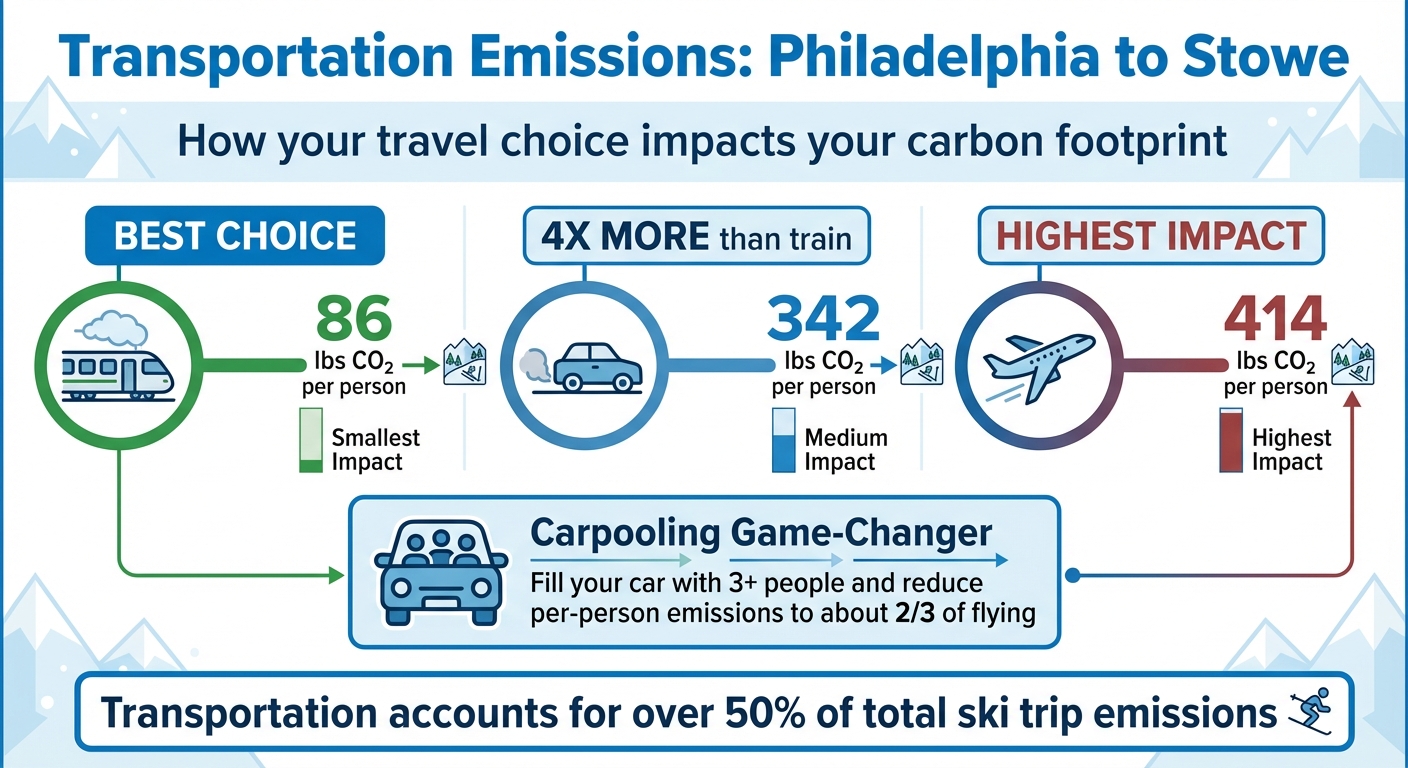
Ski Trip Carbon Emissions by Transportation Method: Philadelphia to Stowe Comparison
HOW TO BE MORE ECO ON THE SLOPES | Top tips to make your ski trip more sustainable!
1. Choose Low-Emission Transportation
Your transportation choice has the biggest impact on your trip’s carbon footprint. Since travel makes up more than half of the emissions from a ski trip, how you get to the mountain is crucial.
Carpool, Use Public Transit, or Drive an EV
Sharing rides can drastically cut emissions. For example, driving solo from Philadelphia to Stowe results in 342 lbs of CO₂ per person, while taking the train reduces that to just 86 lbs. Flying is even less efficient, creating 414 lbs per person for the same route.
Carpooling is a game-changer. When you fill a car with three or more people, per-person emissions drop to about two-thirds of what flying produces. Some resorts even incentivize carpooling – Arapahoe Basin, for instance, offers free parking for vehicles carrying four or more adults. Once at your destination, consider using local shuttles like Lake Link or TART Connect. These services not only reduce traffic but also help preserve the surrounding environment. As the League to Save Lake Tahoe explains:
"Fewer cars mean a clearer Lake, less traffic, and a more enjoyable visit for everyone – including you."
Driving an electric vehicle (EV) can further lower emissions, especially when charged with renewable energy. Just keep in mind that extreme cold (below -31°F) can reduce an EV’s range by 30-40%.
These transportation choices don’t just cut emissions – they also make your trip smoother and set the stage for exploring nearby resorts.
Visit Nearby Resorts
Choosing closer destinations can significantly reduce your environmental impact. Resorts within a day’s drive are far better for the planet than flying across the country. They’re also more accessible by bus or train, making it easier to plan a longer trip instead of multiple short ones. A single extended trip is much more eco-friendly than several weekend getaways when you consider the total emissions.
2. Select Eco-Friendly Ski Gear
Did you know that new ski gear can contribute to 16% of your trip’s carbon footprint?. The good news is you can reduce this impact while still enjoying top-notch performance. Here’s how to make smarter choices when it comes to your equipment.
Rent or Borrow Equipment
If you only hit the slopes occasionally, renting gear is a smart move. It prevents unused items from piling up and reduces your environmental impact. For instance, a polyester ski jacket can take up to 500 years to decompose. Rental options like REI offer ski packages starting at $28 for the first night and $17 for each additional night, making it an affordable and eco-conscious choice.
Outerwear can be rented, too. Services like EcoSki combine style with sustainability, letting you skip the hassle of storing and maintaining gear while cutting down on the environmental costs of production. Renting is a win-win for your wallet and the planet.
Buy from Responsible Brands
For frequent skiers, investing in long-lasting, eco-friendly gear is essential. Durability is key. As Jenn Swain, Burton‘s Global Senior Sustainability Manager, puts it:
"The most sustainable product is the one that lasts".
Seek out brands that use recycled materials. For example, Rossignol‘s Experience skis feature 100% recycled steel edges and bases made from 30-70% recycled materials.
Certifications can guide your choices. Look for labels like B Corp, Bluesign, or PFAS/PFC-free to ensure sustainable production practices. Some brands go even further, like Patagonia, which offers gear repair through its Worn Wear program, and Picture Organic Clothing, which provides lifetime repair warranties. For quick fixes, Noso patches – starting at just $8 – can extend the life of your gear by years.
Consider bio-based materials. Burton’s SuperSap resin reduces carbon emissions by 33% compared to petroleum-based alternatives, while Scarpa incorporates Pebax Rnew, a polymer made from castor plant oil, in their boots. Even small items make a difference – Grass Sticks produces bamboo ski poles ($110) that match the strength of steel and are completely renewable.
3. Pack to Reduce Waste
Once you’ve selected gear that’s kinder to the environment, take the next step by cutting down on waste during your trip. Ski vacations often generate a surprising amount of trash, from single-use plastics to excessive packaging. For instance, during a cleanup at Eldora Mountain Resort, volunteers collected over 4,000 pounds of waste. A few smart packing choices can make a big difference in reducing your environmental footprint.
Bring Reusable Water Bottles and Containers
Carrying a reusable, collapsible water bottle is a simple way to cut down on single-use plastics. The que Bottle, priced at $20, is compact and perfect for filling up at resort water fountains. Many ski resorts are phasing out plastic cups, so having your own bottle is becoming a must.
Consider packing an insulated mug, reusable food containers, and a set of personal cutlery to avoid relying on disposables. For staying hydrated in cold weather, a hydration pack like the CamelBak Powderhound 12 ($110) is a practical choice.
Skip Packaged Snacks
Instead of buying pre-packaged snacks, try preparing your own. Purchase nuts, seeds, and dried fruit in bulk to make energy bites or trail mix, cutting down on unnecessary packaging.
Swap disposable plastic bags for silicone zip-top bags or beeswax wraps for storing food. Mixing your own electrolyte powder in bulk is another way to avoid waste from single-serve packets. As Brent Glogau puts it:
"The most sustainable option for nourishment is packing your own food in reusable containers".
Stick to the "pack in, pack out" principle: whatever you bring to the mountain, make sure you take it back with you.
sbb-itb-289f5f2
4. Choose Eco-Certified Resorts
Where you ski matters. Resorts are nestled in delicate mountain environments, and their operations can have a significant environmental impact. For instance, snow-grooming machines alone are responsible for nearly 80% of a resort’s carbon footprint. Opting for resorts that prioritize environmental responsibility means supporting efforts to protect these fragile ecosystems.
Look for Green Certifications
Certifications can help you identify resorts that meet high environmental standards. Programs like the Sustainable Slopes initiative by the National Ski Areas Association (NSAA) provide a roadmap for resorts to adopt and report on eco-friendly practices. For infrastructure, check for LEED (Leadership in Energy and Environmental Design) certification, which resorts like Aspen have embraced for their facilities.
Another helpful marker is the Flocon Vert (Green Snowflake) label, awarded to resorts following 20 best practices for sustainability, including energy efficiency, recycling, and biodiversity preservation. Additionally, the International Ski Federation (FIS) released its Sustainability Guide in December 2024, highlighting 14 initiatives for resorts, such as transitioning to 100% green electricity and achieving "Waste Zero" goals. As Susanna Sieff, FIS Sustainability Director, puts it:
"Our role is also to provide the whole FIS family with tools that can guide them in trying to reduce their environmental impact in their daily organizational decisions".
These certifications often reflect a resort’s broader commitment to renewable energy and waste reduction.
Seek Out Resorts with Renewable Energy and Waste Initiatives
Choose resorts that run entirely on renewable energy. For example, Jackson Hole Mountain Resort has been powered by 100% green energy since 2019, sourcing wind power from Idaho’s Horse Butte wind farm. Whistler Blackcomb utilizes energy from the Fitzsimmons Creek hydro project, which generates enough electricity to support its lifts, restaurants, and snow guns. Park City Mountain operates entirely on solar energy from the 80-megawatt Elektron Solar farm.
Waste management is another key factor. Vail Resorts has cut landfill waste by 47% as part of its "Commitment to Zero" initiative. Similarly, Whistler has slashed landfill waste by 70% since 2000 through extensive recycling and composting programs. When researching resorts, explore their websites for sustainability reports or look for initiatives like "Play Forever" or "EpicPromise", which outline their environmental goals.
5. Respect Nature and Wildlife
Reducing waste and emissions is just one part of being environmentally conscious during your winter trips. Equally important is respecting the natural mountain environment and its wildlife. By doing so, you help preserve the delicate ecosystems that make the slopes so special.
Mountain ecosystems may seem resilient, but they are surprisingly fragile, especially in winter. Skiing off marked trails can damage vegetation and disrupt the soil beneath. While snow provides a protective layer, it only works when it’s deep enough. By sticking to designated trails, you not only reduce erosion but also protect sensitive alpine habitats.
Stay on Marked Trails
Venturing off-piste can disturb wildlife and increase avalanche risks. Many animals rely on undisturbed habitats to conserve energy during the harsh winter months. Human activity can force them to flee, using up critical energy reserves they need to survive until spring. Staying on marked trails minimizes these disruptions and ensures your safety.
If you create a divot in groomed snow, take a moment to fill it with loose snow. This simple act helps maintain trail quality and prevents injuries for other skiers. As Amanda Neiman and Greg Smith from the Subaru/Leave No Trace Traveling Trainer Team point out:
"It can look like there are no wild animals out in the snow, but they are still around, usually just in smaller numbers for fewer hours. Please do your part by respecting signs outlining migration paths."
Keep Distance from Wildlife
Respecting wildlife goes beyond staying on trails; it also means giving animals the space they need. Winter is a tough season for mountain animals, and getting too close can force them to expend energy they can’t afford to lose. Alex Delucia, Leave No Trace Programs Manager at the Appalachian Mountain Club, highlights this:
"By getting too close and spooking animals, they are unnecessarily wasting energy, which limits their ability to successfully make it through until spring."
To observe wildlife responsibly, keep a safe distance. Use binoculars or a zoom lens for a closer look, and always follow signs about migration paths or restricted areas. Additionally, secure your food and trash in animal-proof containers to prevent wildlife from associating humans with easy meals. This small effort helps protect both animals and their natural behaviors.
6. Try Low-Impact Skiing Alternatives
If you’re already making eco-friendly choices in travel and gear, why not take it a step further with skiing itself? Opting for human-powered alternatives instead of traditional downhill skiing can significantly reduce your carbon footprint. Snow-grooming machines, for example, are responsible for nearly 80% of a ski resort’s emissions due to the massive amounts of diesel they consume. By choosing activities that don’t rely on powered lifts or heavy machinery, you can enjoy the slopes while keeping emissions in check.
Try Cross-Country Skiing
Cross-country skiing is one of the greenest ways to enjoy winter sports. Unlike downhill skiing, it requires little to no infrastructure – no diesel-powered lifts, no energy-draining snowmaking, and minimal trail grooming. You can explore groomed trails at Nordic resorts or even venture onto public lands like city parks, golf courses, or open fields.
Take Lebanon Hills Regional Park in Eagan, Minnesota, as an example. This park boasts nearly 15 miles of cross-country trails that wind through scenic wooded areas and around lakes. It even offers equipment rentals, making it an easy entry point for beginners. Many urban parks around the U.S. provide similar opportunities, often at little to no cost with a local pass. This makes cross-country skiing not only an eco-friendly choice but also an accessible one for those who want to stay close to home.
Consider Ski Touring
For those with more experience, ski touring – also called alpine or backcountry skiing – offers a chance to climb and descend under your own power. Instead of relying on lifts, you’ll "skin" uphill using special equipment and your own energy. As Emy Reznik from SKI Magazine explains:
"Backcountry skiing is a great way to provide an excellent physical challenge with human power instead of fossil fuels".
If you’re just starting out, some resorts offer designated uphill routes with special "uphill only" passes. Snow King in Jackson, Wyoming, is a great example, providing a safe and controlled environment for beginners to practice without the added risk of avalanches. For more seasoned skiers, areas like Berthoud Pass in Colorado, a former ski resort, have become popular backcountry destinations. There, a single skin track on the west side leads to a variety of low-angle, forested terrains.
Before heading into the backcountry, it’s essential to complete an avalanche safety course and carry the proper gear, including a beacon, shovel, and probe. Safety is just as important as sustainability when it comes to enjoying these pristine winter landscapes.
Conclusion
Skiing with an eye toward sustainability is about making thoughtful, small changes that collectively lead to a big impact. Choosing low-emission transportation options and more eco-conscious gear, as mentioned earlier, can significantly cut down your carbon footprint. Since travel and equipment are two major contributors to ski trip emissions, consider carpooling, taking trains, or visiting local resorts. Renting gear or maintaining what you already own can also go a long way in reducing waste.
These individual choices don’t just lower emissions – they send a message to the industry. Supporting resorts that use renewable energy or brands focused on sustainable production encourages broader change. For instance, Wolf Creek Ski Area in Colorado became the first U.S. resort to operate entirely on solar power, while Vail Resorts has committed to achieving a zero net operating footprint by 2030. These milestones are driven by skiers demanding better practices.
"The most sustainable product is the one that lasts".
Simple habits like repairing your gear, staying on marked trails, and packing out your trash might seem small, but their impact adds up. Just one cleanup at Eldora Mountain Resort collected over 4,000 pounds of waste. It’s proof that every choice matters.
Beyond personal efforts, collective action can amplify your impact. Supporting groups like Protect Our Winters or voting for climate-conscious policies in local elections can push the industry toward more sustainable practices. Together, we can help preserve the mountains and the sport we cherish for generations to come.
FAQs
What are the best ways to make my ski trip more eco-friendly?
Reducing the impact of your ski trip on the planet is simpler than it seems. Start with how you get there – carpooling, using public transportation, or driving an electric vehicle can significantly cut down emissions. If flying is your only option, look into offsetting your carbon footprint through a reliable program.
When choosing a resort, go for those that take sustainability seriously. Many resorts are now powered by renewable energy or have programs in place to reduce their environmental footprint. As for gear, consider renting or buying second-hand to cut down on waste, and take care of your equipment so it lasts for years to come.
Lastly, cut back on waste while you’re on the slopes. Bring along a reusable water bottle and containers for snacks, and make sure to pack out any trash you create. These small, thoughtful actions can help protect the environment while you enjoy your time in the mountains.
What should I consider when choosing eco-friendly ski gear?
When shopping for eco-conscious ski gear, aim for options that emphasize sustainability and long-lasting quality. Look for items made from recycled or bio-based materials – think jackets produced with reclaimed ocean plastics or skis incorporating bio-resins. Selecting durable gear with repairable features, like replaceable bindings or jackets that can be patched, ensures your equipment lasts longer and reduces waste.
For those who ski only occasionally, renting or purchasing second-hand gear is a smart way to cut down on your environmental footprint. Check out consignment shops or online platforms for gently used items. You can also support brands that offer take-back or repair programs, which help keep old gear out of landfills. To ensure you’re making a responsible choice, keep an eye out for well-known sustainability certifications such as Bluesign® or the Global Recycled Standard.
By keeping these considerations in mind, you can hit the slopes with gear that’s kinder to the planet.
Why should I choose an eco-certified ski resort?
Choosing a ski resort with eco-certification is a great way to minimize the environmental footprint of your winter vacation. These resorts adhere to rigorous sustainability practices, such as relying on renewable energy, conserving water, cutting greenhouse gas emissions, and running efficient recycling programs. By visiting these destinations, you’re playing a part in protecting mountain ecosystems and ensuring that natural snow remains for future ski seasons.
Eco-certified ski resorts offer the chance to enjoy your favorite winter activities responsibly while supporting a cleaner environment. Plus, your choice sends a strong message to the ski industry to keep sustainability at the forefront. It’s an easy step toward making your winter trips greener and keeping the mountains as beautiful as ever.