
Why Indigenous Practices Matter in Adventure Travel

Indigenous practices are transforming adventure travel by offering deeper connections to the land and its history. These practices, rooted in centuries of knowledge, include sustainable land management, ecological wisdom, and storytelling. Travelers increasingly seek experiences that honor these traditions, leading to a surge in Indigenous tourism. For example:
- In the U.S., visits to native lands grew by 187% between 2007 and 2018.
- Canadian Indigenous tourism outpaced the broader sector with 20% annual growth from 2014 to 2019.
- Programs like the Yurok Tribe’s river tours or New Zealand’s Māori-led marine tourism incorporate stewardship principles.
This shift supports environmental preservation, strengthens community economies, and revitalizes cultural practices. However, challenges remain, such as the risk of commercialization and economic dependency. Ethical travel – supporting Indigenous-led programs and respecting local customs – ensures a positive impact for both visitors and communities.
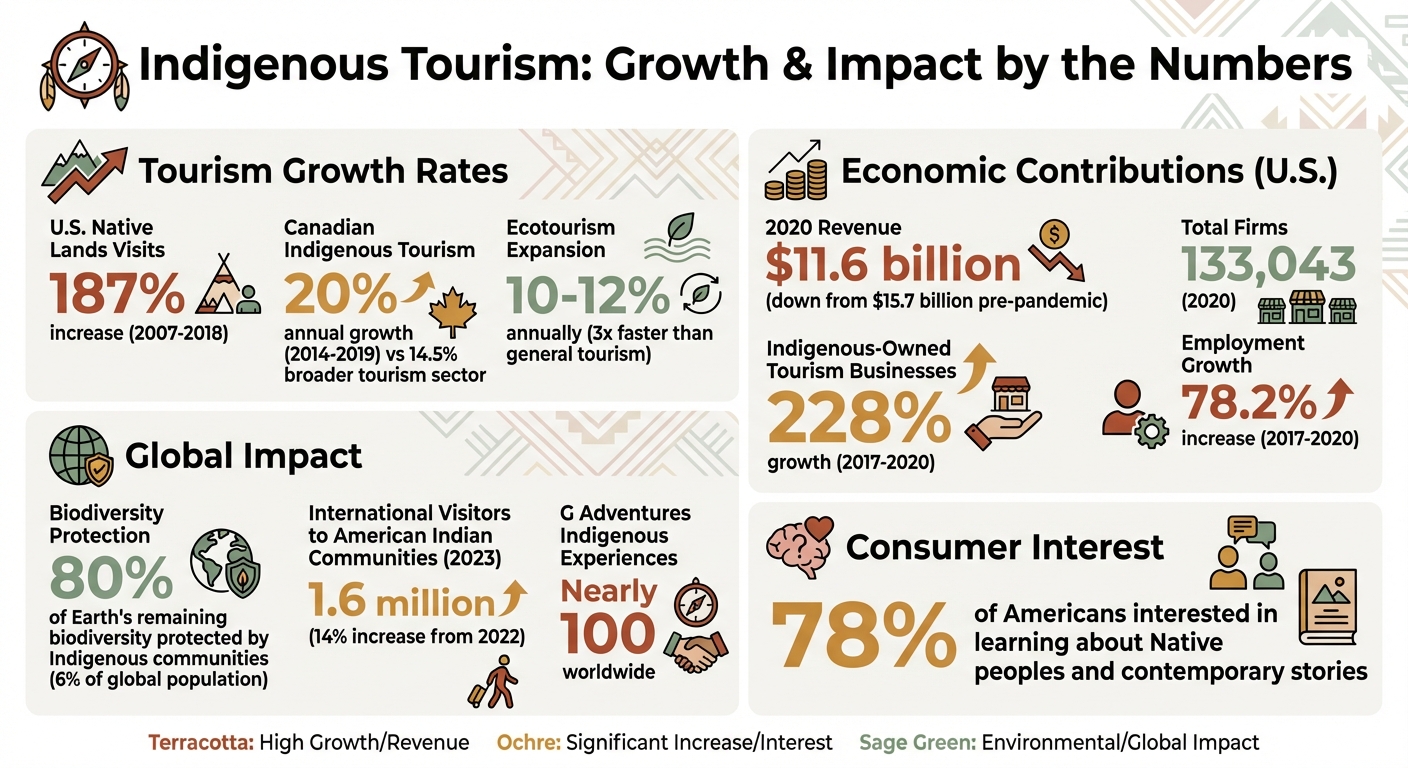
Indigenous Tourism Growth Statistics and Economic Impact 2007-2023
5 Incredible INDIGENOUS Tourism Experiences in Canada | Alberta Travel Guide
How Indigenous Knowledge Supports Environmental Sustainability
Indigenous communities, though they make up just 6% of the global population, are responsible for protecting a staggering 80% of Earth’s remaining biodiversity. These communities rely on knowledge systems developed over thousands of years through direct interaction with their environments. Their practices, rooted in tradition and experience, have sustained ecosystems for millennia, offering a model of environmental care that stands apart from conventional approaches.
This wisdom is not merely theoretical – it is woven into cultural traditions and active environmental management techniques.
Practices That Protect the Environment
Indigenous ecological practices are often preserved and passed down through oral traditions such as proverbs, taboos, and place names, which serve as informal systems of environmental governance. For instance, in Somalia, tree-cutting bans known as gurmo go’an help maintain forest cover. Similarly, among the Comcaac people in Mexico, place names like Moosni Oofia pinpoint green turtle habitats, transforming language into a form of ecological mapping.
In Peru’s Ayacucho region, Quechua communities have revived ancestral "water sowing and harvesting" techniques to regulate water cycles – methods so effective that Costa Rican farmers have adopted them to combat climate challenges. In Australia, the Martu people of the Western Deserts use controlled patch burning and seasonal hunting to create diverse habitats that support native species and promote plant diversity.
Hindou Oumarou Ibrahim, Chair of the UN Permanent Forum on Indigenous Issues, captures the essence of this approach:
"We are custodians of the natural world who are committed to maintaining the natural equilibrium of the planet for the generations to come".
Case Studies: Indigenous-Led Adventure Travel Programs
Several initiatives highlight how indigenous knowledge can shape sustainable tourism. In 2020, Bobbi Rose Koe founded Dinjii Zhuh Adventures (DZA) in the Yukon, offering whitewater canoe and raft trips. Two years later, DZA earned the Arctic Inspiration Award, which funded the Indigenous Youth River Guide Training Program. This program certified five Indigenous youth as professional guides, empowering them to lead tours while monitoring the Peel River Watershed for unauthorized resource extraction. This type of informal yet effective monitoring helps safeguard the ecosystem.
In Nunavut, tours at Sirmilik National Park incorporate qamutiik – traditional Inuit sleds – for sea ice travel. These sleds are perfectly suited to Arctic conditions, offering a low-impact way to explore fragile ecosystems. The SIKU mobile app, developed by Inuit, blends traditional knowledge with real-time environmental data. It tracks ice safety, weather conditions, and caribou migration, allowing guides and hunters to share observations that benefit both adventure tourism and scientific research.
The economic advantages of these practices go hand in hand with their ecological benefits. For example, a pilot project in Clyde River supported a local hunter who harvested around 4,400 pounds of meat, including Arctic char, seal, and ptarmigan, in a single year. This food was distributed to the community and medical boarding homes, demonstrating the efficiency of traditional methods. Remarkably, a $50 investment in traditional hunting gear can provide enough food for 20 people, while the same amount spent at a grocery store feeds only about three adults. As Bobbi Rose Koe explains:
"You can’t protect what you don’t love".
These examples illustrate how indigenous knowledge not only preserves the environment but also creates opportunities for cultural and economic growth, setting a powerful example for sustainable practices worldwide.
Adventure Travel’s Impact on Indigenous Cultures
Adventure tourism can have a profound influence on Indigenous cultures, either enriching or eroding them. The key lies in how tourism is structured and who controls the narrative. When Indigenous communities take the lead in designing and managing tourism initiatives, the benefits often go beyond economic growth, fostering cultural revival and strengthening community pride.
How Tourism Can Strengthen Indigenous Cultures
Indigenous-led tourism programs offer a meaningful way to preserve and celebrate cultural traditions. In Fort Providence, Northwest Territories, for instance, a research project involving 23 interviews with Elders and land users highlighted how tourism near Edéhzhíe – Canada’s first Indigenous Protected and Conserved Area – has helped younger generations learn traditional skills like moose hide tanning and food preparation. This transfer of knowledge ensures that cultural practices remain alive and relevant.
The economic impact of Indigenous-led tourism is equally striking. In 2020, Indigenous-owned tourism businesses contributed $11.6 billion to the U.S. economy, with employment in the sector growing by 78.2% between 2017 and 2020. In Canada, Indigenous tourism experienced annual growth of approximately 20% between 2014 and 2019, outpacing the broader tourism sector, which grew at 14.5% during the same period.
Beyond economics, the cultural impact is transformative. The Ta Oi people in Vietnam, for example, have used tourism to revive traditional Dzeng weaving, architecture, and performance arts. This resurgence reflects what researchers call "Indigenous presencing", where communities reclaim their presence in landscapes often misrepresented as empty wilderness.
Sherry L. Rupert, CEO of the American Indigenous Tourism Association, captures the essence of this movement:
"This powerful exchange not only fosters mutual respect and understanding but also plays a vital role in preserving and revitalizing Indigenous cultures, strengthening community pride, and promoting intercultural understanding beyond its economic contributions".
While the potential for cultural revival is clear, unregulated tourism poses significant risks.
Risks of Commercializing Indigenous Cultures
Even as Indigenous-led tourism can revive traditions, commercial pressures sometimes lead to the distortion of cultural practices. One major concern is staged authenticity, where sacred rituals or traditional customs are altered or simplified to cater to tourists. For example, mass-produced items often replace traditional craftsmanship, diluting the cultural significance of these creations.
Many adventure tourism activities take place in areas with histories of colonial exploitation, where tourism has previously displaced Indigenous communities and suppressed their cultural practices. Western adventure tourism models often treat Indigenous lands as uninhabited wilderness, sidelining local traditions and livelihoods in the process. When these external approaches dominate, the cultural and economic well-being of Indigenous communities can be severely impacted.
Empowering Indigenous communities to take control of tourism planning offers a way forward. Research from the Orang Asli community in Malaysia, based on interviews with community members, highlighted their determination to lead tourism efforts and maintain control over their cultural narratives. Similarly, during the COVID-19 pandemic, the collapse of tourism in places like Rarotonga allowed communities to refocus on traditional socio-economic systems, reducing commercial pressures and fostering local resilience.
When Indigenous communities are empowered to lead and define their involvement in tourism, adventure travel becomes a tool for cultural preservation rather than exploitation. By setting boundaries and maintaining authority over their traditions, these communities can ensure that tourism supports their cultural and social well-being.
sbb-itb-289f5f2
Economic Effects of Indigenous Adventure Tourism
Economic Benefits for Indigenous Communities
Indigenous adventure tourism has become a powerful driver of revenue and job creation for Indigenous communities. In 2020, Indigenous-owned tourism businesses contributed an impressive $11.6 billion to the U.S. economy, even amid disruptions caused by the pandemic. Between 2017 and 2020, the number of Indigenous-owned tourism enterprises grew by 228%, reaching a total of 133,043 firms.
Employment opportunities in this sector also saw a sharp rise, increasing by 78.2% during the same period. These jobs go beyond typical wage work. For example, the K’éhodi Guardians program in Canada’s Dehcho region provides 14.5 full-time positions focused on ecological monitoring and youth mentoring. This initiative offers stable, land-based employment while preserving traditional knowledge for future generations.
International interest in Indigenous tourism is also on the rise. In 2023, 1.6 million overseas visitors traveled to American Indian communities – a 14% increase from the previous year. Key markets include the United Kingdom, France, India, and South Korea. Additionally, ecotourism – a cornerstone of Indigenous adventure travel – is expanding at a rate of 10-12% annually, which is about three times faster than the broader tourism industry.
While these numbers underscore the sector’s potential, they also reveal a reliance on tourism that can pose significant risks.
Economic Risks for Indigenous Communities
Despite its growth, dependence on tourism revenue leaves communities vulnerable to market shifts. The COVID-19 pandemic exposed this fragility when Indigenous tourism contributions in the U.S. fell from $15.7 billion pre-pandemic to $11.6 billion in 2020. In places like Rarotonga, the collapse of tourism forced communities to revert to traditional systems of survival.
Another challenge is the unequal distribution of benefits. A significant portion of tourism revenue is often captured by external operators through "leakage", leaving Indigenous communities with low-paying, seasonal jobs while dealing with the social disruptions tourism can bring. Additionally, some communities face "shadow Indigenous tourism", where they lose control over how their culture is marketed and commodified.
This imbalance is evident in places like Fort Providence, where only 16% of residents expressed satisfaction with local job opportunities in 2019. Such dissatisfaction highlights the gap between the economic promise of tourism and the actual benefits delivered to community members.
Balancing Economic Gains with Cultural Values
A shift toward Indigenous-led governance in tourism is helping communities align economic activities with their cultural priorities. A notable example is the Dehcho First Nations in Canada, who established the Edéhzhíe Indigenous Protected and Conserved Area in 2018. By 2022, they had finalized an agreement with the Canadian government to fund the K’éhodi Guardians program, blending ecological monitoring with the preservation of cultural heritage.
Another inspiring initiative is Dinjii Zhuh Adventures in the Yukon. Its founder, Bobbi Rose Koe, won the Arctic Inspiration Prize in 2022 to launch the Indigenous Youth River Guide Training Program. By 2023, five Indigenous youth were trained and certified as whitewater canoeing and rafting guides, providing them with employment opportunities while supporting land conservation in the Peel Watershed.
Economic resilience improves when communities expand beyond cultural exhibitions to own infrastructure like accommodations and transportation. Legal land rights are a critical component of this process, allowing communities to manage tourism trails and prevent exploitation by external entities. Direct partnerships with tour operators also ensure a fairer share of revenue and give Indigenous communities control over how their cultural stories are shared.
How to Travel Ethically with Indigenous Communities
What Travelers Should Do
Traveling ethically means recognizing the significance of the land and the people who have lived there for generations. When visiting Indigenous territories, remember that you are a guest on ancestral land. A great starting point is Native-Land.ca, a resource that helps identify the ancestral lands you’ll be traveling to. In the United States alone, there are 546 federally recognized tribes. Jolie Varela, founder of Indigenous Women Hike, highlights this perspective:
"The middle of nowhere, as people like to use that phrase, is still the center of one Nation’s universe – our creation stories, where we’re from".
Respect is key. Always ask before taking photos of sacred sites or ceremonies, and honor any refusals. Be prepared to adapt your schedule, as Indigenous customs, such as blessings or storytelling, often take precedence over strict itineraries.
It’s also thoughtful to offer an honorarium or a small gift as a token of appreciation for the knowledge shared by local communities. If monetary gifts are declined, consider alternative gestures. Another meaningful action is paying a "land tax", which is a voluntary donation to grassroots Indigenous organizations or tribal councils as a way to give back for using ancestral lands. Additionally, support local businesses by staying at Indigenous-owned lodges and dining at Indigenous-run eateries.
By following these practices, you help preserve traditions and build a foundation for meaningful connections with Indigenous communities.
How to Support Indigenous-Led Adventure Programs
Beyond ethical travel, actively supporting Indigenous-led programs can empower communities and promote cultural exchange. Between 2017 and 2020, the number of Indigenous-owned tourism businesses grew by an impressive 230%, showing the rising demand for authentic, community-led experiences. To find these opportunities, explore resources like NativeAmerica.travel or the American Indian Alaska Native Tourism Association (AIANTA). With 78% of Americans expressing interest in learning more about Native peoples and their contemporary stories, now is the perfect time to engage with Indigenous guides and programs.
For example, Nez Perce Tourism offers unique experiences like jet boat tours on the Snake River through Hells Canyon and Appaloosa horse riding sessions. These activities are led by tribal members who share their deep connection to the land at the Nez Perce National Historical Park. Another standout destination is Frog Bay Tribal National Park in Wisconsin. Established in 2011, this 180-acre park is the first Tribal National Park in the U.S., owned and managed entirely by a tribal band. On a global scale, G Adventures has incorporated Indigenous tourism principles into its operations, offering nearly 100 different experiences in Indigenous communities worldwide.
Sherry L. Rupert, CEO of AIANTA, underscores the richness of these experiences:
"Native Nations and communities are active, vibrant, rich places to visit with their own language, their own artisans, and their own songs, dance, and food".
Conclusion: Why Indigenous Practices Matter in Adventure Travel
Indigenous practices elevate adventure travel into something far more meaningful than just recreation. By opting for Indigenous-led experiences, you’re embracing guardianship principles like kaitiakitanga (caring for the environment) and taonga tuku iho (responsibility passed through generations). These principles view natural resources as treasures to protect, not commodities to exploit.
This perspective benefits both the environment and the people connected to it. For Indigenous communities, tourism provides a platform to preserve and celebrate traditions – from unique crafts and culinary skills to languages and storytelling. It also fosters stronger community bonds and supports economic initiatives that align with collective values, sidestepping the pressures of external markets. On October 10, 2024, the World Travel & Tourism Council acknowledged Indigenous tourism as a "vital pathway" for sustainable development.
For travelers, these experiences offer a deeper understanding of the world, challenging Western-centric views of nature and history. Research from Frontiers in Sustainable Tourism highlights:
"Wellbeing in Indigenous communities is not solely tied to tourism’s economic contributions, but it is also shaped by cultural resilience and environmental stewardship".
FAQs
How can adventure travelers respectfully engage with Indigenous cultures?
Adventure travelers can honor Indigenous cultures by embracing curiosity, humility, and a willingness to learn. Begin by diving into the history and present-day realities of the community you plan to visit. In the United States alone, there are 574 federally recognized tribes, each with its own traditions and visitor guidelines. Opt for tours led by Indigenous operators or those developed in collaboration with local communities to ensure your experience is both meaningful and respectful.
When you arrive, practice responsible tourism. Obtain any required permits, stay on designated paths to protect sacred sites, and avoid photographing or climbing in restricted areas. Show your support for the community by buying directly from local artisans, and always ask for permission before sharing stories or images of the people you meet. These mindful actions not only help preserve cultural heritage but also deepen your connection to the places and people you encounter.
How does Indigenous-led tourism benefit local communities economically?
Indigenous-led tourism plays a powerful role in strengthening local economies. In the United States, Indigenous-owned tourism businesses have generated billions of dollars in revenue, contributing to tax funds that support critical services like schools, healthcare, and infrastructure. What’s particularly impactful is how this economic activity stays within the communities themselves, fueling growth and development from the inside out.
This sector also opens the door to meaningful employment. Indigenous tourism businesses provide jobs to thousands, often offering competitive wages and work that reflects cultural traditions. Many of these businesses are family-run, ensuring that profits remain within the community, supporting long-term stability and growth. By choosing Indigenous-led tourism, travelers don’t just get a richer, more authentic travel experience – they also help preserve cultural heritage and uplift local economies.
How do Indigenous practices support sustainable tourism?
Indigenous practices are key to fostering tourism that respects the environment and promotes harmony with nature. Rooted in centuries of tradition, these practices often revolve around thoughtful resource management – like reducing waste, safeguarding wildlife, and using natural resources with care.
When Indigenous knowledge is woven into tourism, it encourages low-impact activities that not only minimize environmental damage but also help restore natural areas. This approach supports sustainability, ensuring that future generations can appreciate these landscapes while honoring their cultural and ecological importance.