Leave No Trace: Wildlife Camping Practices
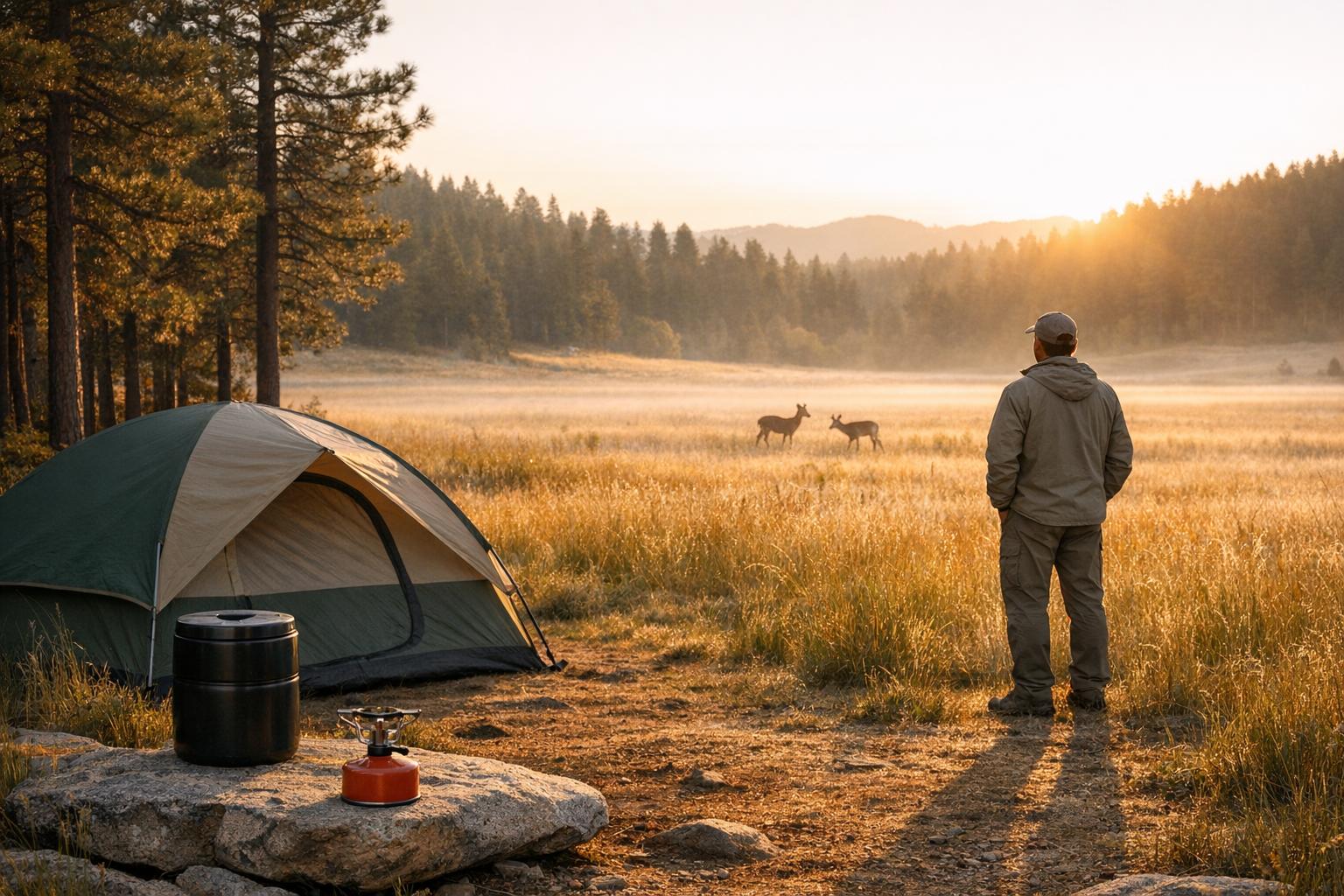
Want to camp responsibly and protect wildlife? It starts with following Leave No Trace (LNT) principles. These guidelines help minimize harm to nature, ensuring outdoor spaces remain undisturbed for wildlife and future visitors. Key practices include:
- Plan ahead: Research local rules, pack bear-proof containers, and choose durable gear.
- Store food properly: Use bear canisters or hang food 10-15 feet off the ground to prevent animal encounters.
- Dispose of waste responsibly: Pack out all trash, bury human waste in catholes, and avoid polluting water sources.
- Keep your distance: Stay 200 feet from water sources and maintain safe distances from animals (25-100 yards depending on species).
- Minimize campfire impacts: Use camp stoves or existing fire rings, and avoid collecting live wood.
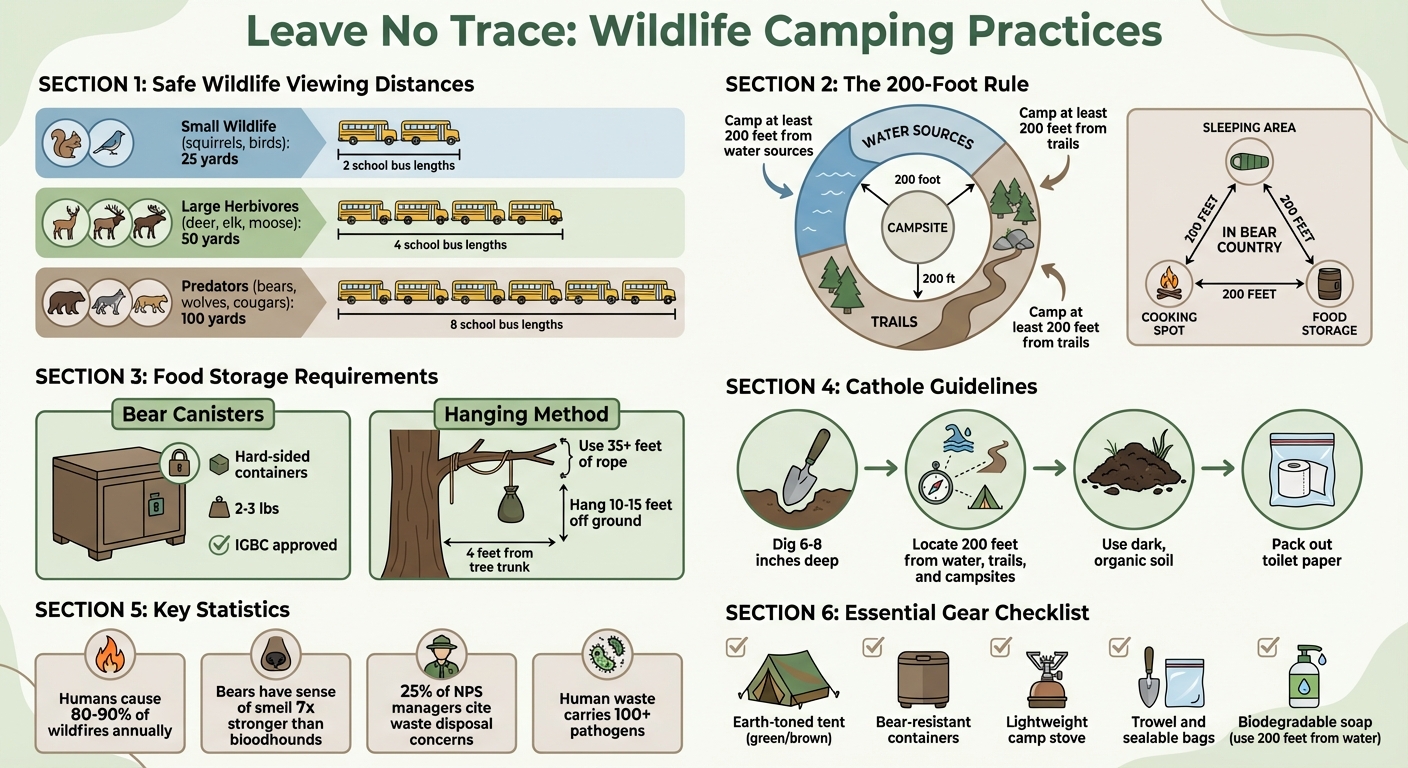
Wildlife Safety Distances and Camping Guidelines for Leave No Trace
What is Leave No Trace? || REI

Plan Ahead and Prepare for Wildlife-Friendly Camping
Planning ahead is key to ensuring your camping trip is safe for both you and the wildlife you may encounter. By researching rules, preparing proper food storage, and selecting the right gear, you can enjoy the outdoors responsibly while minimizing your impact on the environment. Here’s how to get started.
Research Local Regulations and Wildlife Guidelines
Wildlife rules can vary significantly depending on the location, so it’s essential to do your homework before heading out. A regulation that applies in one national park might be completely different in another, even if they’re only a short distance apart. The National Park Service puts it clearly:
"Always check with the parks you plan to visit to learn their regulations. Not following those rules may result in fines, confiscation of food, towing of cars, or other penalties".
Start by identifying the agency managing the land you’re visiting – whether it’s the National Park Service, U.S. Fish & Wildlife Service, or another organization. Visit their official website and look for sections like "Plan Your Visit" or "Backcountry Regulations." Pay special attention to food storage rules, which can vary widely. For example, in April 2025, Yellowstone National Park required backcountry campers to use Interagency Grizzly Bear Committee (IGBC) approved containers or hang food using at least 35 feet of rope to keep it 10 feet off the ground. These measures help protect both visitors and the park’s grizzly and black bear populations.
In addition to online research, call the local ranger station to get updates on wildlife activity, such as recent bear sightings or carcasses in the area. It’s also a good idea to check for seasonal closures, which often occur during mating or nesting periods when animals are especially vulnerable. Keep in mind that campsites should be located at least 200 feet from lakes and streams to protect wildlife water sources and riparian areas.
Prepare Food Storage and Waste Management
Proper food storage and waste management are crucial when camping in wildlife-heavy areas. Animals, particularly bears, are attracted to any scented items – including food, toiletries, medications, and even trash. With a sense of smell seven times stronger than a bloodhound’s, bears can detect scents from incredible distances.
To minimize odor, repackage your meals before your trip to reduce waste and scent attraction. Opt for low-odor foods like rice, jerky, and nuts rather than pungent items like tuna packets. Carefully plan your meals to limit the amount of packaging you’ll need to carry back out.
The type of food storage equipment you’ll need depends on the area’s regulations. Bear canisters, which are hard-sided plastic containers, are often mandatory in regions with high bear activity. Though they weigh 2-3 pounds, they are highly effective. If hanging food is allowed, you’ll need at least 35 feet of rope to suspend it 10 to 15 feet off the ground and 4 feet away from the tree trunk. The National Park Service underscores the importance of proper food storage:
"Storing your food and disposing of garbage properly can mean life or death to a bear".
Choose Appropriate Group Size and Gear
Smaller groups are better for wildlife-friendly camping. They make less noise, disturb fewer animals, and have an easier time finding durable campsites. The National Park Service advises:
"Visit in small groups when possible. Consider splitting larger groups into smaller groups".
When selecting your gear, aim for functionality and minimal environmental impact. Choose earth-toned tents in colors like green or brown to blend into the surroundings and avoid startling wildlife. Instead of building a fire, which can scar the environment and increase wildfire risk, bring a lightweight camping stove. Essential items for wildlife-friendly camping include a trowel for burying human waste, sealable bags for packing out trash (including used toilet paper), and airtight containers like ziplock bags to manage scents. To reduce the overall load, coordinate with your group to share equipment like stoves, water treatment systems, and bear bags.
| Gear Category | Wildlife-Friendly Feature | Purpose |
|---|---|---|
| Shelter | Earth-toned colors (Green/Brown) | Helps blend into the environment |
| Food Storage | Bear-resistant containers/Bear bags | Prevents wildlife from accessing food |
| Waste | Trowel & Sealable bags | Ensures proper disposal of waste |
| Cooking | Lightweight Stove | Reduces need for campfires |
| Navigation | GPS or Map & Compass | Avoids marking trails unnecessarily |
Travel and Camp Responsibly Near Wildlife Habitats
Once you’ve planned your trip, how you travel and set up camp plays a big role in protecting wildlife. Your choices – like where you walk or pitch your tent – can either minimize or increase your impact on local habitats. Knowing the difference between durable and fragile surfaces, and when to concentrate or spread out your activities, makes all the difference.
Stay on Durable Surfaces
Set up your tent and kitchen on sturdy surfaces like rock, gravel, sand, or dry grass. Avoid delicate spots like wet meadows or areas with fragile plants. Stick to established trails, even when they’re muddy – walking at the edges can widen paths and harm surrounding habitats. As Leave No Trace reminds us:
"Good campsites are found, not made. Altering a site is not necessary".
In desert areas, watch out for cryptobiotic crust, a fragile layer of soil that helps prevent erosion. Stick to walking on rocks in single file if you’re off the trail. For untouched, rarely visited areas, spread out your activities to avoid creating permanent trails or campsites. You can even move your tent and kitchen daily, and before leaving, restore the site by covering scuffed areas with pine needles or smoothing out matted grass.
Snow can also be a durable surface, but only if it’s at least 6 inches deep – anything less might not protect the plants underneath. Once your camp is set, maintain a safe distance from water and wildlife areas to further limit your impact.
Keep Distance from Wildlife Areas
A simple but effective guideline is the 200-foot rule: camp at least 200 feet away from water sources. This protects shoreline vegetation and ensures wildlife can access water without disturbance:
"Ideally, camps should be located at least 200 feet or more from existing water sources. This will minimize disturbance to wildlife and help ensure that animals have access to their precious drinking water".
If you’re in bear territory, arrange your sleeping area, cooking spot, and food storage in a triangle, with each point at least 200 feet apart. This setup keeps food odors away from your sleeping area, reducing the chance of a nighttime encounter.
When observing wildlife or hiking, stay at least 25 yards away from most animals and 100 yards from predators like bears and wolves. The National Park Service offers a good rule of thumb:
"In general, if an animal reacts to your presence, you are too close. If you’re close enough for a selfie, you’re definitely too close!".
Dispose of Waste Properly to Protect Wildlife
Taking care of waste responsibly is more than just good camping etiquette – it’s essential for protecting wildlife. Improper disposal can lead to harmful feeding habits and the spread of diseases among animals.
"Proper disposal of human waste is important to avoid pollution of water sources, avoid the negative implications of someone else finding it, minimize the possibility of spreading disease and maximize the rate of decomposition."
By combining careful planning with responsible camping habits, you can help preserve natural habitats and keep wildlife safe.
Pack Out All Trash
Every bit of trash matters – this includes food scraps, peels, shells, and even the tiniest pieces of debris. To minimize waste, consider repackaging food into reusable containers before your trip.
Never use campfires to dispose of garbage. Even burned remnants can attract animals, disrupting their natural behaviors. Instead, pack out all food waste. Before leaving your campsite, thoroughly check your cooking area, tent site, and rest spots for any trash you may have missed. This attention to detail pairs well with other measures like securing food properly and choosing durable campsites.
Use Catholes for Human Waste
When nature calls, dig a cathole 6–8 inches deep and at least 200 feet away from water sources, trails, and campsites. Use dark, organic soil to help speed up decomposition. Afterward, refill the hole, tamp it down, and cover it with natural materials like leaves or pine needles to disguise the site. Always pack out toilet paper and hygiene products.
For fragile environments, such as alpine zones or narrow river canyons, use a WAG (Waste Alleviation & Gelling) bag to carry out all solid waste.
Keep Water Sources Clean
Protecting water sources is critical. Even biodegradable soap doesn’t break down properly in waterways – it needs soil to decompose over time. As the Leave No Trace Center explains:
"Biodegradable soap does not breakdown when introduced into water ways. It requires soil to breakdown properly overtime."
To keep water clean, wash dishes and bathe at least 200 feet away from water sources. Use a minimal amount of biodegradable soap, strain out food particles, and pack them out. Then, disperse the dishwater over a wide area. If you need to urinate, choose durable surfaces like rocks or gravel. This prevents salts in the urine from attracting wildlife.
sbb-itb-289f5f2
Respect Wildlife While Camping
Spending time in nature often comes with the joy of seeing wildlife in its natural habitat. But with that privilege comes the responsibility to ensure your actions don’t harm the animals – or put yourself at risk.
Observe Wildlife from a Safe Distance
Most parks have clear rules about how close you can get to wildlife: at least 25 yards for smaller animals, 50 yards for larger herbivores like deer or elk, and 100 yards for predators such as bears and wolves. To get a closer look without disturbing them, use tools like binoculars, spotting scopes, or telephoto lenses.
Animals often give subtle clues when you’re too close. If they stop feeding, start watching you closely, or move away, it’s time to back off. Always retreat slowly to maintain a safe distance. Be especially mindful during mating, nesting, or winter months when animals are more vulnerable. Keep your ears open by avoiding headphones so you can stay aware of your surroundings.
| Animal Type | Minimum Distance | Visual Reference |
|---|---|---|
| Small Wildlife (squirrels, birds) | 25 yards | 2 school bus lengths |
| Large Herbivores (deer, elk, moose) | 50 yards | 4 school bus lengths |
| Predators (bears, wolves, cougars) | 100 yards | 8 school bus lengths |
Once you’ve ensured a safe distance, the next step is to avoid attracting wildlife by carefully managing your food and anything with a scent.
Secure Food and Scented Items
To wildlife, anything with a scent – whether it’s food, toiletries, or even fuel – can seem like a tasty treat. To prevent unwanted animal encounters, store all scented items in bear-resistant canisters at least 100 feet from your sleeping area. If bear canisters aren’t available, hang items at least 10 feet off the ground and 4 feet from the nearest tree trunk. Additionally, set up your cooking and storage area at least 100 yards downwind from your tent.
Never leave food unattended, and keep it close at hand while you’re eating. After meals, wash your dishes promptly and strain out food particles before packing them up. Avoid storing clothes you’ve cooked in inside your tent, and for extra precaution, place pots or pans on top of bear canisters. If an animal investigates, the noise can act as an alarm.
Keep Pets Under Control
Pets should always be leashed, and in some sensitive areas, it’s better to leave them at home.
"Wildlife is likely to see our furry friends as predators. It is important that we make sure our pets keep their distance from all wildlife and are not following or chasing them." – Leave No Trace Center for Outdoor Ethics
Before heading out, check the regulations for your destination. Some parks or trails don’t allow pets to protect the local ecosystem. Keeping your pet under control helps ensure that wildlife can go about their natural behaviors without unnecessary stress or interference.
Minimize Campfire Impacts in Wildlife Areas
Campfires are a cherished part of outdoor adventures, but they require careful handling – especially in areas where wildlife thrives. Proper fire management is crucial to protect these habitats. Alarmingly, humans are responsible for 80% to 90% of wildfires each year. Beyond the risk of wildfires, campfires can harm the environment by overheating and sterilizing the soil, destroying essential nesting materials.
Use Established Fire Rings
Always use designated fire rings where they are available and permitted. These pre-existing rings are designed to contain fires, preventing unnecessary damage to the landscape. Before lighting a fire, make sure to check the current fire danger levels and any local restrictions, as these can change frequently. Avoid placing fires near rock outcrops, which can leave permanent marks on the natural scenery.
Collect Small Deadwood Only
Stick to collecting dead, fallen wood no thicker than your wrist. Cutting live trees or removing branches disrupts habitats for birds and insects.
"Standing trees, dead or alive, are home to birds and insects, so leave them intact." – Scouting America
When gathering firewood, source it locally – ideally within a 50-mile radius – to help prevent the spread of invasive species. After extinguishing your fire, do so thoroughly by pouring water over the ashes, stirring, and repeating until the ashes are completely cool. Avoid using dirt to smother the fire, as it can insulate hot coals, allowing them to reignite.
Consider Using Camp Stoves Instead
In areas with sensitive ecosystems, portable camp stoves are a safer and more environmentally friendly option. They are quicker, cleaner, and leave no lasting impact on the landscape. For warmth, consider layering clothing or using additional lighting instead of relying on a fire.
"Stoves have become essential equipment for minimum-impact camping. They are fast, flexible, efficient, reliable, and clean burning, and they eliminate the need for firewood." – Scouting America
In places where fires are prohibited, or in high-altitude or heavily visited areas where wood is scarce and slow to regenerate, camp stoves are the responsible choice. They also reduce soil disturbance and help avoid leaving scent trails that might attract wildlife.
Be Considerate of Other Campers and Wildlife Enthusiasts
Balancing your outdoor adventure with respect for others and the environment makes the experience more enjoyable for everyone.
Keep Noise Levels Low
When sharing a campsite, it’s important to be mindful of both wildlife and fellow campers. Natural quiet isn’t just peaceful – it’s critical for animals. They rely on sound to communicate, detect predators, and hunt for food. Human noise can interfere with these behaviors, which might also reduce your chances of spotting wildlife.
"Natural quiet is vital for wildlife survival so that they can locate predators and prey and communicate." – Leave No Trace
To keep noise to a minimum, limit sounds from electronic devices and generators. If you want to enjoy music or podcasts, use headphones or keep the volume very low. A helpful tip is the single earbud method – wearing just one earbud lets you stay aware of your surroundings and hear nearby hikers or campers.
In developed campgrounds, respect designated quiet hours, especially during early mornings and evenings when wildlife is most active. If you’re using a generator, make sure it’s soundproofed, and avoid unnecessary noise like revving engines or honking horns. In areas with bears, use your natural speaking voice to alert animals to your presence – save whistles or air horns for emergencies only.
Space Out Your Campsite
The way you set up your campsite can help reduce your impact on the environment while maintaining privacy for everyone. A good rule of thumb is to keep at least 200 feet away from lakes, streams, and trails. This distance protects sensitive areas and ensures wildlife can safely access water without human interference. Whenever possible, opt for spots naturally hidden by vegetation or terrain rather than open areas visible from trails or other campsites.
In heavily used areas, stick to established campsites to prevent "site creep", which happens when campgrounds gradually expand into untouched spaces. In pristine, undisturbed areas, spread out your tents and cooking areas, move your camp each night, and restore the site before leaving by brushing out footprints or covering scuffed areas with natural materials like pine needles. Large groups should consider using designated group sites or splitting into smaller groups to minimize their impact.
By maintaining proper spacing and minimizing disturbance, you help protect wildlife habitats and create a more respectful camping environment.
Yield to Others on Trails and Wildlife Viewing Areas
Good trail etiquette ensures everyone has a pleasant experience. Always yield to hikers going uphill – they’re working harder and often have limited visibility. Mountain bikers should give way to hikers, runners, and horseback riders, while all trail users should yield to anyone using assistive or adaptive equipment. When encountering horses or pack animals, greet the rider calmly to identify yourself as human and avoid startling the animals. Then, ask which side of the trail to move to – usually the downhill side.
If you’re passing someone from behind, announce yourself briefly and wait for a safe moment to pass. If you need to step off the trail to let others by, choose durable surfaces like rock, gravel, or dry grass to avoid damaging fragile vegetation. At wildlife viewing areas, maintain a safe distance – stay at least 25 yards from most animals and 100 yards from bears or wolves. If an animal reacts to your presence, it means you’re too close. Use binoculars or a zoom lens instead of approaching.
Conclusion
Leave No Trace principles play a crucial role in protecting wildlife. By securing food properly, maintaining safe distances from animals, and packing out all trash, you help prevent wildlife from becoming dependent on humans, shield them from disease, and preserve their access to natural resources.
Responsible camping starts with thoughtful planning and proper waste management. Poor waste disposal remains a significant issue, with 25% of National Park Service managers citing concerns. Human waste alone can carry over 100 pathogens, including Giardia and Hepatitis A. Even a single misstep can destroy fragile cryptobiotic crust, which takes decades to recover. These small-scale actions ripple out, affecting entire ecosystems.
"The future of wilderness camping, hikes and other sustainable outdoor recreation depends on more people adopting what’s known as Leave No Trace principles." – Andy Porter, The Wilderness Society
By consistently practicing these wildlife-conscious habits, they become second nature. Through careful preparation, low-impact techniques, and a commitment to Leave No Trace, each camping trip contributes to a larger conservation effort. Wildlife stays wild, water sources remain clean, and landscapes endure for future generations.
Every trip matters. By embracing these practices, you help protect wild spaces – not just for today, but for years to come.
FAQs
What are the key Leave No Trace guidelines for camping near wildlife?
When camping in areas with wildlife, it’s important to follow Leave No Trace principles to safeguard both the animals and their habitats. Always keep a safe distance when observing wildlife – getting too close can cause unnecessary stress or even provoke defensive behavior. And whatever you do, don’t feed the animals. Feeding them disrupts their natural instincts and can seriously harm their health.
Storing food properly is another must. Use bear canisters or securely hang your food to keep it out of reach from curious wildlife. If you’re bringing pets along, make sure they’re always under control – or better yet, consider leaving them at home. Pets can disturb wildlife, especially during critical times like mating or nesting seasons. By showing respect for wildlife and reducing your impact, you play a role in protecting ecosystems and ensuring a safe outdoor experience for everyone.
What’s the best way to store food while camping to avoid attracting wildlife?
To keep wildlife at bay while camping, storing your food correctly is a must. If you’re in bear territory, use bear-proof containers or hang your food in a tree – at least 10 feet off the ground and 4 feet away from the trunk. This keeps curious animals like bears, raccoons, and squirrels from getting into your supplies and developing habits that could put both them and campers at risk.
Make sure to secure all scented items – including toiletries, trash, and unwashed dishes – in airtight containers or locked inside your vehicle. Never leave these items inside your tent or out in the open. For trash, use bear-proof trash cans when available or double-bag it and store it safely in your car. Following these precautions not only keeps you safe but also helps wildlife stick to their natural behavior and protects their habitats.
What are the best ways to dispose of waste while camping in wildlife areas?
When camping in areas rich with wildlife, disposing of waste responsibly is crucial to protect both the environment and the animals that call it home. Stick to the golden rule: "pack it in, pack it out." This means taking all trash, food scraps, and litter with you when you leave. Not only does this prevent pollution, but it also keeps wildlife from being drawn to human food, which can be harmful to them.
For human waste, dig a cathole that’s 6–8 inches deep and at least 200 feet away from water sources, trails, and campsites. Once you’re done, cover the hole and make sure it blends back into the surroundings. If you use toilet paper or hygiene products, either bury them in the cathole or pack them out with your trash to keep the area clean.
When it comes to washing dishes or yourself, opt for a small amount of biodegradable soap. Be sure to carry your water at least 200 feet away from lakes, streams, or other water sources before washing. Scatter the used water across the ground to prevent contamination of the natural water supply. These straightforward steps not only help protect wildlife habitats but also make for a more responsible and enjoyable camping experience.