
Recycled vs. Upcycled Travel Gear: Key Differences

When it comes to eco-friendly travel gear, recycled and upcycled options are two popular choices. Both aim to reduce waste but differ in how they’re made and used. Here’s the breakdown:
- Recycled gear: Made by breaking down waste (like plastic bottles) into raw materials, which are then used to create new products. It’s durable, widely available, and consistent in quality but involves energy-intensive processes.
- Upcycled gear: Uses discarded materials (like old sails or banners) without completely breaking them down, transforming them into new items through design. It consumes less energy, offers one-of-a-kind designs, but is pricier and less scalable.
Quick Comparison
| Attribute | Recycled Gear | Upcycled Gear |
|---|---|---|
| Source Materials | Waste like plastic bottles, fishing nets | Items like banners, ropes, or fabric scraps |
| Durability | Consistent and reliable | Varies based on materials |
| Cost Range | $100–$300 | $150–$400 |
| Availability | Widely available | Limited quantities |
| Energy Use | Energy-intensive processes | Minimal energy required |
| Design | Uniform and scalable | Unique and handmade |
When to choose recycled gear: For reliable, durable items like backpacks or luggage, especially for frequent or rugged travel.
When to choose upcycled gear: For unique, stylish pieces with a story, ideal for casual trips or urban use.
Both options help reduce waste, but your choice depends on your travel needs and priorities.
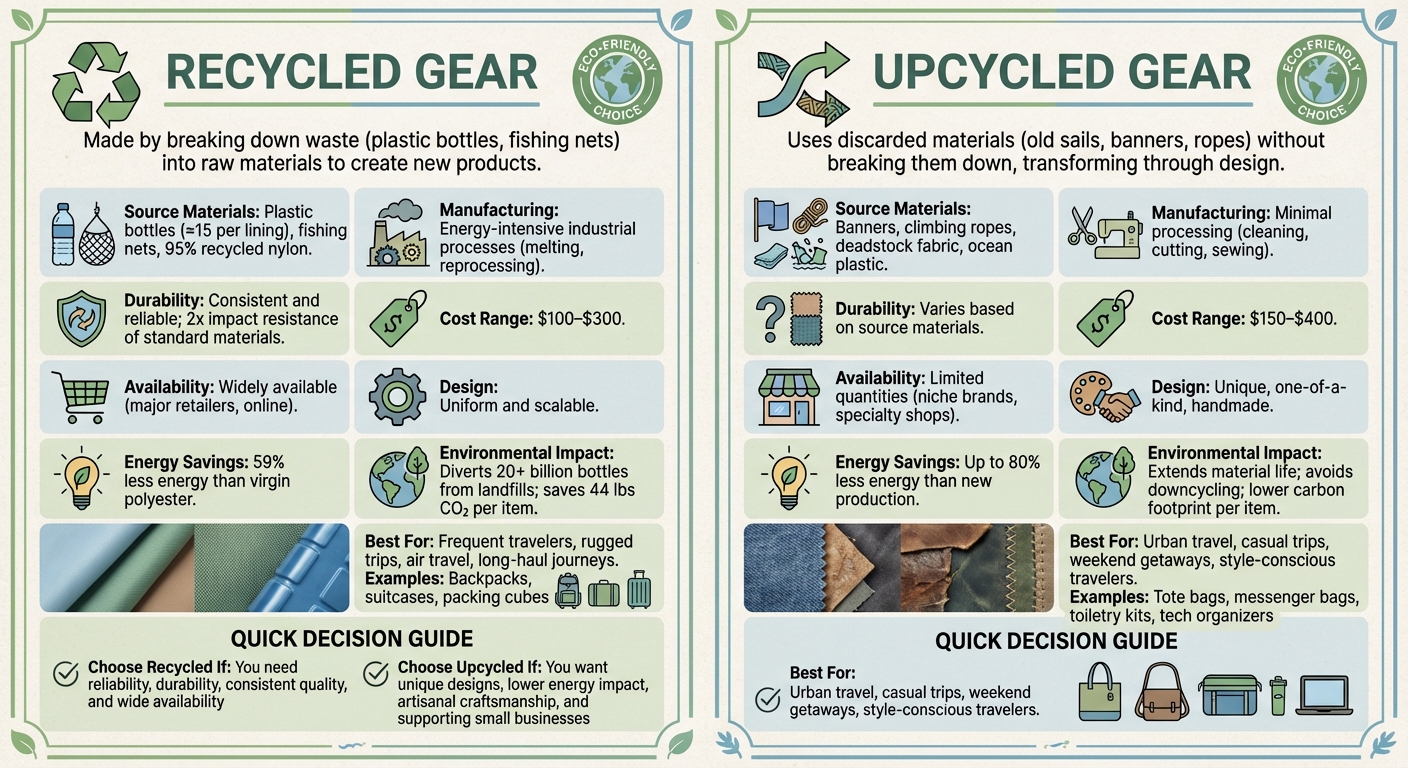
Recycled vs Upcycled Travel Gear Comparison Chart
What Is Recycled Travel Gear?
How Recycled Gear Is Made
Recycled travel gear is crafted from waste materials like plastic bottles, discarded fishing nets, and textile scraps. These materials, either post-consumer or post-industrial, go through a detailed process: they are collected, sorted, cleaned, and then broken down mechanically or chemically into raw components, such as plastic pellets or fibers. For instance, plastic bottles are shredded into small flakes, melted, and transformed into pellets, which are then spun into yarn to create fabrics for backpacks and other travel essentials. Similarly, textile scraps are shredded into fibers and spun into yarn for use in bag linings and accessories.
In the U.S., some of the most commonly used recycled materials in travel gear include recycled PET (rPET) derived from plastic bottles, recycled polyester made from plastic and textile waste, and recycled nylon sourced from fishing nets or industrial leftovers. Many sustainable brands now use these materials to make carry-ons, duffels, and packing cubes, often highlighting that their products are "made from recycled post-consumer plastic." Thanks to this meticulous process, recycled materials offer the durability and reliability needed for travel gear.
Main Features of Recycled Gear
Recycled travel gear stands out for its consistent quality and performance. Industrial processes ensure that waste materials are blended into a uniform product, offering durability and functionality comparable to virgin materials. Recycled polyester and nylon retain their strength and water resistance, making them ideal for frequent travel, whether by air, road, or trail. These fabrics are also lightweight and can be modified to enhance water resistance.
When it comes to aesthetics, recycled gear doesn’t compromise. You’ll find options in a variety of colors and finishes, allowing you to pack sustainably without sacrificing style. Recycled backpacks, suitcases, and packing cubes are widely available through outdoor retailers, brand websites, and eco-focused marketplaces, with many products clearly labeled to showcase their recycled content.
Environmental Impact: Pros and Cons
Recycled travel gear offers several environmental benefits. It reduces the need for virgin materials made from fossil fuels, minimizes raw resource extraction, and keeps plastic and textile waste out of landfills. For example, producing recycled polyester from PET bottles consumes 59% less energy compared to creating virgin polyester. By 2023, the global recycled polyester market was responsible for turning over 20 billion plastic bottles into textiles. For travelers aiming to make responsible choices, these benefits make recycled gear an appealing option.
However, there are tradeoffs to consider. Recycling requires energy-intensive steps like collection, transport, cleaning, and processing, which can offset some of the environmental gains, especially if fossil fuels are involved. Additionally, recycled synthetic fabrics often undergo chemical treatments for dyes or water-repellent finishes, and they can release microplastics during use or washing. At the end of their life cycle, items like suitcases with mixed materials (e.g., metal frames, plastic shells, and fabric linings) can be challenging to recycle without specialized programs. Another drawback is "downcycling", where recycled plastics may degrade into shorter fibers, resulting in lower-quality material compared to the original. While recycled travel gear offers meaningful environmental advantages over virgin synthetics, it’s not a perfect solution – just one of many eco-friendly choices travelers can make.
What Is Upcycled Travel Gear?
How Upcycled Gear Is Made
Upcycled travel gear takes discarded materials and transforms them into new products without breaking them down into raw components. Unlike recycled gear, which often involves processes like melting plastic bottles into pellets, upcycling keeps the material in its original form, adding value through design and craftsmanship instead. This method involves minimal processing – primarily cleaning, cutting, and sewing – giving old items a fresh purpose.
For example, old advertising banners might become tote bags, or retired climbing ropes could be turned into backpack straps. Got Bag‘s Rolltop Backpack is a standout example. It’s made from ocean plastic collected by fishermen, which is cleaned and processed into a durable fabric. Each backpack helps remove 7.7 pounds of ocean plastic and offers an adjustable 23–30L capacity – all without breaking the material down completely. Similarly, some brands use deadstock fabric – leftover textile rolls that might otherwise go to waste – reworking them into new bags and organizers.
Unlike recycled gear, which often prioritizes uniformity through remolding, upcycled gear focuses on minimal intervention and unique designs. This approach not only reduces waste but also gives each item a distinct character, making it a great fit for eco-conscious travelers.
Main Features of Upcycled Gear
One of the standout features of upcycled gear is its uniqueness. Because the source materials vary in color, pattern, and texture, no two items are exactly alike – even if they’re made using the same design template. This gives upcycled products an artisanal quality, often resembling limited-edition pieces rather than mass-produced items.
Production is typically done in small batches, often by hand, which enhances the individuality of each piece. The process frequently uses durable materials like water-resistant sails or heavy-duty ropes, originally designed for tough conditions. As a result, upcycled gear often boasts impressive durability.
Beyond its distinctive design and craftsmanship, upcycled gear also delivers environmental benefits.
Environmental Impact: Benefits and Tradeoffs
Upcycling extends the life of materials while avoiding the energy-intensive processes associated with recycling, saving up to 80% of the energy required for producing new items. Like recycled gear, it helps divert waste from landfills, but with even lower energy consumption. Materials such as ocean plastics, deadstock fabrics, and industrial scraps are repurposed into functional products, reducing the demand for new raw materials. Additionally, producing these items locally can cut down on transport emissions. By retaining the original structure of materials, upcycling also avoids the downcycling issue often seen in recycling, where materials degrade in quality over time.
That said, there are some tradeoffs. Small-scale production means limited availability and often higher prices – upcycled bags, for instance, can range from $150 to $280 due to the labor-intensive, handmade process. The variability in materials, while part of the charm, can lead to inconsistencies in appearance. Scalability is another challenge; upcycled gear struggles to achieve the mass-market reach of recycled products, which limits its overall environmental impact despite a smaller footprint per item.
Recycled vs. Upcycled Travel Gear: Side-by-Side Comparison
Comparison Table: Key Attributes
Here’s a quick breakdown of the main differences between recycled and upcycled travel gear.
| Attribute | Recycled Travel Gear | Upcycled Travel Gear |
|---|---|---|
| Source Materials | Made from post-consumer waste like plastic bottles (≈15 bottles per lining) or 95% recycled nylon from industrial waste | Created by repurposing items without fully breaking them down – e.g., board shorts made with 38% upcycled coconut and recycled polyester |
| Durability | Built with standardized materials like polycarbonate shells, offering twice the impact resistance of ABS and weighing about 2.2 lbs less | Can match durability when using strong repurposed materials – such as recycled nylon–elastane blends or flexible board shorts – but quality may vary |
| Cost Range | Generally priced between $100–$300, thanks to scalable production and mass-market availability | Usually ranges from $150–$400, reflecting smaller-scale production and niche appeal |
| Availability | Widely accessible through major brands like Patagonia or 4MYTU, both in retail stores and online | Limited quantities from niche brands like Vuori or Arcade, often sold online or in specialty shops |
| Environmental Impact | Reduces waste and can save about 44 lbs of CO₂ per item – the same amount absorbed by a fir tree annually – but requires significant energy for reprocessing | Minimizes energy use by directly reusing materials (e.g., coconut fibers or fishing nets), potentially lowering emissions further |
Main Differences and When to Use Each
The core difference between these two lies in how materials are handled. Recycled travel gear involves breaking down waste – like melting plastic bottles into pellets to create new fabrics – resulting in consistent, reliable products. On the other hand, upcycled gear takes a more direct approach by reimagining existing materials without fully processing them, creating unique items while using less energy.
Both options are eco-friendly, but which one works best for you depends on your travel needs.
- Choose recycled gear for dependable, affordable essentials. These are perfect for urban trips or multi-day hikes where availability and consistency are key.
- Go with upcycled gear if you’re after one-of-a-kind, adventure-ready items. Think board shorts made with upcycled coconut fibers for versatility or no-metal belts crafted from repurposed materials to breeze through airport security.
How to Choose the Right Gear for Your Trip
What to Consider When Buying Gear
When picking travel gear, think about how you’ll use it. Durability is key for air travel, rugged trails, or extended trips. Recycled gear often stands out here, as it’s built to last and frequently comes with solid warranties. If you’re flying, weight and size matter a lot. Recycled-fabric luggage and packing cubes are usually lighter and slimmer compared to upcycled items, which might be made from heavier materials like old climbing ropes or truck tarps.
It’s also smart to look at the cost per use, not just the price tag. Gear from well-known brands using recycled materials might cost more upfront, but it’s designed for repeated use. On the other hand, upcycled gear can be pricier due to its labor-intensive production, though it offers one-of-a-kind designs. If environmental impact is a concern, check for details like the percentage of recycled or reclaimed materials, whether the brand diverts waste from landfills or oceans, and if they provide repair services. For U.S. travelers, practical details like TSA-friendly carry-on dimensions (22 x 14 x 9 inches) are also important.
When Recycled Gear Works Best
Recycled gear shines in situations where reliability is non-negotiable. Long-haul flights, multi-country adventures, or backcountry trips demand gear that can handle abrasion and water exposure without fail. For example, suitcases made from recycled polycarbonate shells or polyester are both durable and lightweight – perfect for overhead bins or checked luggage systems.
If you’re traveling light, recycled polyester or nylon bags and packing cubes offer a great balance of strength and weight, helping you stay within airline limits while maximizing packing space. Recycled backpacks and daypacks are also excellent for carrying loads daily, whether you’re commuting, studying, or exploring internationally. Plus, many major brands offer repair services in the U.S., so you can fix worn-out handles, wheels, or zippers instead of replacing the entire bag.
When Upcycled Gear Works Best
Upcycled gear is perfect when you want something with personality and a story behind it. Whether you’re headed to a city, a festival, or a weekend road trip, upcycled bags and accessories add a unique touch to your travel style. Since these items use repurposed materials, no two designs are exactly the same.
Upcycled gear works best in situations where weight and durability aren’t deal-breakers. Think toiletry kits, tech organizers, tote bags, or camp organizers – ideal for car trips or casual outings. An upcycled tote or messenger bag, made from reclaimed canvas or banners, can double as a personal item on flights and a stylish day bag for urban adventures like visiting museums or coworking spaces. For road trips or camping, upcycled duffels crafted from surplus outdoor fabrics or retired gear are tough enough for regular use without needing to be ultralight.
Buying upcycled gear also supports small businesses and circular-economy initiatives in the U.S., keeping your money local while celebrating artisanal craftsmanship. Knowing these differences between recycled and upcycled options can help you pick the perfect gear for your journey.
sbb-itb-289f5f2
Caring for and Disposing of Your Travel Gear
How to Care for Recycled and Upcycled Gear
Taking care of your travel gear not only extends its life but also helps reduce waste. For recycled-polyester items like backpacks, packing cubes, and luggage, wash them gently with cold water and a mild detergent. Skip bleach and fabric softeners – they can harm the fibers and protective coatings. Always air-dry these items, keeping them away from high heat to avoid warping or damaging the recycled plastics and coatings. Structured gear like roller bags or framed backpacks should never go in the washing machine. Instead, clean them with a soft cloth, lukewarm water, and mild soap. Make sure they’re completely dry before storing.
For upcycled gear – crafted from materials like deadstock canvas, retired sails, or climbing ropes – extra care is key. Spot clean with a damp cloth and mild soap rather than soaking the item, as these materials might have been exposed to UV rays or have unknown coatings. Check rope handles and webbing for fraying, and if needed, trim loose fibers and reinforce with bar-tacks or replacement webbing. Store your gear in a cool, dry spot with zippers slightly open to allow airflow. This prevents mold on recycled fabrics and keeps materials like leather trim from cracking.
Simple fixes can go a long way. Use repair tape for small tears, replace zipper pulls, tighten screws on telescoping handles, and apply seam sealer to worn areas. Many sustainable brands and U.S.-based repair services offer affordable options for fixing zippers, straps, and wheels. Choosing gear from companies that offer "lifetime guarantees" or "free repairs" ensures your items stay in use longer, aligning with the ethos of recycled and upcycled products.
Proper care keeps your gear functional and prepares it for responsible disposal when it’s time to retire it.
What to Do with Old Gear
When your gear has reached the end of its journey, there are plenty of ways to ensure it doesn’t end up in a landfill. If it’s still usable but no longer meets your needs, consider resale, donation, or gear swaps. Lightly used items can be sold through online resale platforms or outdoor-specific marketplaces where eco-conscious buyers are eager to find secondhand gear. Alternatively, donate working luggage and backpacks to thrift stores, outdoor education programs, scouting groups, or community organizations. These donations can be especially helpful to students or first-time travelers. Some U.S. brands and retailers even offer trade-in programs, giving you store credit for used items they refurbish and resell. Community gear swaps, often organized by hiking clubs or climbing gyms, are another great way to pass on gear while connecting with others.
For items that are too worn to use, programs like REI’s Re/Supply and Patagonia Worn Wear accept gear for repair, resale, or recycling. If the main structure – like frames, handles, or fabric – is still intact, repairs are usually worth it. When the main material is too damaged, salvage what you can. Straps, buckles, and fabric panels can be repurposed as patches or turned into smaller items like cable organizers or toiletry bags using intact zippers. Recycled-PET packing cubes, being made from a single material, are easier to recycle than mixed-material items, which are harder to disassemble. For specific disposal instructions, reach out to the brand’s customer service or a local recycling center.
Recycled, Upcycled, Downcycled, Circular – What’s the Difference?
Conclusion
Choosing between recycled and upcycled travel gear comes down to your specific needs. Recycled gear, like Eagle Creek‘s Tarmac XE carry-on, repurposes waste materials – such as plastic bottles – through industrial processes to create durable and consistent products. This type of gear is a great option for travelers who prioritize reliability and water resistance, especially for frequent trips. On the other hand, upcycled gear, such as Cotopaxi‘s roller bags made from pre-consumer fabrics, involves minimal processing, resulting in one-of-a-kind items that require less energy to produce.
Each option has its strengths. Both approaches help reduce landfill waste and decrease dependency on virgin materials, but they cater to different priorities. Recycled gear stands out for scalability and dependability – take Samsonite‘s Maxsum ECO line, which also emphasizes repairability. Meanwhile, upcycled gear focuses on making the most of available resources and often achieves a smaller carbon footprint, as seen in Horizn Studios‘ BioX biodegradable flax shells.
Whether you’re planning to explore U.S. national parks or travel internationally, consider your priorities. Recycled gear is perfect for durability and consistent performance, while upcycled gear offers a more personalized, eco-conscious style. Look for certifications like bluesign® or PETA-approved materials, and choose brands with repair programs to extend the lifespan of your gear.
Your gear choice goes beyond functionality – it reflects your commitment to sustainable travel. By aligning your purchases with your values and habits, you’re not just enhancing your trips; you’re also contributing to a greener future for the travel industry, one journey at a time.
FAQs
What makes upcycled travel gear more eco-friendly than recycled gear?
Upcycled travel gear takes a greener approach by giving a second life to existing materials, turning them into new products without the need for energy-heavy processing. This method cuts down on carbon emissions and skips the use of extra raw materials, helping to preserve natural resources. By reusing materials and keeping them out of landfills, upcycling contributes to a more resource-conscious, circular economy, offering a smarter alternative to traditional recycling.
Is upcycled travel gear more durable than recycled gear for frequent use?
When it comes to durability, upcycled travel gear often holds its own – and sometimes even outperforms – recycled gear. A lot of this boils down to the materials and craftsmanship behind the product. Upcycled gear is usually crafted from repurposed, high-quality materials, making it a reliable choice for frequent travelers who need something long-lasting.
Recycled gear, however, can be a bit more hit-or-miss in terms of durability. Since it’s made from processed materials, the recycling process can sometimes reduce the material’s original strength. To make sure you’re investing in something that will last, take the time to read product reviews and dig into the details about the materials used before you buy. This extra step can make all the difference.
How do I choose between recycled and upcycled travel gear for my trip?
When weighing your options between recycled and upcycled travel gear, it helps to keep a few key factors in mind: environmental impact, durability, cost, and style. Recycled gear is crafted from processed materials like plastic or fabric waste, offering eco-conscious choices that often stick to traditional designs. In contrast, upcycled gear takes a more creative approach, transforming materials into distinctive, one-of-a-kind pieces.
Consider the specifics of your trip – like the activities you’ll be diving into or the weather you’ll face – and pick gear that’s practical and fits your needs. If you’re drawn to originality and enjoy owning something truly unique, upcycled gear could be your best bet. But if you’re after a more classic aesthetic with a lighter environmental footprint, recycled gear might be the ideal fit.