
Best Practices for Restoring Wilderness Areas
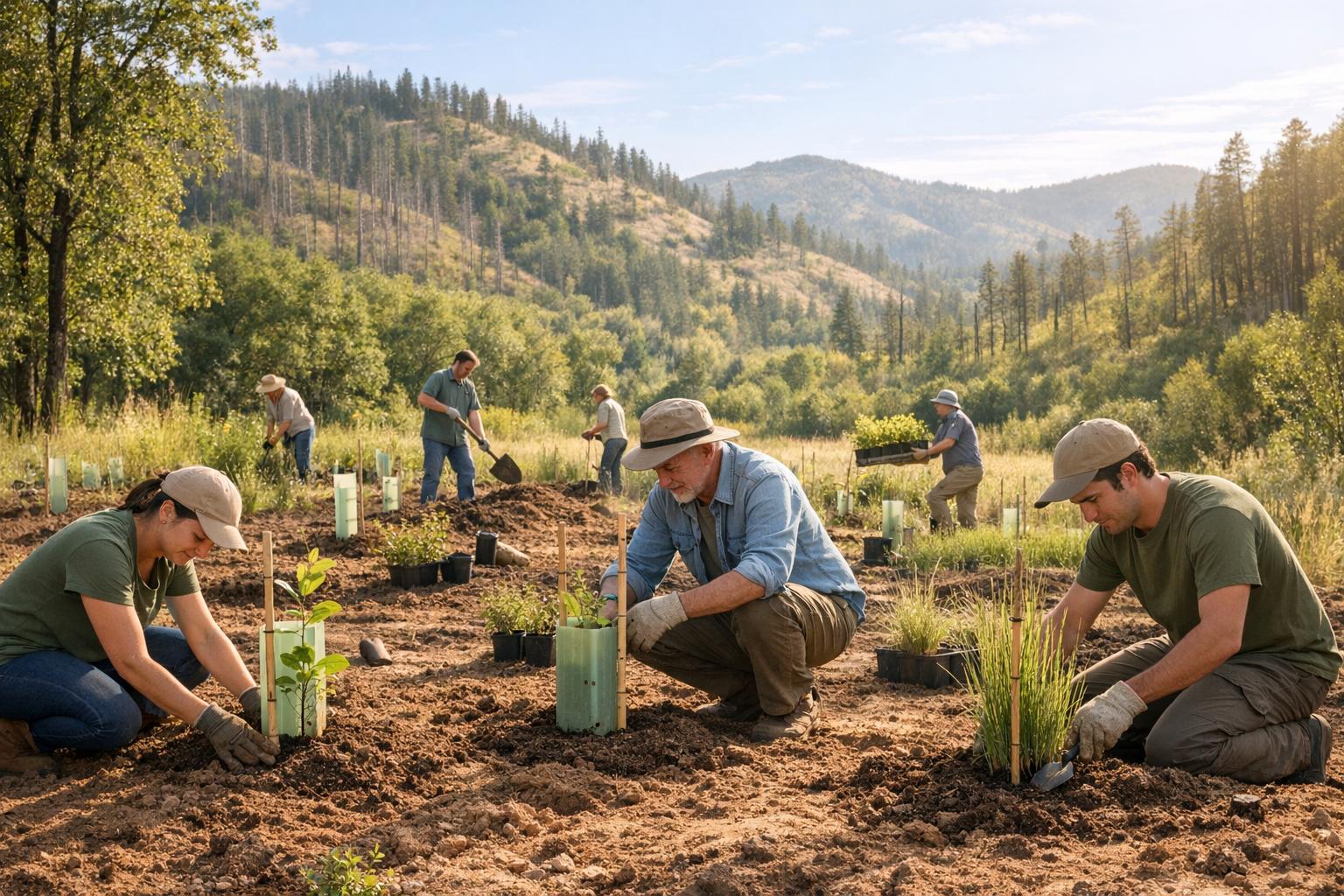
Restoring wilderness areas is a complex process that requires careful planning, long-term strategies, and site-specific solutions. The goal is to repair damage caused by human activity while preserving the natural balance of these ecosystems. Key practices include:
- Site Assessment and Planning: Understanding the site’s history, current conditions, and visitor behavior helps identify the root causes of damage and guides restoration efforts.
- Removal of Non-Native Species: Combining techniques like mechanical removal, targeted herbicides, and biological control ensures effective management of problematic species.
- Revegetation with Native Plants: Using locally sourced seeds and hardy species helps rebuild plant communities and support ecological recovery.
- Soil Stabilization: Preventing erosion with physical barriers, organic materials, and bioengineering techniques protects the land and prepares it for regrowth.
Each method has its challenges, such as labor intensity, cost, and environmental trade-offs, but combining these approaches leads to more effective restoration. By prioritizing sustainable techniques and addressing site-specific needs, land managers can help wilderness areas recover and thrive.
SCA Wilderness Restoration Corps: #4 Techniques
1. Site Assessment and Planning
Getting a clear understanding of the site is the first step in any restoration effort. This involves bringing together a team of experts – recreation managers, archeologists, botanists, and soil scientists – to evaluate the area. Their work includes studying historical records to identify past impacts like grazing, mining, or logging, and observing visitor behavior during busy seasons.
Key observations include how hikers access water, collect firewood, and choose campsites. Early-season surveys, when snow is still melting, often reveal duplicate trails created as visitors detour around snow patches. To stay organized, each affected campsite and trail should be assigned a unique ID and mapped. This detailed tracking is essential for monitoring restoration progress and gauging the success of planning efforts.
Effectiveness
Good planning is all about addressing the root causes of damage, not just the symptoms. The "Three Es" framework – Engineering, Education, Enforcement – is a proven method for tackling these challenges. Take Cradle Lake in the Alpine Lakes Wilderness, for example. Planners discovered that illegal stock camping was causing significant damage. Their solution? Relocating Trail No. 1550 to a more durable talus area and closing fragile lakeshore sites. This not only reduced the immediate impact but also guided visitors to areas better suited to handle foot traffic.
It’s also important to choose a planning approach that minimizes unintended consequences. For instance, closing one site shouldn’t push visitors to another vulnerable area. Comparing damaged sites with undisturbed ones can help identify soil and vegetation components that are more resilient, offering insights for future restoration efforts.
Cost
While these assessments require time, expertise, and careful budgeting, they can save money in the long run by avoiding costly mistakes. Coordinating a team of specialists can be challenging, but the benefits outweigh the difficulties. In wilderness settings, managers often use the Minimum Requirements Decision Process to ensure restoration efforts align with wilderness values. This approach emphasizes using the least intrusive methods to achieve goals.
"The minimum tool represents the minimum action necessary, within the context of wilderness values, to meet management direction or to accomplish other administratively necessary activities." – USDA Forest Service
2. Invasive Species Removal
After a thorough site assessment, tackling invasive species becomes a top priority for ensuring long-term ecological recovery. These species can disrupt the natural balance, making their removal critical. The most effective approach combines multiple techniques rather than relying on just one. Integrated Pest Management (IPM) is a widely used strategy, starting with cultural and mechanical controls and progressing to chemical treatments when necessary. This layered approach is key to managing invasive species effectively.
Mechanical methods – like hand-pulling, digging, or mowing – are ideal for smaller infestations but require consistent effort. For example, persistent species may need to be cut or mowed three to four times annually for up to five years to deplete their root systems. For woody plants with stems between 1 and 3 inches in diameter, tools like the Weed Wrench™ or Root Jack offer effective solutions. Timing is also important – spring or early summer, when the soil is moist, is the best time to ensure complete root removal.
Effectiveness
For larger infestations or hard-to-remove species, herbicides such as glyphosate and triclopyr are highly effective. Glyphosate is non-selective, while triclopyr targets specific plants, making it ideal for preserving native grasses and wildflowers. This is especially important in wilderness areas. As one restoration guide notes:
"Herbicides are among the most effective and resource-efficient tools to treat invasive species".
Biological control – introducing natural predators or diseases from an invasive species’ native habitat – also offers promise for long-term management. However, it requires extensive research to prevent unintended ecological issues. Another option for small areas is suffocation using UV-stabilized plastic sheeting, which must remain in place for at least two years to be effective.
Ease of Implementation
The ease of implementing these methods depends on the ecosystem and the species being targeted. For instance, wetlands may require special permits under the Wetlands Protection Act, as well as the use of aquatic-safe herbicides. For larger plants, leverage-based tools are often necessary.
"Mechanical removal is highly labor intensive and creates a significant amount of site disturbance, which can lead to rapid reinvasion if not handled properly."
– DC Department of Energy & Environment
Cost
Chemical methods tend to be more resource-efficient for widespread infestations, though applying herbicides on public land often requires a state-issued pesticide applicator license. On the other hand, mechanical techniques avoid licensing fees but demand considerably more labor. The real expense often lies in follow-up work – if disturbed soil isn’t quickly stabilized with cover crops like annual rye, reinvasion can occur, forcing the process to start over.
Environmental Impact
Each removal method has its trade-offs. Mechanical techniques can disturb the soil, creating conditions ripe for reinvasion if not carefully managed. Non-selective herbicides like glyphosate can harm all vegetation they contact, potentially affecting water quality and non-target species. Biological control, while generally less disruptive to non-target species, requires thorough testing to avoid unintended consequences. Selecting methods that align with specific site conditions is crucial. For example, using digging forks instead of shovels can help prevent root shearing, which might otherwise allow plants to regrow. Tailoring removal methods to the site ensures progress toward broader restoration goals.
3. Revegetation with Native Plants
After removing invasive species, replanting with native vegetation becomes a crucial step in helping ecosystems recover. To ensure success, use a nearby undisturbed area with a similar slope, aspect, moisture level, and soil type as a reference when selecting native plants.
Effectiveness
Choosing plants that are locally adapted and sourced from designated seed zones significantly boosts their survival chances. These plants are better equipped to handle the local climate and environmental pressures. As the Bureau of Land Management highlights:
"Transferring seeds within [seed] zones reduces the risk of maladaptation".
For areas so degraded that restoring original conditions is no longer an option, focus on planting early- to mid-seral species – plants that thrive in disturbed environments. A great example comes from Upper Florence Lake in Washington’s Alpine Lakes Wilderness, where restoration teams observed which plants naturally colonized the area after decades of sheep grazing. They identified black sedge, Parry’s rush, and partridgefoot as key species to reintroduce. Start with reliable "workhorse species" – common natives that are easy to grow and quickly cover the ground – before adding more challenging plants.
Ease of Implementation
How difficult this process is depends on the site and the plants chosen. In wilderness areas, the minimum requirements principle often limits the use of motorized equipment, making hand planting more time-consuming. Some species, like heather in the Pacific Northwest or creosote bush in the Southwest, need specialized propagation techniques to thrive. Soil conditions can also complicate the process. Before planting, evaluate the soil’s water-holding capacity and compaction, as these factors heavily influence plant establishment.
Cost
Labor is usually the biggest expense, especially in remote areas where equipment use is restricted. Innovative partnerships can help offset costs. For example, the Great Basin Sagebrush Project collaborates with correctional facilities to grow native sagebrush for large-scale restoration efforts across several states. While locally adapted seeds may cost more initially, their higher survival rates reduce the need for replanting. Plants grown under "tough-love" conditions – exposed to full sun, minimal fertilizer, and controlled drought – are better suited to harsh environments than traditional nursery stock.
Environmental Impact
Revegetating with native plants provides a more sustainable solution than other restoration methods. Unlike emergency stabilization techniques that focus solely on erosion control, native plant restoration helps rebuild entire ecosystems. This includes everything from supporting soil microbial activity to creating habitats for wildlife. However, patience is key, as the Wilderness and Backcountry Site Restoration Guide explains:
"If you select the ‘wrong’ plant species, they may eventually die out. Although it might be discouraging to lose some plants, letting nature shape the result is what restoration is all about".
Over time, this natural selection process ensures that only the most well-adapted species survive, forming resilient plant communities that need little maintenance. These robust plant systems also support other restoration efforts, such as soil stabilization and erosion control.
sbb-itb-289f5f2
4. Soil Stabilization and Erosion Control
Stabilizing soil and controlling erosion is all about protecting wilderness areas from further damage. This is typically achieved by using physical barriers like vegetation, rocks, or bioengineering materials to absorb the energy from wind and water. These methods also help manage smaller-scale issues, such as compacted trails or damaged campsites.
Effectiveness
The key to successful soil stabilization lies in restoring the soil’s ability to hold water, rather than just adding nutrients. According to the USDA Forest Service, wildland soils often have sufficient nutrients, but they’re less accessible compared to agricultural soils. Before starting any stabilization work, it’s essential to assess soil compaction and water infiltration. For compacted soils, physical treatment may be necessary to allow roots to penetrate effectively.
At Denali National Park, teams tackled eroding road cutbanks by using plant species that naturally thrive on unstable slopes. Similarly, at Upper Florence Lake, where 70 years of sheep grazing had taken a toll, planners chose "volunteer" species like black sedge, Parry’s rush, and partridgefoot. These plants served as natural models for restoration, avoiding the need to replace lost topsoil.
These case studies highlight how targeted evaluations can lead to practical, effective solutions.
Ease of Implementation
Wilderness restrictions often mean restoration efforts lean on simple, portable tools. Techniques like mulching with locally sourced organic materials and using fiber rolls (wattles) to break up slopes are particularly useful in remote or hard-to-reach areas. If the soil structure remains intact, passive restoration – letting nature take its course – can be the easiest approach. However, for severely damaged sites, addressing compaction and rebuilding organic layers is crucial to support long-term plant growth without ongoing maintenance. Observing nearby revegetated areas can also help in selecting native species that are well-suited to disturbed environments.
Cost
Bringing in topsoil or fertilizers can be expensive and often conflicts with preservation goals. Instead, field evaluations of soil and topography can usually identify the best treatment options. At Joshua Tree National Park, restorationists use "tall pots" to grow deeply rooted native Mojave Desert plants. This technique boosts survival rates in arid areas where stabilizing surface soil is particularly challenging. While it requires an initial investment, it reduces long-term costs by improving the plants’ ability to establish and thrive.
Environmental Impact
Cost isn’t the only factor – minimizing environmental disruption is just as important. Effective soil stabilization prevents water pollution, protects habitats, and lays the groundwork for native plant regrowth. Using native plants and locally sourced materials helps preserve genetic diversity and maintain ecosystem health while reducing the environmental footprint. The USDA Forest Service underscores this balance:
"Consider the resource tradeoffs and remember to apply the minimum requirements principle".
Bioengineering techniques, which use living plant materials for structural support, provide both immediate stabilization and long-term reinforcement through root systems. These methods avoid the environmental damage that heavy machinery can cause, making them a thoughtful choice for wilderness restoration.
Pros and Cons
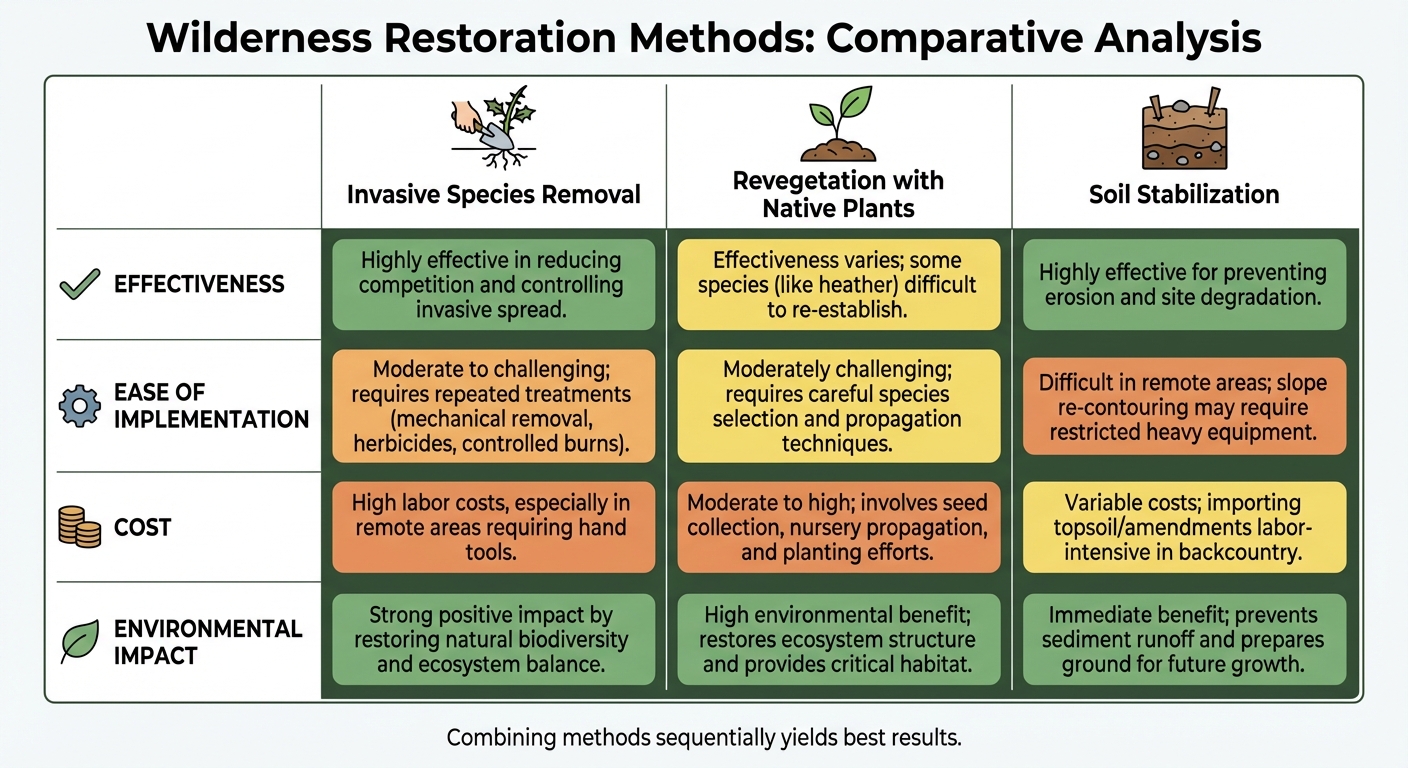
Wilderness Restoration Methods Comparison: Effectiveness, Implementation, Cost, and Environmental Impact
Every restoration method comes with its own set of advantages and challenges, shaping the way a project is planned and executed.
| Method | Effectiveness | Ease of Implementation | Cost | Environmental Impact |
|---|---|---|---|---|
| Invasive Species Removal | Highly effective in reducing competition and controlling invasive spread | Moderate to challenging; often requires repeated treatments like mechanical removal, herbicides, or controlled burns | High labor costs, especially in remote areas where hand tools are needed | Strong positive impact by restoring natural biodiversity and ecosystem balance |
| Revegetation with Native Plants | Effectiveness varies; some species, like heather, can be difficult to re-establish | Moderately challenging; requires careful selection of species and propagation techniques | Moderate to high; involves seed collection, propagation in nurseries, and planting efforts | High environmental benefit; restores ecosystem structure and provides critical habitat |
| Soil Stabilization | Highly effective for preventing erosion and further site degradation | Difficult in remote areas; slope re-contouring may require restricted heavy equipment | Costs vary; importing topsoil or amendments can be labor-intensive in backcountry areas | Immediate benefit; prevents sediment runoff and prepares the ground for future growth |
While the table provides a quick comparison, the practical realities of each method play a crucial role in decision-making. For instance, direct seeding is a budget-friendly choice for large-scale projects but demands precise weather conditions to succeed. On the other hand, transplanting plugs often yields good results but can harm donor sites if overused, potentially shifting the damage elsewhere.
Greenhouse propagation offers a way to minimize harm to donor sites but comes with higher costs and requires significant labor. Additionally, cloning techniques, while useful, limit genetic diversity compared to plants grown from seeds.
To achieve successful restoration, it’s often necessary to combine methods. For example, stabilizing soil should come before planting native species. This sequential approach ensures that site conditions are ready to support long-term recovery.
Conclusion
Restoring wilderness areas successfully hinges on tailoring methods to the specific conditions of each site rather than relying on a universal strategy. Using precise reference site modeling is a cornerstone of effective restoration. For example, arid land techniques work best in dry forests and alpine ridges, while wetlands thrive with plants like marsh marigold and various sedges. Similarly, grasslands and meadows often recover more effectively when early colonizers such as partridgefoot or Parry’s rush naturally reclaim disturbed soils.
To achieve lasting ecological recovery, restoration efforts must follow a thoughtful sequence, as outlined earlier. Starting with soil stabilization before planting ensures a solid foundation for long-term results, addressing challenges like soil compaction and pH imbalances. These steps directly tackle issues identified during initial site assessments. In cases where historical plant communities can no longer survive under altered conditions, introducing early- to mid-seral species that thrive in disturbed environments becomes a practical solution.
"If your short-term goals do not match your long-term goals, your prescriptions should attempt to meet your short-term goals while moving the site toward your long-term goals."
– USDA Forest Service
The combination of field observations and proven restoration techniques highlights the importance of a customized approach for each ecosystem. Observations from locations such as Upper Florence Lake and Denali National Park show that selecting species naturally suited to disturbed or unstable environments and using minimal intervention methods are crucial for sustainable outcomes. For instance, opting for hand tools over motorized equipment helps protect the wilderness’s unique character. Ultimately, sustainable restoration allows natural processes to guide the ecosystem’s recovery, even if some introduced species fade over time as the landscape establishes its own balance.
FAQs
What are the best ways to remove invasive species during wilderness restoration?
The best way to tackle invasive species involves a mix of early detection and consistent monitoring, paired with targeted methods like physical removal, careful use of herbicides, and biological control measures. Additional strategies, such as planting native species, controlled grazing, and prescribed burns, can play a key role in restoring ecological balance.
Every situation is unique, so it’s crucial to adjust your approach based on the specific species and environment. Often, using a combination of methods is the most effective way to manage invasive species while helping native habitats recover.
What are the best practices for restoring native plants in wilderness areas?
To bring back native plants successfully, land managers should focus on three main steps:
- Choose the right native species: Select plants that naturally thrive in the local environment. Consider factors like soil type, climate, and rainfall patterns. Using seeds from the same region can improve their chances of thriving and reduce the risk of poor growth.
- Get the site ready: Clear away debris, loosen compacted soil, and add organic material if needed to create favorable conditions for germination. Plant seeds at the appropriate depth, and using a mix of species can help promote a balanced ecosystem.
- Keep an eye on progress and make adjustments: Regularly monitor seedling growth and survival. Protect young plants from threats like erosion, grazing, or trampling. If issues like invasive weeds or low germination arise, consider reseeding or taking other corrective steps.
By carefully selecting species, preparing the site, and staying attentive through monitoring, land managers can create thriving and long-lasting native plant communities.
What are the biggest challenges in stabilizing soil in remote wilderness areas?
Stabilizing soil in remote wilderness areas comes with its own set of hurdles. Protecting delicate ecosystems while working around limited access, steep slopes, and tough weather conditions is no easy task. Crews often have to use lightweight, portable tools to minimize environmental impact, but this approach can slow things down and drive up costs.
Access to reliable water sources is another major obstacle, as is the storage of essential materials like organic matter or seed mixes. Without enough of these resources, applying them effectively becomes a challenge. On top of that, sourcing and transporting native plant materials adds another layer of complexity. Seeds and live plants need to arrive intact, which isn’t always easy given the rugged terrain. The short windows of favorable weather and the isolated nature of these areas further complicate things, making it harder to monitor progress and make adjustments over time – both of which are key for long-term success.