Ultimate Guide to Weather-Ready Adventure Planning
Planning outdoor adventures with weather in mind is essential for safety and success. Sudden storms, extreme temperatures, or flash floods can disrupt plans and create dangerous situations. This guide simplifies how to prepare for unpredictable weather, covering key tools, gear, and strategies to stay safe. Here’s a quick breakdown:
- Understand Weather Basics: Learn terms like wind chill, UV index, and pressure systems to interpret forecasts effectively.
- Plan by Activity and Region: Different activities (hiking, climbing, paddling) and U.S. regions (Pacific Northwest, Rockies, Southwest) come with unique weather risks.
- Use Forecast Tools: Apps like NOAA, Windy, and Weather Channel provide detailed, location-specific data.
- Gear Up Smartly: Layering systems, proper footwear, and weather-specific accessories (e.g., microspikes, gaiters) are critical.
- Follow Safety Protocols: Regular weather checks, risk assessments, and emergency plans reduce hazards.
- Minimize Impact: Adjust plans responsibly to protect trails and ecosystems during weather changes.
How to be ready for all Weather | MSC x Macpac | How-to Tramp and Hike Tips
Weather Basics and Outdoor Hazards
Grasping key weather concepts is crucial for turning forecasts into smart adventure plans.
Weather Terms Every Adventurer Should Know
Knowing basic weather terms can make a big difference in decision-making out in the field. Pressure systems are a good place to start. High-pressure systems usually mean calm, sunny skies, perfect for a day outdoors, though valleys might trap cold air. On the other hand, low-pressure systems bring rising air, which leads to clouds, rain, and wind – often signaling quick weather changes.
Wind chill is another important factor. It combines air temperature and wind speed to show how cold it feels on your skin. For example, if it’s 10°F with 20 mph winds, it feels like -4°F, which can cause frostbite in just 30 minutes. The UV index measures ultraviolet radiation on a scale from 0 to 11+. In places like Arizona, a UV index of 10+ can lead to severe sunburn in just 15–25 minutes, especially with reflective surfaces like sand.
The dew point tells you how much moisture is in the air. When it’s above 70°F, the air feels sticky, making it tough for sweat to evaporate. Imagine paddling in Florida during the summer with dew points over 75°F and temps around 90°F – conditions like that can quickly lead to heat exhaustion. Keeping an eye on barometric pressure is also helpful; falling pressure often means storms or severe weather are on their way.
These weather terms aren’t just trivia – they directly affect the risks you might face on your adventures.
Weather Hazards by Activity Type
Different activities come with their own weather challenges. Thunderstorms, for instance, pose serious risks for hikers and climbers. Lightning strikes are especially dangerous on ridges and peaks, and heavy rain can lead to flash floods or hail. The U.S. experiences over 100,000 thunderstorms each year, with summer afternoons in the Rockies and Appalachians being particularly risky. A good rule: reach summits before noon and head down before storms roll in.
Heat waves bring sustained temperatures over 100°F, which can lead to heat cramps, exhaustion, or even heat stroke. In California’s Sierra Nevada, climbers face reduced grip strength and increased rockfall during extreme heat. To stay safe, consider using ice vests, avoid peak heat hours, and watch for warning signs like dizziness.
Snow and ice create hazards like slippery trails, avalanches, and whiteouts. In the Cascades, fresh snowfalls of 12–24 inches during winter months can trigger slab avalanches, while thin ice on Adirondack lakes often leads to dangerous falls. Using traction devices and checking avalanche forecasts are musts before heading out. Flooding is another major concern, whether it’s from heavy rain or rapid snowmelt. In the Southeast, hurricanes can dump more than 6 inches of rain, flooding trails in the Appalachians. Meanwhile, Utah’s slot canyons are notorious for fatal flash floods. Avoid low-lying areas after rain and monitor river gauges to stay safe.
Recognizing these hazards can help you prepare with the right gear and strategies.
U.S. Regional and Seasonal Climate Patterns
The United States has diverse climate zones, and each one requires different planning. In the Pacific Northwest, winters are wet and mild, with 40–50 inches of rain. Persistent drizzle can lead to hypothermia even without extreme cold. By contrast, the Southwest features dry, scorching summers with temperatures over 100°F and monsoon thunderstorms. Hydration and avoiding July-August monsoon peaks are critical in this region.
The Midwest deals with humid summers and frequent thunderstorms, while the Rockies see snow year-round at high elevations, with freezing levels dictating whether you’ll face snow or rain on mountain routes. The Northeast experiences unpredictable springs, sometimes with late-season snow, while the Great Plains are known for tornadoes during spring, particularly from March to May.
Experts like those from REI and Outdoor Project suggest checking NOAA regional data and staying flexible with plans, as phenomena like El Niño can intensify weather patterns, such as heavy California rains. Andrew Skurka highlights the importance of using forecasts tailored to elevation, as conditions can vary greatly even within the same region. For instance, winter weather in Virginia differs dramatically between the coastal areas of Virginia Beach and the inland regions of Northern Virginia, requiring distinct gear and precautions for the same season.
How to Use Weather Forecasts and Alerts
Getting weather data is one thing, but knowing how to use it effectively is what makes it a real safety tool rather than just background noise. Here’s how to turn forecasts into actionable insights for your outdoor plans.
Reading and Understanding Forecast Tools
The National Weather Service (NWS) is a go-to resource for trip planning in the U.S. With tools like zone forecasts, interactive maps, and hourly graphs, it provides detailed information such as wind chill, precipitation timing, and temperature trends. Many private weather apps build on this data, offering features like push alerts and user-friendly radar visuals.
Radar maps are especially helpful for tracking real-time precipitation, allowing you to time your departures or adjust turnaround points. Satellite imagery, on the other hand, reveals larger patterns like cloud movements and approaching weather fronts – key information for longer backcountry trips. For mountain adventures, specialized forecast sites can give elevation-specific predictions, which are crucial when freezing levels determine whether you’ll face rain or snow.
The key to using these tools is to focus on how multiple factors interact, rather than relying on a single piece of data. For instance, a 40–50% chance of rain might not sound too bad – until you factor in the risk of thunderstorms on an exposed ridge. Similarly, wind speeds above 25–30 mph can make ridges, paddling routes, or winter travel dangerous, especially when combined with low temperatures and high wind chills. Even subtle signs, like increasing cloud cover earlier than expected, can indicate a weather system is moving faster than predicted.
| Forecast Tool | Key Features | Best For |
|---|---|---|
| NOAA Weather.gov | Hourly graphs (temperature, wind chill, precipitation, humidity), GPS-linked forecasts, detailed discussions | Detailed U.S. trip planning and weather pattern analysis |
| Windy.com | Multi-model comparisons with intuitive wind and rain visuals | Cross-checking forecasts and assessing elevation data |
| The Weather Channel App | Activity-specific forecasts (hiking, camping, etc.), health risk assessments, personalized alerts | Outdoor adventures with timely push notifications |
| Flowx/RadarScope | Interactive radar with layered views of clouds, rain, and wind | Real-time storm tracking |
Creating a Forecast Timeline for Your Trip
Start planning your trip weeks in advance by reviewing regional climate averages and seasonal trends. This helps you choose your destination and decide whether to pack summer gear, winter equipment, or something in between. About 7–10 days before your trip, start checking long-range forecasts for patterns like heat waves or storms, even if the specifics aren’t clear yet.
As you get closer – within 5 to 3 days – forecasts become more reliable. Use this window to fine-tune your route, evaluate campsite elevations, plan for potential bailouts, and finalize your gear based on expected conditions. In the last 48–24 hours, check multiple trusted sources for updated warnings about hazards like thunderstorms, high winds, heavy snow, or flooding. This is the time to make your final go/no-go decision.
On the day of your trip, re-check short-term forecasts and radar maps before heading out. Adjust your start times or turnaround points if conditions have changed. Once you’re out there, keep monitoring the weather through apps or a NOAA Weather Radio. If you lose connectivity, rely on your observations: shifts in wind direction, drops in temperature, or sudden changes in cloud formations can all signal incoming weather.
For shorter outings, like a half-day hike, checking forecasts 1–3 days ahead and again on the morning of your trip is usually enough – especially if you’re near shelter. Multi-day trips require a longer watch (5–7 days ahead) to track storm cycles and plan around dry windows. Remote expeditions demand even more prep, combining seasonal data, specialized tools, and contingency plans.
Setting Up Weather Alerts and Offline Options
Most U.S. weather apps allow you to set up push alerts for severe conditions like thunderstorms, tornadoes, flash floods, high winds, and winter storms. These alerts are especially critical for campers near rivers, hikers in canyons, or anyone in open terrain. Smartphones with Wireless Emergency Alerts (WEA) will also automatically notify you of life-threatening weather, even without a dedicated app.
For backcountry trips where cell service is spotty, a NOAA Weather Radio is a must-have. It broadcasts official watches and warnings in remote areas, making it a critical tool for river runners, overlanders, and backcountry campers. You can also configure weather apps to track multiple locations – like your trailhead, campsite, and exit point – so you stay informed no matter where you are.
Don’t forget to take screenshots of forecasts before heading out, so you can access them offline. In remote areas, learning to read visual weather cues is just as important. For example, sudden temperature drops or shifts in barometric pressure can signal an approaching front, while changes in wind direction or the appearance of towering cumulus clouds often mean bad weather is on the way.
In July 2023, a group of hikers in the Sierra Nevada used a Garmin inReach device to receive weather updates during a multi-day trek. The alerts helped them adjust their route to avoid a storm, ensuring a safe and successful trip.
sbb-itb-289f5f2
Gear and Clothing for Different Weather Conditions
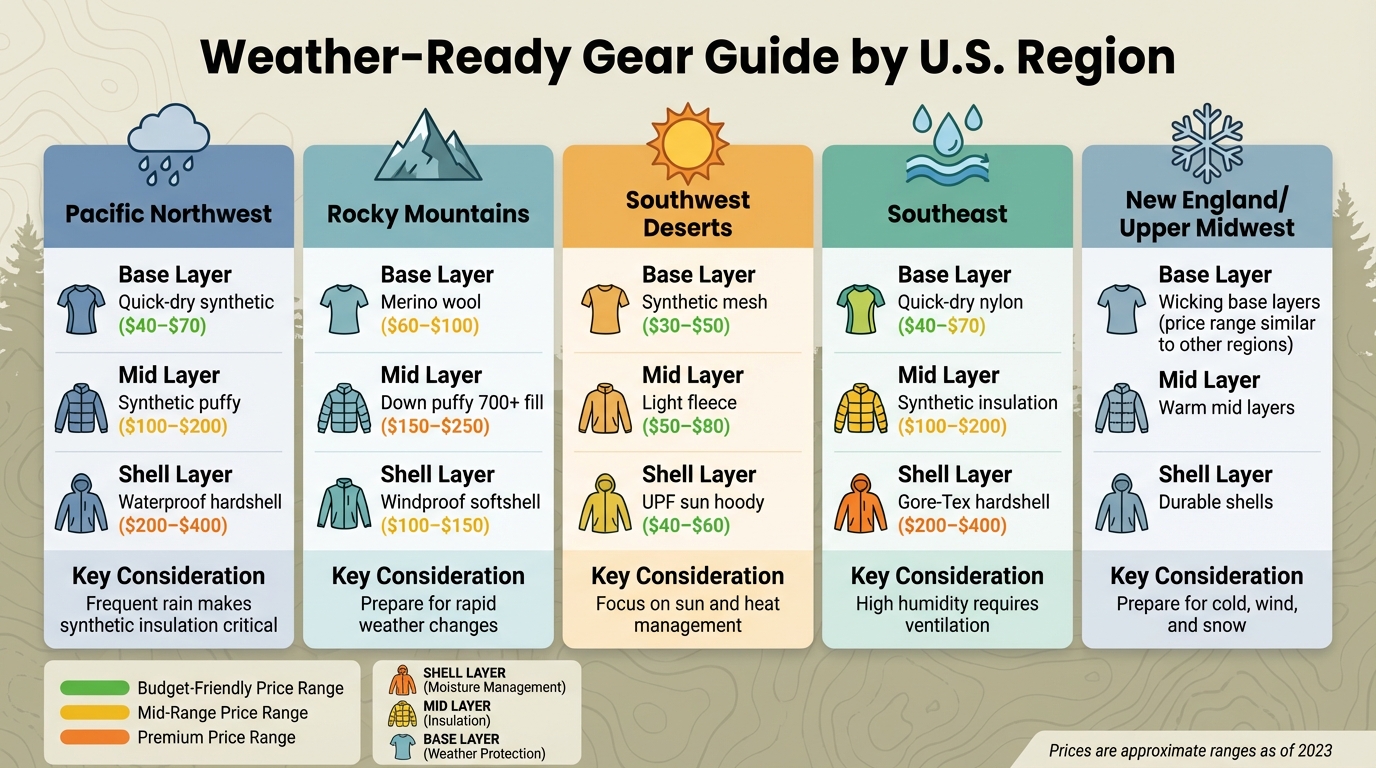
Weather-Ready Gear Guide by U.S. Region
The right gear can make all the difference when the weather takes a turn. A dependable clothing system not only keeps you comfortable but also protects you from potential dangers like hypothermia. According to NOLS, hypothermia risk increases fivefold in wet conditions without a proper shell layer.
Layering Systems for All Climates
A solid layering system is the backbone of staying weather-ready. It typically includes three layers: a base layer to wick moisture, a mid layer for insulation, and a shell layer to shield against wind and precipitation. The key is flexibility – adjust layers as needed to maintain comfort and prevent sweat buildup.
For the base layer, moisture-wicking fabrics like lightweight merino wool or synthetics are ideal in most U.S. climates. In the Southwest’s deserts, ultralight synthetic tees or UPF sun hoodies help keep you cool while protecting against harmful UV rays. In colder areas like the Rockies or Upper Midwest, midweight merino wool or synthetic long underwear works best. Avoid cotton at all costs – it holds moisture and loses its ability to insulate when wet, which can be dangerous in cold weather.
The mid layer provides insulation and varies depending on the season and location. Thin fleece or light synthetic jackets are perfect for spring and fall hikes in regions like the Northeast or Pacific Northwest, where temperatures range from 20°F to 50°F. For winter or high-altitude adventures, thicker fleece or synthetic puffy jackets are a must. Down jackets perform well in cold, dry conditions but lose their effectiveness in wet climates like the Pacific Northwest, where synthetic insulation is a safer bet. Popular options include the Patagonia Nano Puff (priced $199–$239) and the Arc’teryx Atom LT.
The shell layer is your main defense against wind and precipitation. For wet climates like the Pacific Northwest or the Southeast, breathable rain jackets are essential. In dry but windy areas, such as desert plateaus or high peaks, a wind shell works well. For heavy rain or snow, invest in fully waterproof, breathable shells with seam taping – look for a hydrostatic head rating of at least 3,000mm for maximum protection. The Patagonia Torrentshell 3L is a standout option, praised for its packability and performance in rainy conditions.
Different regions require specific adjustments to your gear. For example:
- In the Pacific Northwest, prioritize waterproof shells and quick-drying synthetics to handle frequent rain and wet vegetation.
- In the Rocky Mountains, versatile layers are essential to adapt to sudden weather changes, including afternoon thunderstorms and rapid cooling.
- In Southwest deserts, focus on sun protection with UPF clothing, wide-brim hats, and light colors, while keeping a mid layer handy for cooler nights.
- The Southeast calls for lightweight, breathable clothing paired with a reliable rain jacket to combat high humidity.
- In New England and the Upper Midwest, prepare for cold, wind, and snow with wicking base layers, warm mid layers, and durable shells.
| Region | Base Layer | Mid Layer | Shell Layer | Key Consideration |
|---|---|---|---|---|
| Pacific Northwest | Quick-dry synthetic ($40–$70) | Synthetic puffy ($100–$200) | Waterproof hardshell ($200–$400) | Frequent rain makes synthetic insulation critical |
| Rocky Mountains | Merino wool ($60–$100) | Down puffy (700+ fill, $150–$250) | Windproof softshell ($100–$150) | Prepare for rapid weather changes |
| Southwest Deserts | Synthetic mesh ($30–$50) | Light fleece ($50–$80) | UPF sun hoody ($40–$60) | Focus on sun and heat management |
| Southeast | Quick-dry nylon ($40–$70) | Synthetic insulation ($100–$200) | Gore-Tex hardshell ($200–$400) | High humidity requires ventilation |
Beyond clothing, choosing the right footwear and accessories is just as important for staying safe and comfortable.
Footwear and Traction Accessories
Your choice of footwear depends on the terrain, weather, and the weight of your pack. On dry, well-maintained trails, trail runners are a great option – they’re lightweight, quick-drying, and comfortable. The Salomon Speedcross waterproof trail shoes (priced $140–$160) are a popular choice for mixed conditions. For uneven terrain or moderate loads, such as weekend backpacking trips in New England or the Sierra, light hikers or mid-cut boots provide extra ankle support and durability without being too heavy.
For snow, heavy packs, or rugged off-trail terrain like the Cascades or Colorado’s high country, high-cut waterproof boots offer better support and keep your feet warm and dry. Mountaineering boots are essential for technical conditions like glaciers or icy slopes, as they provide stiffness for crampons and extra insulation. In very wet areas like Alaska or the Pacific Northwest, choose footwear that dries quickly or pair waterproof boots with gaiters to keep water out. Keep in mind that heavier boots can lead to fatigue and increase the risk of blisters.
Accessories like gaiters are invaluable for keeping out water, mud, snow, and debris. They’re especially useful in wet underbrush, spring snow, or even desert sand. Microspikes (priced $70–$100) are a must for icy trails, offering twice the traction compared to standard boots. With 40% of backcountry injuries linked to slips on wet or icy terrain, microspikes are a smart safety measure.
For steep, icy conditions, crampons are necessary, providing the grip needed for snowfields or alpine ice. Snowshoes are ideal for deep, soft snow, preventing you from sinking with every step. Trekking poles are another essential, helping with balance, reducing the risk of slips, and making stream crossings or steep descents easier. In winter, combining trekking poles with microspikes is a basic safety practice.
Shelter and Navigation Equipment
Your shelter choice should reflect the weather you expect to face. In regions like the Pacific Northwest or during Southeast storms, a double-wall tent with a full-coverage rainfly and bathtub floor is your best bet for staying dry. The Big Agnes Copper Spur is a lightweight, three-season option that performs well in these conditions.
For high winds, go for low-profile tents with geodesic or semi-geodesic designs. These tents feature strong pole structures and multiple guylines to withstand gusts. Position the tent’s narrow end into the wind and use all guylines for added stability. In snowy conditions, opt for four-season tents designed to handle snow loads, and regularly clear off accumulating snow to avoid collapse.
In milder or drier climates like the high desert or summer in the Sierra, tarps are a lighter alternative to tents. Properly pitched, they can provide adequate protection with significantly less weight. In humid, forested areas like the Southeast or Appalachians, hammocks with underquilts and tarps keep you off wet or uneven ground while offering protection from rain – just ensure the tarp is large enough to handle sudden storms.
Safety Protocols and Weather-Based Decision Making
Turning your gear and weather insights into action can make all the difference in ensuring a safe outdoor adventure. Weather-based decision making isn’t about being overly cautious – it’s about making informed, consistent choices before and during your trip.
Pre-Trip Risk Assessment
Start by combining your gear setup with a detailed pre-trip risk check. Use the National Weather Service (NWS) and at least one other reliable forecast source to confirm conditions at the trailhead and along your route. Keep in mind that temperatures typically drop about 3.5°F for every 1,000 feet of elevation gain in dry conditions. For instance, a pleasant 60°F at the trailhead could feel much colder higher up.
Identify potential hazards along your route, such as exposed ridges susceptible to lightning, dry washes prone to flash floods, or areas likely to experience extreme temperatures. Match these risks to your group’s experience and gear limits. Set clear go/no-go criteria and have backup plans ready, like alternate trailheads or shorter routes. For example:
- Skip ridge hikes if thunderstorms are forecasted.
- Avoid desert slot canyons if there’s a Flash Flood Watch or Warning in the area.
- Reduce mileage if the heat index is projected to exceed 90–95°F or if wind chills are beyond your gear’s capacity.
Ensure everyone in the group knows how to recognize signs of heat illness, hypothermia, frostbite, and lightning danger – and how to respond if symptoms arise.
Managing Hazards During Your Trip
Once on the trail, staying alert and sticking to pre-planned protocols can help you avoid trouble. Schedule regular weather check-ins – every one to two hours or at key landmarks. Look for signs of changing conditions, like building cumulonimbus clouds or shifts in wind patterns, and check updated forecasts if you have cell service.
Lightning is one of the most serious threats in the backcountry. According to the National Weather Service, lightning can strike over 10 miles away from a storm. If you hear thunder, you’re at risk. Move off high ground, avoiding summits, ridges, open spaces, and tall isolated objects. Seek shelter in a vehicle or low-lying area, spacing group members about 50–100 feet apart to reduce the chance of multiple injuries. Wait at least 30 minutes after the last thunder before resuming exposed activities.
For heat, prevention is critical. Hike during cooler times of the day, take breaks in shaded areas, and monitor hydration by checking urine color or using buddy checks. Snack on foods rich in electrolytes. At the first signs of heat exhaustion (e.g., heavy sweating, weakness, nausea), stop and cool down immediately. For heat stroke (altered mental state and possibly dry skin), call emergency services and begin aggressive cooling with water, ice, or wet clothing.
In cold, wet, or windy conditions, use layers to regulate your body temperature and avoid sweating too much. Keep a dry emergency layer in a waterproof bag and change out of wet clothes promptly. Limit exposure to strong winds on ridges, and if wind chills exceed your insulation’s limits, move to sheltered terrain or set up camp early. Be alert for early signs of hypothermia, like shivering, clumsiness, or mood changes, and address them with dry clothes, extra calories, warm fluids, and protection from the elements. Remember, hypothermia can occur even above 40°F if you’re wet and exposed to wind or rain.
For storms, rain, and flooding, avoid camping in dry washes, slot canyons, or near rivers if rain is expected upstream. If water levels rise or heavy rain intensifies, head for higher ground immediately. Cross streams early in the day before runoff peaks, and don’t hesitate to abandon a crossing if conditions are unsafe. Flash floods are a leading cause of flood-related deaths in the U.S., often striking when people venture into flooded roadways or low-lying areas. In high winds or storms, secure your gear, orient your tent’s narrow end into the wind, and double-check guylines before nightfall.
By staying vigilant, you can turn pre-trip planning into effective, real-time safety strategies.
Minimizing Environmental Impact During Weather Changes
Adapting to changing weather doesn’t mean neglecting Leave No Trace principles. In fact, it’s especially important to protect the environment when conditions force you to adjust your plans. For instance, if rain turns trails muddy, walk straight through the mud rather than skirting puddles. This prevents the creation of side trails, which can lead to soil erosion and harm vegetation.
If bad weather forces you to camp earlier than planned, choose a durable surface like rock, gravel, or dry grass. Avoid clearing new ground or digging trenches around your tent for runoff. Stick to established campsites whenever possible. If you must camp in an untouched area, spread out tents and cooking areas to avoid concentrating your impact.
When you need to cut your trip short or change routes, pack out everything you brought, including unused food or gear. While storms and heat may disrupt your plans, they shouldn’t compromise your commitment to leaving the wilderness as you found it. By combining careful weather decisions with low-impact practices, you can protect both yourself and the natural places you cherish.
Conclusion
Planning for weather conditions relies on three key elements: accurate forecasts, the right gear, and clear safety protocols. When these pieces come together, they create a strong foundation for safe and successful adventures. But if even one fails, it can quickly turn a great outdoor experience into a risky situation.
To strengthen your preparation, stick to a step-by-step pre-trip checklist:
- 7–5 days before your trip: Start by checking broader regional weather trends.
- 3–2 days before: Dive into detailed forecasts for your trailhead, focusing on temperature (°F), wind speeds (mph), precipitation levels, and snow conditions.
- The night before: Double-check short-term forecasts and make route adjustments if necessary.
- Packing: Prepare for both expected conditions and worst-case scenarios. Set a clear safety plan, including a turnaround time and a shared itinerary.
- On the day of your trip: Do one last forecast review and stay alert to shifting conditions.
Follow the "Triple R" rule to guide your decision-making:
- Risk: Evaluate potential dangers like severe storms, extreme heat, or heavy snowfall.
- Readiness: Consider your skills, fitness level, and gear.
- Reward: Weigh the importance of the trip against the risks.
When risks pile up and red flags appear, seasoned adventurers always prioritize caution.
Make weather checks a routine part of your trip planning. Keep records of forecast details and how your gear performs to fine-tune future plans. Over time, this habit transforms weather from a source of stress into a tool that expands your opportunities for safe adventures.
For detailed guides, eco-friendly travel tips, gear reviews, and planning resources that incorporate weather insights – like ideal seasons, typical temperature ranges (°F), precipitation patterns, and gear recommendations for U.S. destinations – check out Take More Adventures. Bookmark it as your go-to resource for planning your next trip.
Ready to put this into action? Pick an upcoming weekend to test these tips. Check your local forecast, follow the timeline and gear checklist, and share your plan with a friend. Afterward, review what worked and what could improve. Keep this checklist handy for every trip, and watch your confidence grow with every adventure.
FAQs
How can I use weather forecasts to plan safe and enjoyable outdoor adventures?
When planning an outdoor adventure, keeping an eye on the weather forecast is a must. Pay attention to details like temperature (in °F), chances of rain, wind speeds, and any severe weather warnings. These factors will help you pick the best time for your activity.
Weather can be unpredictable, so check forecasts regularly, especially as your trip gets closer. This will help you prepare properly – whether that means packing a rain jacket, dressing in layers for colder temperatures, or bringing sunscreen for sunny conditions. If needed, adjust your plans to ensure both safety and comfort.
What gear do I need to prepare for different weather conditions?
When preparing for different weather conditions, having the right gear can make all the difference. For rainy days, pack a waterproof jacket and pants to stay dry. In colder weather, opt for insulated layers and thermal underwear to keep warm. If you’re heading out in hot, sunny conditions, wear sun-protective clothing, a wide-brimmed hat, and don’t forget to apply sunscreen. Tackling wet or snowy terrain? Sturdy waterproof boots are essential.
A few additional accessories can also enhance your comfort and safety. Bring gloves to combat the cold, goggles to shield your eyes from snow or wind, and sunglasses for those bright, sunny days. Always tailor your gear to match the forecast and the environment you’ll be exploring.
How can I reduce my environmental impact during unexpected weather changes?
When weather takes an unexpected turn, there are simple ways to tread lightly on the environment. Start by sticking to marked trails. This helps protect delicate ecosystems and ensures local wildlife isn’t disturbed. And don’t forget to pack out all your trash – yes, even those biodegradable scraps. Keeping the area clean makes it safer and more pleasant for everyone.
Another key step is using reusable, weather-appropriate gear. This cuts down on waste and, when possible, choose gear made from eco-friendly materials. Also, embrace the Leave No Trace principles: respect nature, avoid harming plants or trees, and stay aware of how your actions affect the environment. Small, mindful choices can go a long way in keeping nature intact, even when the weather is unpredictable.